Theopolis Logo

Writing

Explore our collection of theological essays, biblical studies, and reflections on faith and culture.

See all
31-03-0213
Hermeneutics

Apocalyptic Eyes

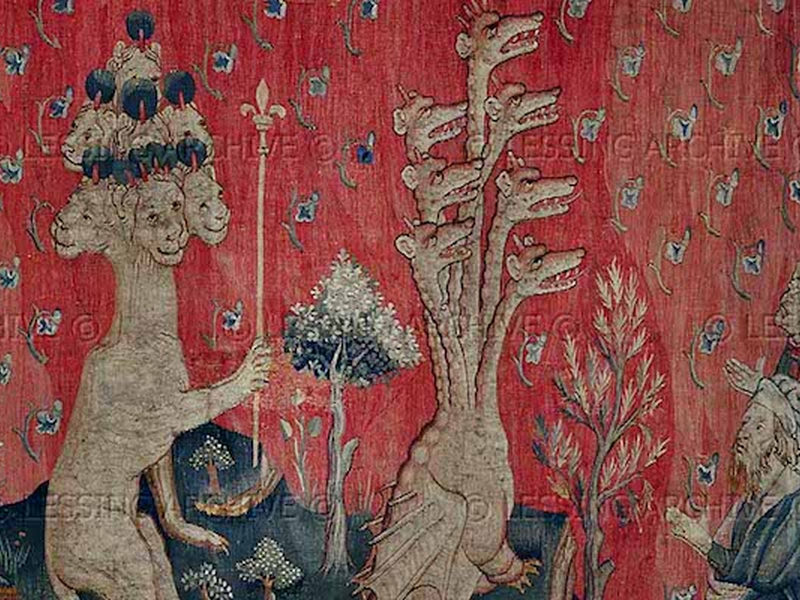
Flying scrolls. Red horses. Beasts coming out of the sea. Winged women. The list goes on. Apocalyptic literature in the Bible is like a cross between science fiction and Marvel comics. And the Bible has a fair bit of this sort of thing. Daniel sees visions in Babylon, Zechariah sees…

by Toby SumpterNovember 4, 2014

bhm-skyline-2
Theopolis News

New Name, New Look

Trinity House Institute has taken a new name, the Theopolis Institute. This striking new name expresses our unique vision and mission and captures the unified purpose behind all our specific programs and activities. We still have Bible, liturgy, and culture in our tagline. We still offer the same courses on…

by TheopolisNovember 4, 2014
istock_000012860926small
Atonement

Not Fearing the Devil

Adam Kotsko offers a socio-political variation on the Christus Victor atonement theory in his 2010 study, The Politics of Redemption: The Social Logic of Salvation . He does this by explaining "the devil" in terms of the Hegelian concept of "objective spirit," Geist . As Kotsko puts it, Geist "refers…

by Peter LeithartOctober 13, 2014
jez-timms-8muutamcwu4-unsplash
Leviticus

The Meaning of Sacrifice

Two factors keep Nahtali Meshel from discussing the meaning of sacrifice until late in his The "Grammar" of Sacrifice . The first has to do with the texts he draws from: "P says little about the meaning of its rituals" (174). The other has to do with the grammatical theory…

by Peter LeithartOctober 8, 2014
jez-timms-8muutamcwu4-unsplash
Leviticus

Praxemics

Chapter 5 of Naphtali Meshel's The "Grammar" of Sacrifice focuses on "praxemics," the physical actions of sacrificial ritual. Praxemes are constituted by six elements: an "atomact," an elementary physical act or gesture; an actor; an object that is acted up; a target for the action and often for the object…

by Peter LeithartOctober 6, 2014
markus-winkler-aid-xyrtlec-unsplash
Leviticus

Jugation and Hierarchy

Two chapters of Naphtali Meshel’s The “Grammar” of Sacrifice cover what he calls “jugation” and “hierarchies.” The first involves the addition of other materials to an animal offering. Jugates include wine, cereal, and oil that are added to the animals (zoemes) that are offered in sacrifice. Some jugates are coordinated…

by Peter LeithartOctober 1, 2014

Showing page 167 of 309

See all

Showing page 23 of 43

See all

Preaching Repentance

John (Mark 1:4; Luke 3:3) and Jesus (Matthew 4:17; Mark 1:15) come preaching repentance. Over time, though, it becomes clear that the Jews are not repenting, and Jesus begins to denounce the cities that don't respond to His message of repentance (Matthew 11:20-21; 12:41; Luke 10:13; 11:32). Jesus' lurid predictions…

June 17, 2015

Race in the American Church

It was not uncommon in the early 19th century for blacks and whites to worship together. As Niebuhr observes, they “did not enjoy complete fellowship” and there was certainly not equality between them, yet “they participated in the same services and were members of the same denominations. . . .…

June 17, 2015

Denominationalism Is Secularization

“Denominational pluralism, on the American plan,” wrote Will Herberg, “means thoroughgoing secularization” (36). By “secularization,” Herberg meant a gap between “conventional” and “operational” religion. Conventional religion is that practiced by religious adherents - Protestants, Catholics, Jews, Muslims, Buddhists. Operational religion is the set of beliefs, rituals, and values that shapes…

June 17, 2015

Numerical Patterning in Revelation 16

After the third angel turns the rivers and springs to blood by pouring the passion of God into them, the “angel of the waters” praises the righteous judgment of God (Revelation 16:5-7). His speech of praise is chiastically arranged, with a modification: A. I heard the angel of waters saying…

June 16, 2015

Denominationalism and the New World

Timothy L. Smith offers a vivid portrait of the “loneliness and danger,” as well as the fragmentation of traditional social networks, that the earliest American settlers had to face (contribution to Denominationalism , 50-1): “Gone was the material heritage of the European village - the cottages and garden plots, the…

June 16, 2015

Social Sources of Denominationalism

H. Richard Niebuhr is altogether too much the sociologist. He displays the habit of peering past theological debates to the “roots” of conflict and division in the church, roots that always turn out to be fundamentally social roots. As Milbank stressed, this sort of sociology turns “society” into an explanatory…

June 16, 2015

Showing page 411 of 2212

Browse by Category

In Medias Res

Your weekly digest for all things Theopolis.

Donate

Theopolis is nearly 100% donor-supported. Consider joining us on our mission.