Theopolis Logo

Writing

Explore our collection of theological essays, biblical studies, and reflections on faith and culture.

See all
tanner-mardis-xuxghzhibn4-unsplash-1-2
Biblical Studies

Tweets-turned-Notes on the Bible’s Chronology

Summary In what follows, I will consider the “year-stamps” employed in Scripture, i.e., statements of the form, “Such-and-such an event took place in the Xth year of Y.” In the process, I will suggest some ways in which the Biblical narrative might relate to events in the extra-Biblical world, though…

by James BejonJuly 16, 2019
durer-prodigal-son-2
Luke

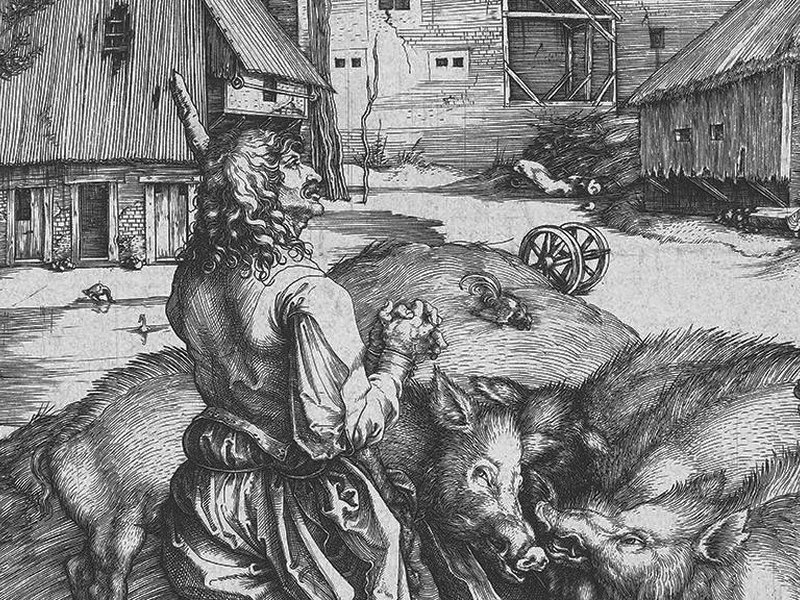
Perspectives on the Prodigal, (Part 2)

In the first essay on the parable of the Prodigal Son, I suggested that the problems commentators and others encounter in interpreting Jesus three-part parable are not accidental. These are not just problems in our ignorance of cultural background. They are intentional features of the stories —stories designed to poke…

by Ralph Allan SmithJuly 11, 2019
durer-prodigal-son-2
Luke

Perspectives on the Prodigal, (Part 1)

The story of the Prodigal Son is perhaps the most well-known story in the Bible. As others have observed, it may also be one of the most misunderstood. In two short essays, I will point out features of this story that are commonly neglected, aspects of Jesus’ parable that might…

by Ralph Allan SmithJuly 9, 2019
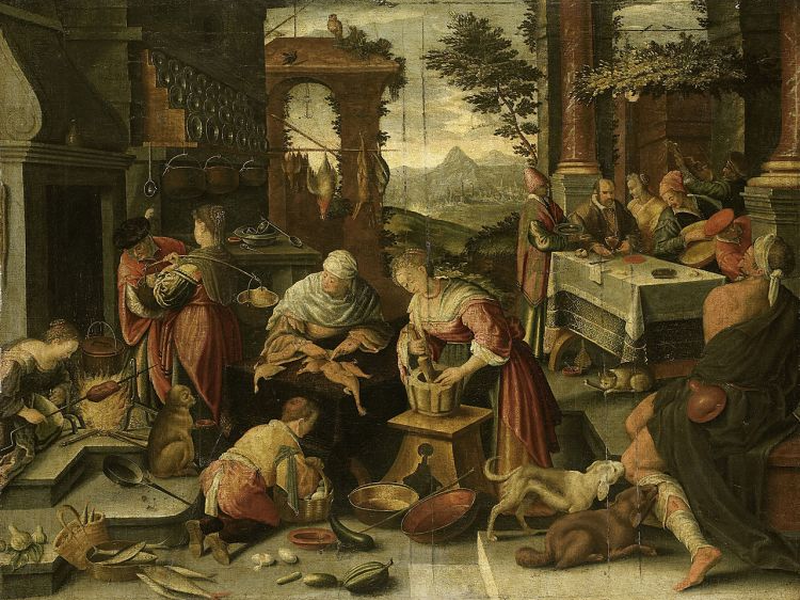
de-rijke-man-en-de-arme-lazarus-by-jacopo-da-ponte-16th-century
Luke

Lazarus and the Rich Man

The parable of Lazarus and the nameless rich man is not an independent story. It is part of a long context that begins in Luke 15:1, where Jesus is eating with tax collectors and sinners and the scribes and Pharisees grumble. In response to their hardheartedness, Jesus tells a three-part…

by Ralph Allan SmithJuly 4, 2019
aaron-burden-uynrnfdkjwg-unsplash
Luke

Everybody has Dropsy - Luke 14:1-24

The Bible is written so that even when a reader cannot pick up on what might be deeper or more detailed aspects of a text, there is virtually always a message to be heard. In the ancient world, where the “reader” of Scripture would likely be a church official facing…

by Ralph Allan SmithJuly 2, 2019
communion
Biblical Theology

Fruit Trees and Grain Plants

The distinction between garden (or vineyard) and field begins in Genesis 2. This relates to the ordering of the formless world. Plants of the field are contrasted with the garden planted by God in Genesis 2:5&8. Later on, under the Old Covenant the Israelites will be required to keep their…

by James B. JordanJune 27, 2019

Showing page 77 of 309

See all

Showing page 23 of 43

See all

Form and Type

It sure seems that the story of Joseph is a typological foreshadowing of the life of Jesus. Joseph is hated by his brothers; turned over to Gentiles; falsely accused; thrown into pit and prison; raised up, finally set on a throne, from which he gathers and distributes bread. Of course,…

March 5, 2015

Othering and Order

Jock Young ( Vertigo of Late Modernity ) discerns two sorts of “othering” in contemporary life: “the first is a conservative demonisation which projects negative attributes on the other and thereby grants positive attributes to oneself The second, very common yet rarely recognised, is a liberal othering where the other…

March 5, 2015

Fragmentation and Aestheticism

In several dense paragraphs in The Fragmented World of the Social , Axel Honneth describes the Gyorgy Lukacs's analysis of the fragmentation caused by capitalist society and the romantic reaction. There is, for starters, the fragmentation of the human being himself, induced by the capitalist separation of the worker from…

March 4, 2015

A World Beyond Morality

In his little book, Alone Again , Zygmunt Bauman summarizes his characteristic themes: We live in a liquid world, nothing permanent, nothing solid, nothing predictable. Typically pungent, Bauman points to “the overall tendency to dismantle, deregulate and dissipate the once solid and relatively lasting frames in which the concerns and…

March 4, 2015

Heifers, Serpents, Trees, Locusts

Jeremiah 46 is an oracle against Egypt, which, like Judah, is threatened by the advancing forces of Babylon. In the space of four verses (20-23), Jeremiah runs through a dizzying series of metaphors. Egypt is a pretty heifer (v. 20), and Nebuchadnezzar's army is a “horsefly” that is going to…

March 4, 2015

Making Selves Without Straw

The late Jock Young observes in his Vertigo of Late Modernity that our period is characterized by “a combination of factors, some long existing yet unique in their combination, others pre-existent yet transformed in the present period. The impact revolves around three axes, the disembeddedness of everyday life, the awareness…

March 4, 2015

Showing page 456 of 2212

Browse by Category

In Medias Res

Your weekly digest for all things Theopolis.

Donate

Theopolis is nearly 100% donor-supported. Consider joining us on our mission.