Theopolis Logo

Writing

Explore our collection of theological essays, biblical studies, and reflections on faith and culture.

See all
tanner-mardis-xuxghzhibn4-unsplash-1-2
Biblical Studies

Tweets-turned-Notes on the Bible’s Chronology

Summary In what follows, I will consider the “year-stamps” employed in Scripture, i.e., statements of the form, “Such-and-such an event took place in the Xth year of Y.” In the process, I will suggest some ways in which the Biblical narrative might relate to events in the extra-Biblical world, though…

by James BejonJuly 16, 2019
durer-prodigal-son-2
Luke

Perspectives on the Prodigal, (Part 2)

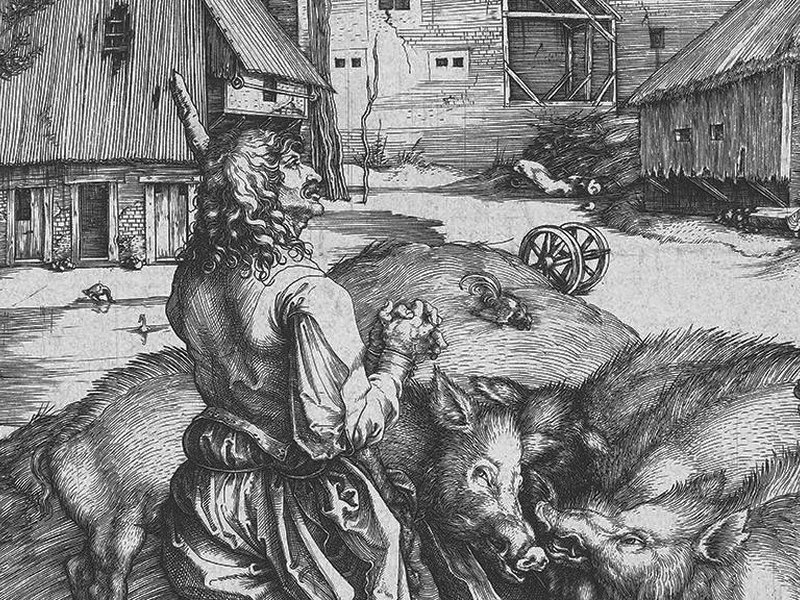
In the first essay on the parable of the Prodigal Son, I suggested that the problems commentators and others encounter in interpreting Jesus three-part parable are not accidental. These are not just problems in our ignorance of cultural background. They are intentional features of the stories —stories designed to poke…

by Ralph Allan SmithJuly 11, 2019
durer-prodigal-son-2
Luke

Perspectives on the Prodigal, (Part 1)

The story of the Prodigal Son is perhaps the most well-known story in the Bible. As others have observed, it may also be one of the most misunderstood. In two short essays, I will point out features of this story that are commonly neglected, aspects of Jesus’ parable that might…

by Ralph Allan SmithJuly 9, 2019
de-rijke-man-en-de-arme-lazarus-by-jacopo-da-ponte-16th-century
Luke

Lazarus and the Rich Man

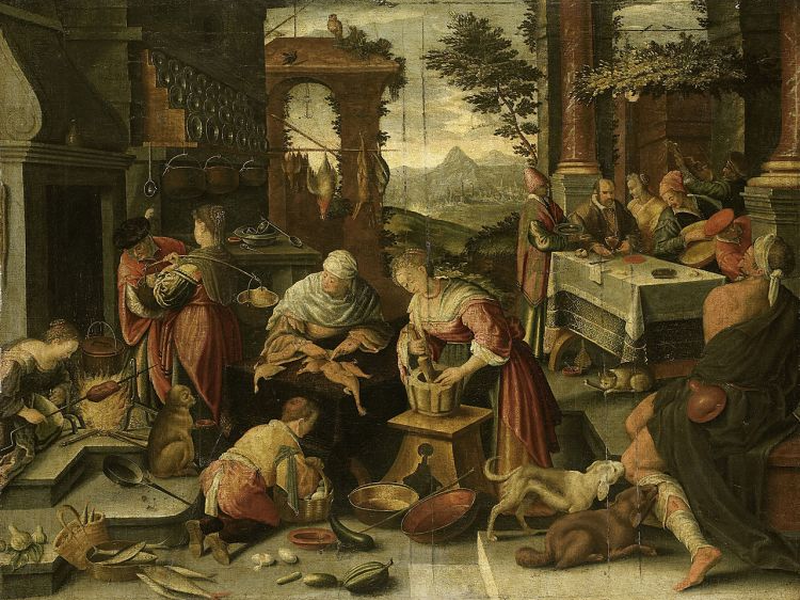
The parable of Lazarus and the nameless rich man is not an independent story. It is part of a long context that begins in Luke 15:1, where Jesus is eating with tax collectors and sinners and the scribes and Pharisees grumble. In response to their hardheartedness, Jesus tells a three-part…

by Ralph Allan SmithJuly 4, 2019
aaron-burden-uynrnfdkjwg-unsplash
Luke

Everybody has Dropsy - Luke 14:1-24

The Bible is written so that even when a reader cannot pick up on what might be deeper or more detailed aspects of a text, there is virtually always a message to be heard. In the ancient world, where the “reader” of Scripture would likely be a church official facing…

by Ralph Allan SmithJuly 2, 2019
communion
Biblical Theology

Fruit Trees and Grain Plants

The distinction between garden (or vineyard) and field begins in Genesis 2. This relates to the ordering of the formless world. Plants of the field are contrasted with the garden planted by God in Genesis 2:5&8. Later on, under the Old Covenant the Israelites will be required to keep their…

by James B. JordanJune 27, 2019

Showing page 77 of 309

See all

Showing page 23 of 43

See all

Structure in Spenser

The macro-structures of The Fairie Queene become clear if we look at a single book in detail. Book 1 is a good place to start. It is the story of Holiness, focused on the Redcrosse Knight and Una. Redcrosse is called upon to rescue the parents of a damsal in…

March 3, 2015
Literature

50 Shades of Pamela

John Podhoretz ( Weekly Standard , March 2) admits that he giggled his way through Fifty Shades of Grey . The movie. He doesn't seem in a giggly mood about the novels, which he describes as “the worst books I have every read all the way through.” But Podhoretz spots…

March 3, 2015
Ritual

Rituals of Power?

Theodore Vial's Liturgy Wars is a rich and detailed account of the struggle over the change in the baptismal rite in 19th-century Zurich. He picks the knot of this culture war, unraveling the political, theological, and ritual dimensions of the the battle between liberalizing and conserving forces. Vial's aims go…

March 3, 2015

Society v. Culture

Chris Jenks argues in Subculture that “postmodernism’s critical imperative recommending the end of grand narratives is an invitation to dispense with the power/knowledge, truth and authority on which society, and, in many senses, the social bond, of yesterday were established” (3). One of the key theoretical tools has been an…

March 3, 2015

Accommodation

Brian Howell's In the Eyes of God is a substantial contribution to the discussion of theological language and to our understanding of the workings of biblical anthropomorphism. His approach rests on the “three legs” of “the biblical depiction of the divine-human relationship, divine Speech Acts, and context-sensitive metaphorical interpretation” (57).…

March 2, 2015

I Am Welsh

David Hawkes's TLS review of Marisa Cull's Shakespeare's Princes of Wales sums up the influence of Wales on Elizabethan England, and on England's Bard in particular: “The Bard (the very term has a specifically Welsh provenance) had a Welsh grandmother, Alys Griffin. The man who taught him his ‘small Latin,'…

March 2, 2015

Showing page 457 of 2212

Browse by Category

In Medias Res

Your weekly digest for all things Theopolis.

Donate

Theopolis is nearly 100% donor-supported. Consider joining us on our mission.