Theopolis Logo

Writing

Explore our collection of theological essays, biblical studies, and reflections on faith and culture.

See all
cross-2
Atonement

God of the Furies

The idea of atonement is not a distinctly Christian, or even Hebraic, concept. It also makes an appearance in ancient Greek thought (among other places). The Greek tradition is by no means monolithic, so it isn’t possible to speak of a “Greek” concept of atonement. But there are certain commonalities…

by Gerald HiestandFebruary 18, 2016

aaron-burden-1ebsmyrau-s-unsplash
Acedia

Sloth, Song, Story

As we know, there are seven deadly or capital sins. Prior to the list of the seven deadly sins there was a list of eight evil thoughts or demons. It was made by an Eastern monk, Evagrius Ponticus. When the list was transposed to the West, one evil thought was…

by Bogumil JarmulakFebruary 16, 2016
medievalilluminatedmanuscript
1 Corinthians

What the Corinthians Did Right

Paul’s letter to the Corinthians is one of those epistles in Scripture to which pastors and teachers resort to show the church everything that it shouldn’t be . There is, of course, good reason for this. The Corinthian church was filled with all sorts of problems. Personality cults (i.e., factions),…

by Bill SmithFebruary 11, 2016
cross-2
Church Calendar

To Ash or Not To Ash

Today is Ash Wednesday , and as many Christians of the Protestant formerly "low church" persuasion are reacquiring some of the good and ancient practices of the church, one question in particular comes to the front: to ash or not to ash? That is, while many of us are finding…

by Timothy LeCroyFebruary 10, 2016
img_4660-2
Church Calendar

40+ Reasons To Observe Lent

A murder of tweets. To observe Lent rightly, we have to be persuaded that we already stand in God’s favor. Ash Wednesday reminds us to number our days. It helps us gain a heart of wisdom (Psalm 90:12). We keep Easter to manifest and deepen our prior share in resurrection.…

by Peter LeithartFebruary 9, 2016
medievalilluminatedmanuscript
Matthew

New Moses

Dale C. Allison, Jr., The New Moses: A Matthean Typology (Minneapolis: Fortress, 1993). Dale Allison 1993 book is a superb case study in the New Testament's use of the Old. Though he focuses on only a single typology (Christ as a new Moses) in only a single gospel (Matthew), Allison's…

by Peter LeithartFebruary 4, 2016

Showing page 136 of 309

See all

Showing page 23 of 43

See all

Anointed Bread

Leviticus is the oilest book of the Bible. The Hebrew shemen is used 42 times (6 x 7); the closest competitor is Numbers, with 34 uses. The uses of shemen are clustered. Leviticus 2 uses the word 9 times, all with reference to the preparation of the tribute offering (…

March 25, 2019
egptian-art

Broken Noses

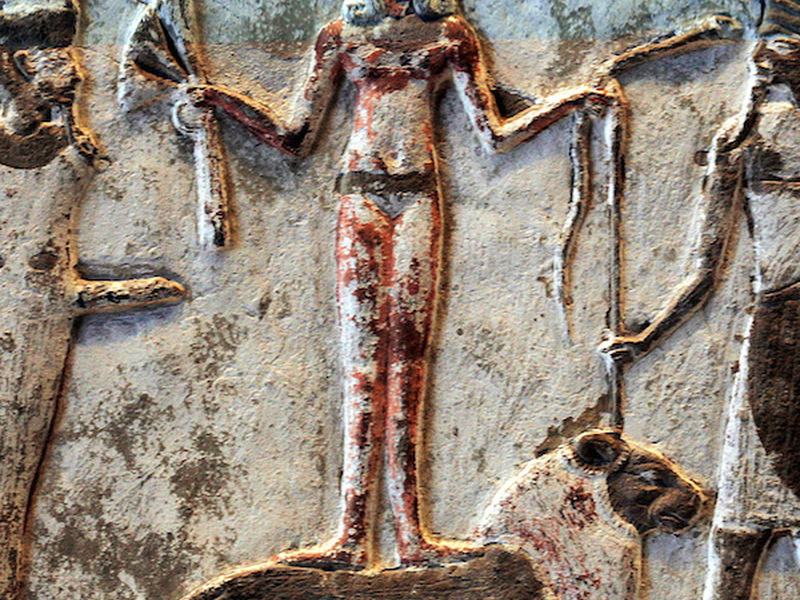
Why do so many Egyptian statues have broken noses? Julia Wolkoff summarizes the answer of Brooklyn Museum curator Edward Bleiberg. Noses protrude, and so are more apt to be knocked off accidentally, but the pattern is too consistent to be accident. Erosion could account for some, but not all. Bleiberg…

March 20, 2019
13714bedda625c2ec1816f0890ed72f4-snow-storms-image-photography
Ecclesiology

Ecclesial Ethics

Some snippets from Philip Turner's Christian Ethics and the Church . The premise of Turner's book is well summarized by a passage he quotes from Sabina Lovibond's Ethical Formation : "The ethical, let us say, pertains to what people learn to value through immersion in a community acquainted with ideas…

March 13, 2019

Nose to Nose

Levitical offerings send a "soothing aroma" ( reyach nichoach ) to Yahweh. Israel needs to produce good smells because her sin is noxious to Yahweh. When Israel rebels, His "nose burns." By slaughtering a substitute animal and turing it to smoke, Israel soothes Yahweh's hot nose. But that can't be…

March 11, 2019
Pneumatology

Reading in the Spirit

“Spiritual reading” is usually associated with patristic, monastic, and medieval modes of reading. It's fruitful, however, to shift the focus and ask what the Spirit has to do with our reading. The Spirit is the enlivening breath of God, the water of God who makes us into a fruitful garden.…

March 6, 2019
capitol-dc
Liberalism

Liberalism and Ecclesia

Liberalism is "in origin primarily a refusal of ecclesial power." So write John Milbank and Adrian Pabst ( Politics of Virtue , 31). In refusing ecclesial power, early modern political theorists renounced the arrangement of Latin Christendom. The "first polity knowing no bounds and truly based upon the rule of…

March 4, 2019

Showing page 46 of 2212

Browse by Category

In Medias Res

Your weekly digest for all things Theopolis.

Donate

Theopolis is nearly 100% donor-supported. Consider joining us on our mission.