Theopolis Logo

Writing

Explore our collection of theological essays, biblical studies, and reflections on faith and culture.

See all
tanner-mardis-xuxghzhibn4-unsplash-1-2
Biblical Studies

Tweets-turned-Notes on the Bible’s Chronology

Summary In what follows, I will consider the “year-stamps” employed in Scripture, i.e., statements of the form, “Such-and-such an event took place in the Xth year of Y.” In the process, I will suggest some ways in which the Biblical narrative might relate to events in the extra-Biblical world, though…

by James BejonJuly 16, 2019
durer-prodigal-son-2
Luke

Perspectives on the Prodigal, (Part 2)

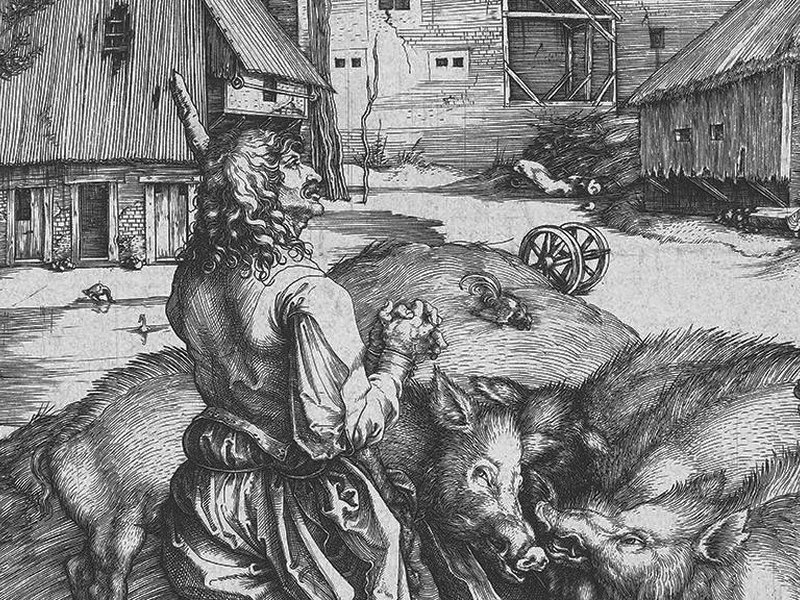
In the first essay on the parable of the Prodigal Son, I suggested that the problems commentators and others encounter in interpreting Jesus three-part parable are not accidental. These are not just problems in our ignorance of cultural background. They are intentional features of the stories —stories designed to poke…

by Ralph Allan SmithJuly 11, 2019
durer-prodigal-son-2
Luke

Perspectives on the Prodigal, (Part 1)

The story of the Prodigal Son is perhaps the most well-known story in the Bible. As others have observed, it may also be one of the most misunderstood. In two short essays, I will point out features of this story that are commonly neglected, aspects of Jesus’ parable that might…

by Ralph Allan SmithJuly 9, 2019
de-rijke-man-en-de-arme-lazarus-by-jacopo-da-ponte-16th-century
Luke

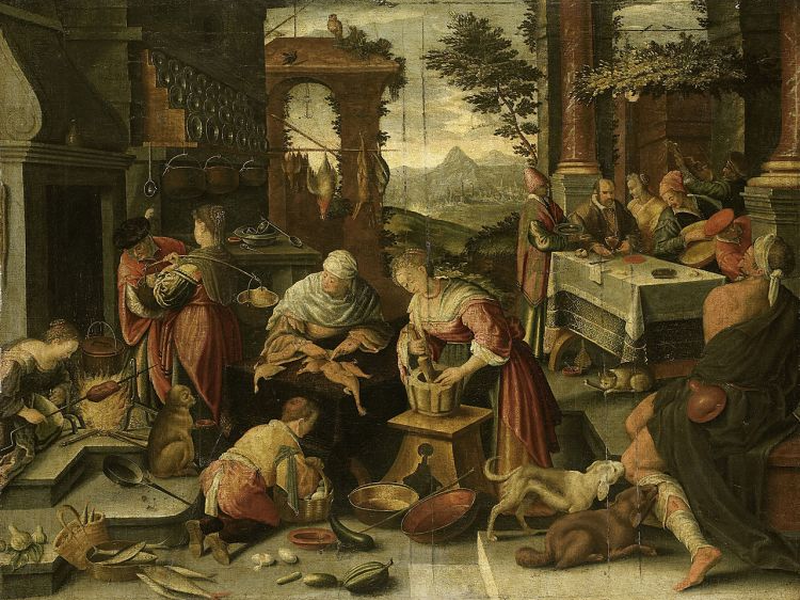
Lazarus and the Rich Man

The parable of Lazarus and the nameless rich man is not an independent story. It is part of a long context that begins in Luke 15:1, where Jesus is eating with tax collectors and sinners and the scribes and Pharisees grumble. In response to their hardheartedness, Jesus tells a three-part…

by Ralph Allan SmithJuly 4, 2019
aaron-burden-uynrnfdkjwg-unsplash
Luke

Everybody has Dropsy - Luke 14:1-24

The Bible is written so that even when a reader cannot pick up on what might be deeper or more detailed aspects of a text, there is virtually always a message to be heard. In the ancient world, where the “reader” of Scripture would likely be a church official facing…

by Ralph Allan SmithJuly 2, 2019
communion
Biblical Theology

Fruit Trees and Grain Plants

The distinction between garden (or vineyard) and field begins in Genesis 2. This relates to the ordering of the formless world. Plants of the field are contrasted with the garden planted by God in Genesis 2:5&8. Later on, under the Old Covenant the Israelites will be required to keep their…

by James B. JordanJune 27, 2019

Showing page 77 of 309

See all

Showing page 23 of 43

See all

Forgiveness

Solomon’s prayer at the temple dedication (1 Kings 8) is a prayer about prayer. It’s a prayer that future prayers will be heard. His petitions take the form: “When Israel suffers from X, and turns to You in Your house, deliver them from X.” Solomon’s petitions for future petitions repeatedly…

February 11, 2015

Priest by the Cross

A malar of Metz’s On the Liturgy , recently published in a handsome two-volume Latin-English edition in the Dumbarton Oaks Medieval Library, represents the kind of “mysteriological” piety against which modern liturgical scholars like Bouyer and Schmemann fulminated. For Amalar, every moment and movement of the liturgy symbolizes some event…

February 10, 2015

Poetics of Denunciation

In a NYRB review of Justin Steinberg’s Dante and the Limits of Law , Robert Pogue Harrison pinpoints why the Comedy is so disquieting. Steinberg’s book shows how thoroughly the Comedy is indebted to medieval conceptions of law and punishment, and thus how much Dante’s poem is an effort to…

February 10, 2015

Our Fatherless World

Dave Eggers’s latest novel takes its lengthy title from the prophet Zechariah: Your Fathers, where are they? And the Prophets, Do They Live Forever? The novel is inverted Kafka, as if K. had been able to tie down his interrogators and depose them. Thomas, a disturbed and disappointed young man,…

February 10, 2015

Disenchantment?

As Carlos Eire has documents ( War Against the Idols ), some Reformation iconoclasts were motivated by a spiritualizing piety that denied that God could be encountered in material things. Some, but not all. Some opposed images for precisely the opposite reasons. There is something of the spiritualizing tendency in…

February 9, 2015

God’s Pets

Hosea 2 offers a lovely evocation of a new exodus and new covenant. After Yahweh threatens to destroy Israel’s vines and fig trees because she has prostituted herself with the Baal’s (2:9-13), He promises to lure her into the wilderness, take her to the vineyards where she will sing the…

February 9, 2015

Showing page 465 of 2212

Browse by Category

In Medias Res

Your weekly digest for all things Theopolis.

Donate

Theopolis is nearly 100% donor-supported. Consider joining us on our mission.