Theopolis Logo

Writing

Explore our collection of theological essays, biblical studies, and reflections on faith and culture.

See all
sixteen-miles-out-al48tflf4e8-unsplash
Food

Gluttony In The Bible (As Opposed To Gluttony In The American Church)

In the Bible, fatness is such a blessing, that it is especially hard to understand why wicked men are permitted to enjoy such a state. It requires a theodicy and faith in God. Thus: “For they have no pangs until death; their bodies are fat and sleek . They are…

by Mark HorneAugust 12, 2013

jeremy-yap-j39x2xx_8cq-unsplash
How to Worship

Biblical Worship (Video with James B. Jordan)

[fve]http://vimeo.com/71901553[/fve]

by Peter LeithartAugust 8, 2013
chris-bair-ndczc5739ck-unsplash
Deuteronomy

Holy Things for Holy People

The allusion to the Exodus story is contained in the first words of Deuteronomy 14:1 — “ye are the sons of Yahweh your God” — as well as in 14:2 in the use of the technical term translated “treasured possession,” “His own possession,” “peculiar people,” “precious people,” and so forth.…

by Ralph Allan SmithAugust 5, 2013
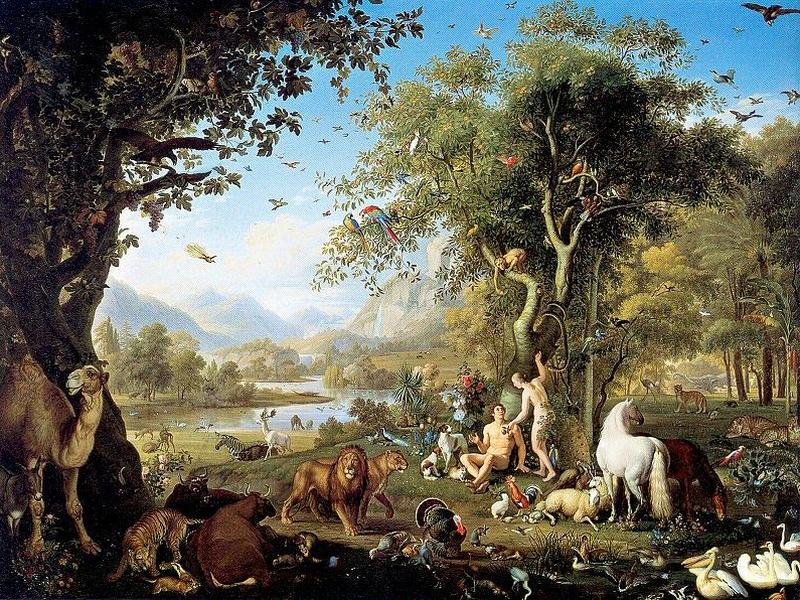
adam-and-eve-in-the-garden-of-eden-wenzel-peter
Deuteronomy

Forbidden Foods

I have argued that Deuteronomy 14:1-21 is an independent literary unit that applies the Third Word to the lives of Israelites from the time of Moses and Joshua. In this short pericope, Moses suggests broad and deep meaning by means of literary allusion to the stories of the creation and…

by Ralph Allan SmithJuly 31, 2013
david-weber-fwuo_zluhnw-unsplash
How to Worship

Pro-Sacramental Reformation

In his recently republished The New Creation , the late, delightful Herbert McCabe defends the priesthood of the plebs as roundly as anyone could want. Citing Hebrews, he claims that "there is an essential difference between the Christian community and the community of the Old Law, or any other religious…

by Peter LeithartJuly 29, 2013
eric-ward-7kqe_8meex8-unsplash
Augustine

Sexual Idolatry

Augustine famously prayed, “Our hearts our restless until they rest in You.” True indeed. Being creatures, we inherently sense our ontological poverty—our innate condition of dependence—and are compelled to find a sense of security. And it is also true—as Augustine’s own narrative painfully illustrates—that one of the things we most…

by Gerald HiestandJuly 24, 2013

Showing page 190 of 309

See all

Showing page 24 of 43

See all

Pride of life

Augustine describes “pride of life” in part as follows: “The temptation is to wish to be feared or loved by people for no reason other than the joy derived from such power, which is no joy at all. It is a wretched life, and vanity is repulsive . . .…

October 15, 2006

Eucharistic meditation

1 John 2:15: If anyone loves the world, the love of the Father is not in him. As we’ve seen this morning, John poses a stark either/or choice. Our lives are directed by our loves; what we love determines what path we take in life. Ultimately, there are only two…

October 15, 2006

Exhortation

John says, “Do not love the world or the things in the world,” and we immediately scurry around to find rationalizations and escape routes. Is John saying that cigarettes and beer and symphony orchestras and dancing and watching movies and art museums and playing video games are inherently sinful? Didn’t…

October 15, 2006
History

Urban pigs

Stallybrass and White again: “increasingly from the sixteenth century pigs were present and high visible in the city . They wandered through the streets, sometimes biting and even killing small children: in 1608 the young Sir Hugh Cholmley was attacked by a sow. A Jacobean starchmaker kept 200 pigs in…

October 14, 2006
History

Civilized savages

After a survey of the exotica on display in fairs in the 18th-19th centuries, Stallybrass and White conclude that the fairs do not, as Bakhtin argued, enact a grotesque inversion of civilized hierarchies, but instead reinforce those very hierarchies. Two passages are particularly important: “One could even mount the precise…

October 14, 2006
History

Smokin’ like a Christian

English fairs in earlier centuries displayed wares and displays from all over the world. At one there was an animal described as “a noble creature, which much resembled a Wild Hairy man” whose main skill was to doff his hat and show “his respects to the Company, and smoaks a…

October 14, 2006

Showing page 1776 of 2212

Browse by Category

In Medias Res

Your weekly digest for all things Theopolis.

Donate

Theopolis is nearly 100% donor-supported. Consider joining us on our mission.