Theopolis Logo

Writing

Explore our collection of theological essays, biblical studies, and reflections on faith and culture.

See all
chris-bair-ndczc5739ck-unsplash
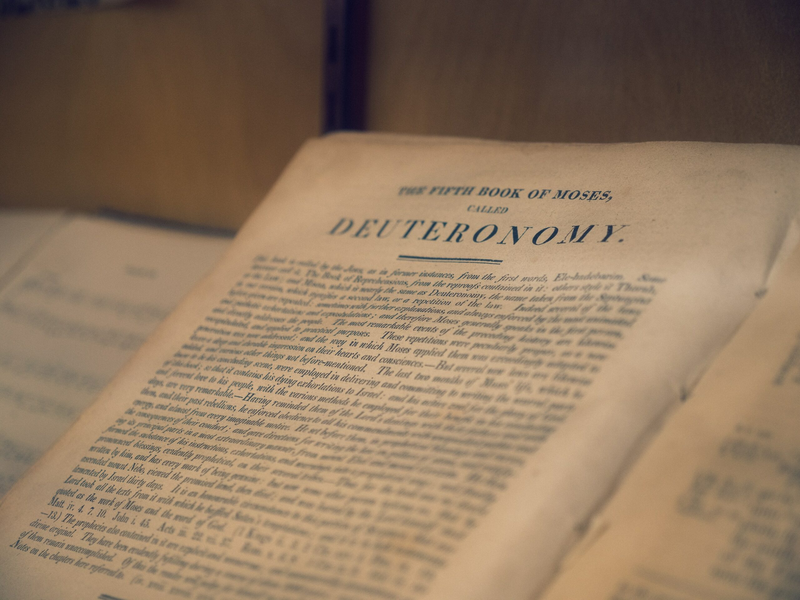
Deuteronomy

Allusive Torah

In the first part of this essay, I argued that the story of the covenant is what unifies and grounds the laws in the book of Deuteronomy. In the third section of this essay, as part of my argument that Deuteronomy 14:1-21 forms a distinct pericope, I claimed that these…

by Ralph Allan SmithJuly 22, 2013

blogging-guide-k5dy18hy5jq-unsplash
Economics

So You Wanna Be Rich?

Paul ends 1 Timothy with convicting warnings about the temptations of wealth and the danger of pursuing wealth. Godliness involves contentment and gratitude for the basics – food and clothing (1 Timothy 6:8). To reinforce the point, Paul reminds Timothy that we came into the world without anything, which is…

by Peter LeithartJuly 17, 2013
channel-82-urfja47nuhu-unsplash
Catholicism

The Festival and the Mass

Like Marx himself, the Marxist sociologist Henri Lefebvre was a firm believer in the dictum that “the criticism of religion is the premise of all criticism,” though he dissented from Marx’s prior claim that the criticism of religion is essentially complete. He includes a vicious, sarcastic, Marxist diatribe against the…

by Peter LeithartJuly 15, 2013
markus-winkler-aid-xyrtlec-unsplash
Theopolis News

Biblical Horizons Summer Conference

This week, Trinity House fellows James Jordan, Jeff Meyers, Rich Bledsoe, and Peter Leithart will be lecturing in Niceville, Florida, at the Biblical Horizons Summer Conference. Fore more information, check the Biblical Horizons web site.

by Peter LeithartJuly 15, 2013
guido-jansen-nz-zat4qiuu-unsplash
Isaiah

Combustible God

Fire seems to be a motif in Isaiah 6. The chapter opens “in the year that king Uzziah died,” and we know that Uzziah died a leper because he tried to burn incense in the temple against the law of God. And in this context, in the year king Uzziah…

by Daniel StanleyJuly 10, 2013
sixteen-miles-out-d40gdcd_-he-unsplash
Biblical Studies

Rehabilitating the Quadriga

According to the medieval theory of the "Quadriga" or the "fourfold sense" of Scripture, each passage of Scripture has four dimensions of meaning. Protestants generally cast a suspicious eye on this "method" of reading. That's a mistake. It's a handy guide to the questions we should always ask as we…

by Peter LeithartJuly 8, 2013

Showing page 191 of 309

See all

Showing page 24 of 43

See all

Knowing the “From the Begining”

1 John 2:13-14 twice says that groups within the church “know the one from the beginning.” That is a perfectly fine way to translate it, but the Greek has TON AP’ ARXES, “the from the beginning.” To whom is this phrase referring? The more awkward translation suggests the possibility that…

October 12, 2006

Overcoming the world

The sequence from 1 John 2:14-15 seems abrupt: John moves from addressing children, fathers, and young men to the warning not to love the world. But there is a link between the “overcoming” in 2:14 to the “world” in 2:15. Every other time the verb “overcome” is used in John,…

October 12, 2006
Theology

Persistence of the past

The doctrine of original sin is bound up with the conviction that the past inheres in the present, for the human race and for individuals. And for this the denial of original sin is the necessary premise for all revolutionary politics and also explains why revolutionary politics invariably ends up…

October 12, 2006
History

Political religion

Few have said it with the forthrightness of Joseph II, the Habsburg emperor from 1780 to 1790, who justified his 1781 Edict of Toleration because “with freedom of religion, one religion will remain, that of guiding all citizens alike to the welfare of the state. Without this approach we shall…

October 11, 2006
History

Enthusiasts of reason

Since Carl Becker’s book on the heavenly city of the philosophes, historians have recognized that the Enlightenment was motivated, by a secularized version of the biblical story - a fall from the Golden Age of the classical world into the darkness of superstitution and priestcraft, the gospel of Enlightenment and…

October 11, 2006
History

Cleric and Philosophe

Battle lines are never, in reality, as clean as we see them in retrospect. Some 700 of the 20,000 freemasons in pre-Revolutionary France were Catholic clergy, and Michael Burleigh reports that “revolutionaries and counter-revolutionaries, clergy and laity shared a taste for the same authors. In 1778 Marie Antoinette attended the…

October 11, 2006

Showing page 1779 of 2212

Browse by Category

In Medias Res

Your weekly digest for all things Theopolis.

Donate

Theopolis is nearly 100% donor-supported. Consider joining us on our mission.