Theopolis Logo

Writing

Explore our collection of theological essays, biblical studies, and reflections on faith and culture.

See all
eyasu-etsub-hn7scs05pju-unsplash
Leviticus

Priestly Animals

The first commandment given in the Levitical sacrificial legislation has to do with the animals appropriate to sacrifice: "When any man of you brings an offering to the Lord, you shall bring your offering of cattle ( behemah ), from the herd or the flock" (Lev. 1:2). Cattle alone were…

by Peter LeithartSeptember 3, 2024

james-coleman-hoznesupplm-unsplash
Baptism

Rome Won't Have Me

This post was originally posted in 2004 The ultimate condemnation of a position in Reformed circles is to show that it “leads back to Rome.” Indeed, one gets the feeling that Rome is a worse destination for a Presbyterian than even hell itself. The accusation of Rome stings deeply, of…

by Rich LuskAugust 27, 2024
alex-guillaume-2k4du3r1giy-unsplash-2
Biblical Theology

It's About Time

There are countless scholars who have helped me in my reading of various passages of Scripture. I have gleaned insights and keys from them that have unlocked texts that once perplexed me. However, no scholar has done so much to teach me how to read the Scripture more generally than…

by Alastair RobertsAugust 15, 2024
nicki-eliza-schinow-mg3nb1l2kdm-unsplash

The Dangers of Getting Ahead

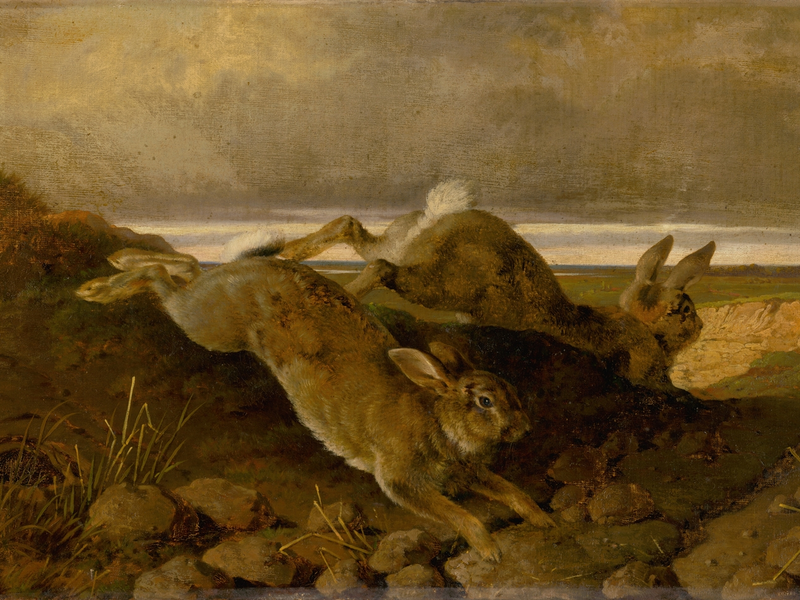
The Tortoise and the Hare is perhaps the most well-known of the Greek fables. Its story has been present in every era of human history. From the Indigenous retellings with hummingbirds and cranes to the Biblical account of David and Goliath, the basic furniture of an unlikely hero tale is…

by Garrett SoucyAugust 8, 2024
adam-and-eve-in-the-garden-of-eden-wenzel-peter
Genesis

Sinning Naked: Double the Exposure, Double the Shame

Sexual sins are perhaps the most shame-inducing sins experienced by Christians and non-Christians alike. All sins can bring shame, but sexual sins are deeply personal and affect us in profound ways. For example, adultery leaves its victim devastated by betrayal; porn addiction leaves men feeling gross, pathetic, and lazy; losing…

by Adam McIntoshAugust 6, 2024
714368ansdl
Books

Lessons from Watership Down: What Rabbits Can Teach the Church

If the mark of a good book is how many times a person can re-read it with pleasure, Richard Adams’ novel Watership Down is one of the best books of the 20 th century. I’ve taught this book in my middle school literature class for the past three years, and…

by Christian LeithartJuly 30, 2024

Showing page 18 of 309

See all

Showing page 24 of 43

See all
Philosophy

Hermeneutics v. Semiology

According to Michel Foucault, what Marx, Nietzsche, and Freud introduce is an age of interpretation. He develops one of the implications of this by suggesting there is a “fierce war” between semiology and hermeneutics, between treating words as signs and treating them as interpretations. Nietzsche in particular, Foucault claims, develops…

August 26, 2006
Literature

Shakespeare and Bible

Steven Marx’s Shakespeare and the Bible (Oxford, 2000), purports to be the “first book to explore the pattern and significance” of Shakespeare’s biblical allusions. Perhaps. The results are mixed. Each chapter of Marx’s book attempts to show structural, plot, and thematic parallels between a section of Scripture and a play…

August 26, 2006
Literature

Ubiquitous Shakespeare

Exploring Lake Superior in 1840, one Charles W Penny wrote, “We read the Bible I dare say much more than we would have done had we been in Detroit. Shakespeare was duly honoured, as he is every day when we travel. When on the water, some one of the party…

August 26, 2006

Divine Love

The Persons of the Trinity live out an eternal round of self-sacrificing love. If a proof text is needed, John 15 supplies it. 1) Jesus says, “as the Father loved Me, I have also loved you” (v. 9). Jesus’ love for the disciples is modeled on the Father’s for Him.…

August 26, 2006

Queen of the Sciences

John Stuart Mill declared at the beginning of his book on logic that “Logic is the common judge and arbiter of all particulars investigations. It does not undertake to find evidence, but to determine whether it has been found. Logic neither observes, nor invents, nor discovers; it judges.”

August 24, 2006
History

New

Hans Jonas writes in an essay on technological and scientific advance that one of the key cultural shifts in the sixteenth and seventeenth centuries was a, well, new understanding of “new,” and a corresponding revision of traditional ways of thinking about history: “A sign of this spreading mood is the…

August 24, 2006

Showing page 1804 of 2212

Browse by Category

In Medias Res

Your weekly digest for all things Theopolis.

Donate

Theopolis is nearly 100% donor-supported. Consider joining us on our mission.