Theopolis Logo

Writing

Explore our collection of theological essays, biblical studies, and reflections on faith and culture.

See all
tanner-mardis-xuxghzhibn4-unsplash-1-2
Biblical Studies

Tweets-turned-Notes on the Bible’s Chronology

Summary In what follows, I will consider the “year-stamps” employed in Scripture, i.e., statements of the form, “Such-and-such an event took place in the Xth year of Y.” In the process, I will suggest some ways in which the Biblical narrative might relate to events in the extra-Biblical world, though…

by James BejonJuly 16, 2019
durer-prodigal-son-2
Luke

Perspectives on the Prodigal, (Part 2)

In the first essay on the parable of the Prodigal Son, I suggested that the problems commentators and others encounter in interpreting Jesus three-part parable are not accidental. These are not just problems in our ignorance of cultural background. They are intentional features of the stories —stories designed to poke…

by Ralph Allan SmithJuly 11, 2019
durer-prodigal-son-2
Luke

Perspectives on the Prodigal, (Part 1)

The story of the Prodigal Son is perhaps the most well-known story in the Bible. As others have observed, it may also be one of the most misunderstood. In two short essays, I will point out features of this story that are commonly neglected, aspects of Jesus’ parable that might…

by Ralph Allan SmithJuly 9, 2019
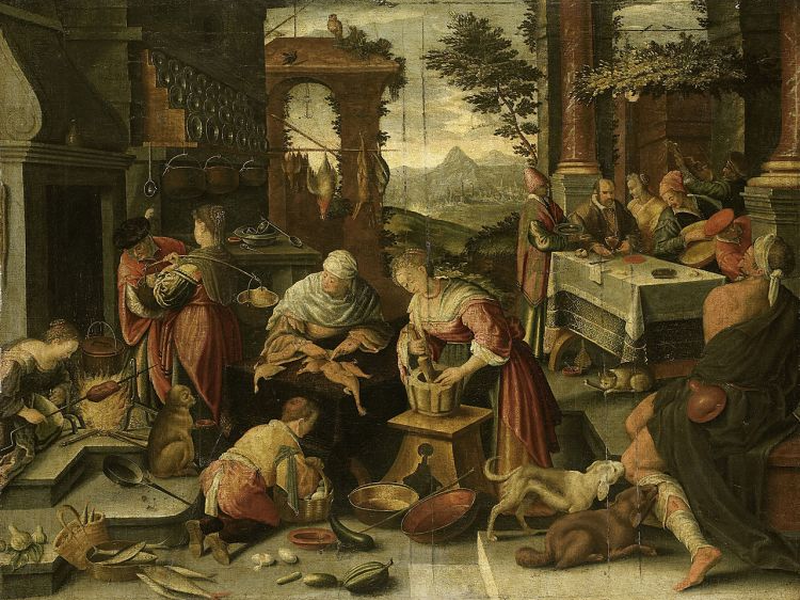
de-rijke-man-en-de-arme-lazarus-by-jacopo-da-ponte-16th-century
Luke

Lazarus and the Rich Man

The parable of Lazarus and the nameless rich man is not an independent story. It is part of a long context that begins in Luke 15:1, where Jesus is eating with tax collectors and sinners and the scribes and Pharisees grumble. In response to their hardheartedness, Jesus tells a three-part…

by Ralph Allan SmithJuly 4, 2019
aaron-burden-uynrnfdkjwg-unsplash
Luke

Everybody has Dropsy - Luke 14:1-24

The Bible is written so that even when a reader cannot pick up on what might be deeper or more detailed aspects of a text, there is virtually always a message to be heard. In the ancient world, where the “reader” of Scripture would likely be a church official facing…

by Ralph Allan SmithJuly 2, 2019
communion
Biblical Theology

Fruit Trees and Grain Plants

The distinction between garden (or vineyard) and field begins in Genesis 2. This relates to the ordering of the formless world. Plants of the field are contrasted with the garden planted by God in Genesis 2:5&8. Later on, under the Old Covenant the Israelites will be required to keep their…

by James B. JordanJune 27, 2019

Showing page 77 of 309

See all

Showing page 24 of 43

See all
Philosophy

Cinematic perception and Zeno’s arrow

Henri Bergson attempted to solve the paradox of Zeno’s arrow (which can never cover the infinite points between the bow and the target, and yet does) by calling attention to the implicit spatialization of time within the paradox. The space in which movement takes place is divisible, but the duration…

May 5, 2005
Philosophy

Cinematic perception and Zeno’s arrow

Henri Bergson attempted to solve the paradox of Zeno’s arrow (which can never cover the infinite points between the bow and the target, and yet does) by calling attention to the implicit spatialization of time within the paradox. The space in which movement takes place is divisible, but the duration…

May 5, 2005

Romans 8, continued

INTRODUCTION Paul is talking about the liberation of creation from bondage to decay and corruption into freedom. This raises the question of the time frame for the fulfillment of this prophecy. It is normally taken as a reference to the end of the world. The ?redemption of the body?E(v. 23)…

May 5, 2005

Osiander and the Reformed Tradition

Julie Canlis has a helpful article on Calvin’s response to Osiander in the International Journal of Systematic Theology (6:2 [2004]). A few points are worth highlighting: 1) She sees the response to Osiander as part of the reason why Reformed theologians tend to be skittish about talk of “participation.” Calvin,…

May 5, 2005

Justification and Reformation

In two older articles, Alister McGrath examines the sources for the Reformation doctrine of justification, covering ground also covered in his 2-volume Iustitia Dei. The first article, published in the Harvard Theological Review in 1982 (75:2, pp. 219-242) examines the evidence for claiming that the Reformation doctrine of justification was…

May 4, 2005
Theology

More on Hart, The Beauty of the Infinite

Covenant of Light. This section concludes Part I of The Beauty of the Infinite , entitled ?Dionysus Against the Crucified.?E With this section, Hart concludes his critique of classical, modern and postmodern thought, and the outlines of the Christian ontology that interrupted the history of metaphysics and that he develops…

May 4, 2005

Showing page 1984 of 2212

Browse by Category

In Medias Res

Your weekly digest for all things Theopolis.

Donate

Theopolis is nearly 100% donor-supported. Consider joining us on our mission.