Theopolis Logo

Writing

Explore our collection of theological essays, biblical studies, and reflections on faith and culture.

See all
screen-shot-2023-02-24-at-1-48-41-pm
Biblical Chronology

Chronologies and Kings: Part 3

The chronology of the Kings of Judah and Israel can be divided into three periods with clearly defined boundaries. The first period begins with the death of Solomon and the accessions of Rehoboam in the south (Judah) and Jeroboam in the north (Israel). It ends with the deaths of Ahaziah…

by James B. JordanSeptember 22, 1991

johann-walter-bantz-clv9dfjlwac-unsplash-1-5
Art

Arts & Play, Part 1

Most modern people regard the arts as essentially decorative. They are hardly very important, as compared to business, politics, or religion. Yet, from a Biblical point of view, the arts lie close to the heart of human life. The universe that God created is itself an artistic masterpiece by the…

by James B. JordanSeptember 22, 1991
6273e95e0f5ac766258d8cf3_joshuasconquestoftheland-2
Exodus

Chronologies and Kings, Part 2

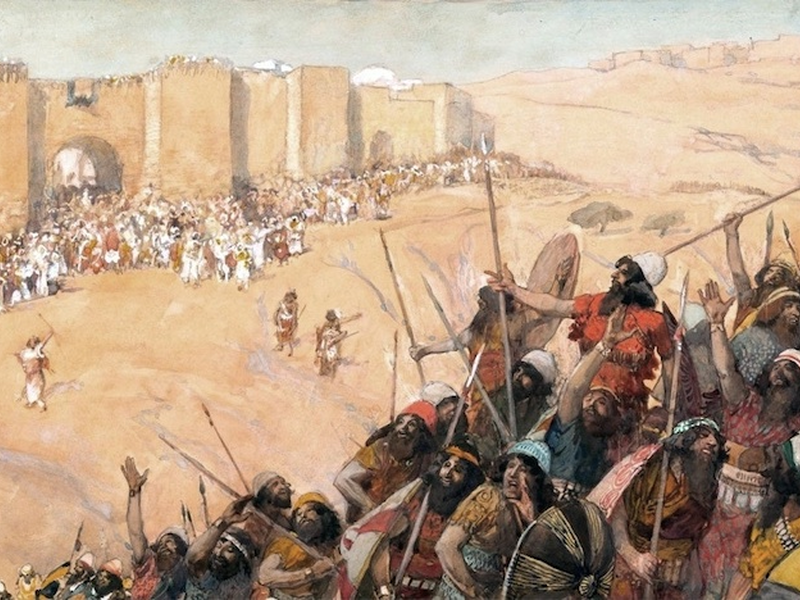
Before we move into a detailed survey of the history and chronology of the kings of Israel and Judah, let us review the chronological information that leads from creation to the kingdom. This will be helpful both to new readers of these essays, and a reminder for those who have…

by James B. JordanAugust 22, 1991
screen-shot-2023-02-24-at-1-48-41-pm
Biblical Chronology

Chronologies and Kings, Part 1

We have completed our overall survey of Biblical chronology, and now turn to a detailed examination of the Biblical information regarding the chronology of Israel’s kings. The first piece of chronological information we have regarding Israel’s kings is very cryptic, and it serves as an guide to the interpretation of…

by James B. JordanJuly 22, 1991
screenshot-2023-08-09-at-2-13-32-pm
Biblical Horizons

Book Review - To Take Place: Toward Theory in Ritual

Jonathan Z. Smith, To Take Place: Toward Theory in Ritual (Chicago: University of Chicago Press, 1987). Reviewed by Peter J. Leithart. The philosophes of the 18th century often attacked Christendom using the tools of anthropology and comparative religion. Rousseau contrasted the idyllic equality of primitive, natural peoples with the bondage…

by Peter LeithartJuly 6, 1991
screenshot-2023-08-09-at-1-47-41-pm
Biblical Horizons

Book Review: The Rise of Magic in Early Medieval Europe

Valerie I. J. Flint, The Rise of Magic in Early Medieval Europe (Princeton University Press, 1991). Reviewed by Peter J. Leithart. Valerie I. J. Flint, Professor of History at the University of Auckland, New Zealand, is refreshingly candid about her reasons for undertaking a study of The Rise of Magic…

by Peter LeithartJuly 6, 1991

Showing page 295 of 309

See all

Showing page 24 of 43

See all

God's Wounds

J ean-Louis Chretien begins his Hand to Hand with a series of meditations on the story of Jacob wrestling with God, and artistic representations of that episode. He quotes Francois de Sales, who wrote: “Our Lord may turn us and sweep us round to the left or to the right;…

February 10, 2017

Silence of Painting

I n Hand to Hand , Jean-Louis Chretien meditates on silence in painting. He doesn't simply mean that painting is a visual rather than an audible art. Instead, he argues that paintings must not only be viewed but listened to: “To say that painting is silent is to say that…

February 10, 2017

Fair Nature's Second Chance

“G iving oneself up to sleep can constitute the worst of abandonments,” writes Jean-Louis Chretien ( Hand to Hand ), “wherein we abandon another person to his solitude and his distress by withdrawing ourselves from the common world and from our community with him. Our eyelids close upon our weary…

February 10, 2017

The New (Secular) Pragmatism

P aul Collier devotes a long, provocative, stimulating TLS review to a sketch of a “new pragmatism.” The review doubles as an essay on the “future of capitalism.” Along the way, Collier discusses the problems of multiculturalism and gives qualified endorsement to nationalism. Multiculturalism must be “bounded,” partly because Western…

February 10, 2017

Authoritarian Gardeners

D avid I. Smith and Susan M. Felch ( Teaching and Christian Imagination ) want to rehabilitate the symbolism of “gardening” as a model of education. It does require rehabilitation, not least because of Rousseau, who wrote: “God makes all things good. . . . [but] man meddles with them…

February 10, 2017

Horticultural Anthropology

D avid Smith and Susan Felch devote several pages of their Teaching and Christian Imagination (129–134) to a summary of John Amos Comenius's seventeenth-century treatise on education, Great Didactic . Comenius starts where humanity starts, with Eden's garden, and reflects that the garden is not only man's original location but…

February 10, 2017

Showing page 207 of 2212

Browse by Category

In Medias Res

Your weekly digest for all things Theopolis.

Donate

Theopolis is nearly 100% donor-supported. Consider joining us on our mission.