Theopolis Logo

Writing

Explore our collection of theological essays, biblical studies, and reflections on faith and culture.

See all
shutterstock_156932447
Politics

Utopia: A Brief Critique

Utopia is often accompanied by such adjectives as impossible, unrealistic, and impractical. In spite of that, it is not so hard to find some renowned people who actually maintain that is a very helpful and practical concept. Zygmunt Bauman ( Socialism: The Active Utopia ) argues that “utopian thinking belongs…

by Bogumil JarmulakMarch 5, 2015
movie-audience
Culture

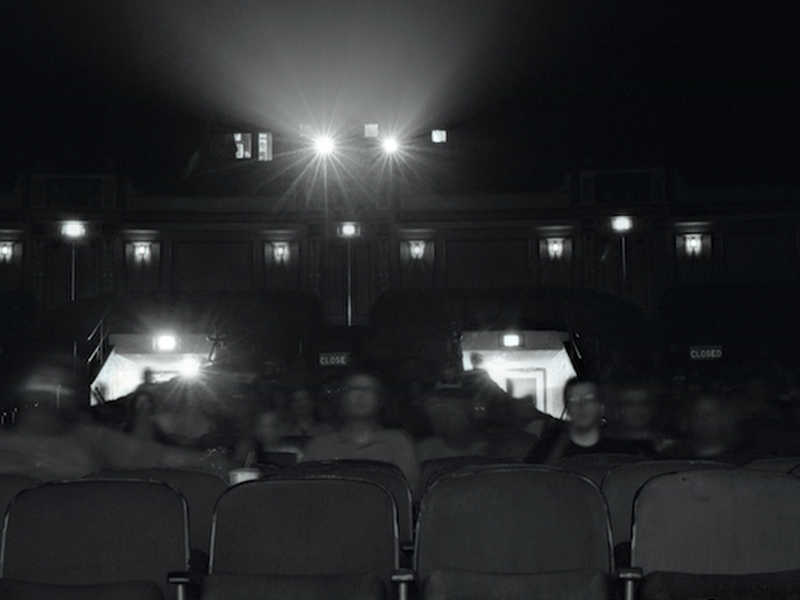
An Experiment in Film Criticism

C. S. Lewis was no fan of the cinema. He once described himself as “rather allergic to films” and after attending one he added in a letter to a friend, “Do not worry it shall not become a habit.” But though he was quick to dismiss films, his fruitful discussion…

by Remy WilkinsMarch 3, 2015
nevin
Nevin Lectures

Nevin Lectures, 2015

Noted Catholic patristic scholar, Robert Louis Wilken, delivered the second annual Nevin Lectures at Beeson Divinity School's Hodges Chapel last Friday and Saturday, February 20-21, 2015. Wilken, the Emeritus William R. Kenan, Jr., Professor of the History of Christianity at the University of Virginia, traced the influence of the writings…

by TheopolisFebruary 25, 2015
hell-bosch-2
American Culture

50 Shades of Surprise

I confess that I’m surprised by the number of Christians who are surprised by the popularity of Fifty Shades of Grey . Many are simply bewildered by the buzz the movie has generated. They shouldn’t be. This is the world we live in. More precisely, this is the country we…

by Aaron GunsaulusFebruary 24, 2015
shutterstock_222718405
Ephesians

Our New Task

The newer perspective on justification by faith advocated in various studies in Pauline Theology by N.T. Wright and others, is now utterly relevant to our historical situation. Such work cannot be merely avant garde theologizing. In Luther’s day, everyone was “in” as regards the Church and the faith. We were…

by Richard BledsoeFebruary 19, 2015
capital-second-temptation-of-christ
Church Calendar

Keep the Fast, Keep the Feast

Over the centuries, Christians have fasted for many reasons. Sometimes, the reasons have been good. The apostles and their churches fasted and prayed before selecting elders or ordaining missionaries. Christians have fasted in mourning for their sins. They have fasted and prayed to combat demons and to plead with God…

by Peter LeithartFebruary 18, 2015

Showing page 159 of 309

See all

Showing page 24 of 43

See all
Literature

Michel on Tragedy

Laurence Michel, exploring the “Possibility of a Christian Tragedy,” suggests that the creation account of Genesis opens the possibility for a “tragic sense of life.” How? “To have a world imitative of the simple perfection of God one must have multiplicity and diversity of goods. Various evils and contraries will…

January 15, 2004
Theology

Evil and Good

CS Lewis says in Pilgrim’s Regress : “Evil is fissiparous, and could never in a thousand eternities find any way to arrest its own reproduction. If it could, it could be no longer evil: for Form and Limit belong to the good.” But what then of a Good and Infinite…

January 15, 2004
Literature

Niebuhr on Christianity and Tragedy

In a chapter in Beyond Tragedy , Reinhold Niebuhr considers the relationship between Christianity and tragedy. He denies that Christianity is tragic: “The cross is not tragic but the resolution of tragedy.” In the course of his discussion he makes several intriguing points about the tragic outlook: 1) He highlights…

January 15, 2004
Literature

Weil on Tragedy

Simone Weil offered one of the most thorough-going Christian defenses of tragedy, though that defense comes at considerable cost to her orthodoxy. As Katherine Brueck points out in her study of Weil’s theory ( The Redemption of Tragedy ), Weil recognized that what was at stake in a discussion of…

January 15, 2004

More Thoughts from Segal

Some more thoughts from Segal’s book: 1) He points out the optimism that gripped Athens in the Periclean period, an optimism about the ability of human LOGOS and NOMOS to stave off the savage potential of man’s PHUSIS. But that was short-lived: The Peloponnesian wars broke out, marked by several…

January 15, 2004

civilization in Sophocles

In his study of Sophocles, Tragedy and Civilization , Charles Segal points to several Greek terms that might be translated as “civilization” and that capture various aspects of civilized life: NOMOS = the established institutions, customs, and norms of a people POLITEIA = the form of government, especially the constitutional…

January 15, 2004

Showing page 2136 of 2212

Browse by Category

In Medias Res

Your weekly digest for all things Theopolis.

Donate

Theopolis is nearly 100% donor-supported. Consider joining us on our mission.