Theopolis Logo

Writing

Explore our collection of theological essays, biblical studies, and reflections on faith and culture.

See all
tim-marshall-k2u71wv2ei4-unsplash
Apostasy

Regeneration and Lettuce

My good friend, Jason Ewert, recently posted a review of Pastor Douglas Wilson’s book, Against the Church . Jason correctly notes that Pastor Wilson’s main pastoral motivation in writing this book is to combat dead orthodoxy. Dead orthodoxy is a real problem in Reformed churches that celebrate the primacy of…

by Garry VanderveenJuly 31, 2014
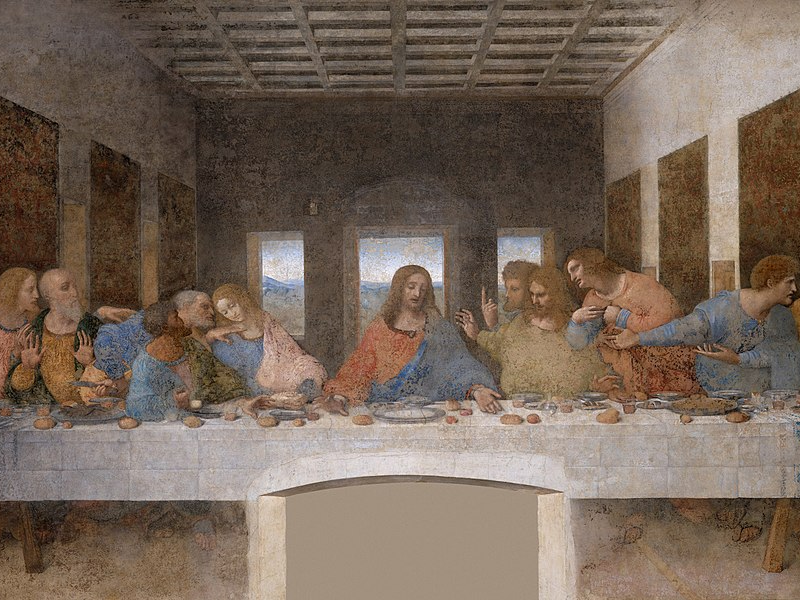
the_last_supper_-_leonardo_da_vinci_-_high_resolution_32x16-2
Eucharist

Jesus Eats First

At the church I pastor, we have four servers who distribute the communion elements to the congregation, and I distribute the elements to those in the foyer and nursery. The servers and I do not partake of the bread and wine until the congregation is served first. As this has…

by Burke ShadeJuly 28, 2014
markus-winkler-aid-xyrtlec-unsplash
Theopolis News

Church of the Present, Pastors of the Future

We at Trinity House believe that the church ought to raise and train her future pastors. Part of that training may be carried out by specialized institutions like Trinity House, but the church and her leaders are ultimately responsible for that training. To encourage churches to assume that responsibility, Trinity…

by Peter LeithartJuly 23, 2014
aaron-burden-1ebsmyrau-s-unsplash
Exodus

Mutilated Bodies

Sandra Jacobs's ​The Body as Property examines the role of physical disfigurement in the Hebrew Bible, with focus on the Torah, and more specifically on the (fictitious) Priestly document, P. After an introduction laying out a rationale for the comparative method that guides her research, she explores circumcision, the use…

by Peter LeithartJuly 23, 2014
Isaiah

Saving Judah

Yahweh saves. That’s what Isaiah’s name means, and that’s what Isaiah’s prophecy is about. Yah saves Judah when Aram and Israel pressure her. He saves Jerusalem from the Assyrian siege. He brings Judah back from the grave of Babylonian exile. But this triumphant message of Isaiah fizzles. The last few…

by Peter LeithartJuly 21, 2014
screen-shot-2019-11-12-at-5-58-16-pm
Apostasy

Apostasy and Assurance

Are apostasy and assurance mutually exclusive? Some seem to think so. But let’s consider this a bit: No Reformed man would ever say that a man who is “saved” today will be safe forever no matter what . Rather we say, “your sins are forgiven, now, walk faithfully, glorify the…

by Steve WilkinsJuly 16, 2014

Showing page 171 of 309

See all

Showing page 24 of 43

See all
Literature

Michel on Tragedy

Laurence Michel, exploring the “Possibility of a Christian Tragedy,” suggests that the creation account of Genesis opens the possibility for a “tragic sense of life.” How? “To have a world imitative of the simple perfection of God one must have multiplicity and diversity of goods. Various evils and contraries will…

January 15, 2004
Theology

Evil and Good

CS Lewis says in Pilgrim’s Regress : “Evil is fissiparous, and could never in a thousand eternities find any way to arrest its own reproduction. If it could, it could be no longer evil: for Form and Limit belong to the good.” But what then of a Good and Infinite…

January 15, 2004
Literature

Niebuhr on Christianity and Tragedy

In a chapter in Beyond Tragedy , Reinhold Niebuhr considers the relationship between Christianity and tragedy. He denies that Christianity is tragic: “The cross is not tragic but the resolution of tragedy.” In the course of his discussion he makes several intriguing points about the tragic outlook: 1) He highlights…

January 15, 2004
Literature

Weil on Tragedy

Simone Weil offered one of the most thorough-going Christian defenses of tragedy, though that defense comes at considerable cost to her orthodoxy. As Katherine Brueck points out in her study of Weil’s theory ( The Redemption of Tragedy ), Weil recognized that what was at stake in a discussion of…

January 15, 2004

More Thoughts from Segal

Some more thoughts from Segal’s book: 1) He points out the optimism that gripped Athens in the Periclean period, an optimism about the ability of human LOGOS and NOMOS to stave off the savage potential of man’s PHUSIS. But that was short-lived: The Peloponnesian wars broke out, marked by several…

January 15, 2004

civilization in Sophocles

In his study of Sophocles, Tragedy and Civilization , Charles Segal points to several Greek terms that might be translated as “civilization” and that capture various aspects of civilized life: NOMOS = the established institutions, customs, and norms of a people POLITEIA = the form of government, especially the constitutional…

January 15, 2004

Showing page 2136 of 2212

Browse by Category

In Medias Res

Your weekly digest for all things Theopolis.

Donate

Theopolis is nearly 100% donor-supported. Consider joining us on our mission.