Theopolis Logo

Writing

Explore our collection of theological essays, biblical studies, and reflections on faith and culture.

See all
jez-timms-8muutamcwu4-unsplash
Leviticus

Savage Judaism

​Should anthropological categories and tools be applied to Judaism? Seems a narrow and academic question, of interest to maybe ten people on the planet. It's one of the many virtues of Howard Eilberg-Schwartz's 1990 ​The Savage In Judaism to show that the question is a central one in the origins…

by Peter LeithartMarch 10, 2014
Leviticus

Obsessed with Sex?

Christians are often accused of being obsessed with sexual sin. Why can't two people, of whatever sex, do whatever they please in the enclosure of their own room? Who is hurt if a guy wants to get off looking at tantalizing pictures and videos on his computer? What's the big…

by Peter LeithartMarch 5, 2014
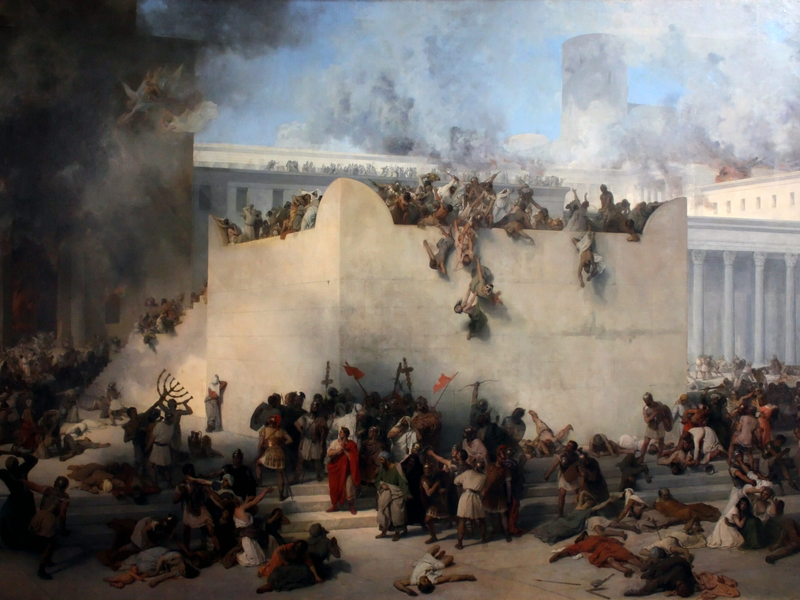
francesco_hayez_017
Mark

Binding and Loosing

“No one can enter a strong man’s house and plunder his goods, unless he first binds the strong man. And then he will plunder his house” (Mark 3:27 NKJV). Much commentary on the Revelation seems oblivious to its allusions to the Pentateuch (although there are many that do enlighten us…

by Mike BullMarch 3, 2014
Leviticus

Holiness, Ethics, Ritual

Leigh M. Trevaskis's 2011 monograph, Holiness, Ethics and Ritual in Leviticus , is an outstanding contribution to the study of Leviticus. His main thesis is directed at the world of Old Testament scholarship, in which there is a consensus that the ritual laws of Leviticus 1-16 come from a school…

by Peter LeithartMarch 1, 2014
6273e95e0f5ac766258d8cf3_joshuasconquestoftheland-2
Hermeneutics

Joshua Typology

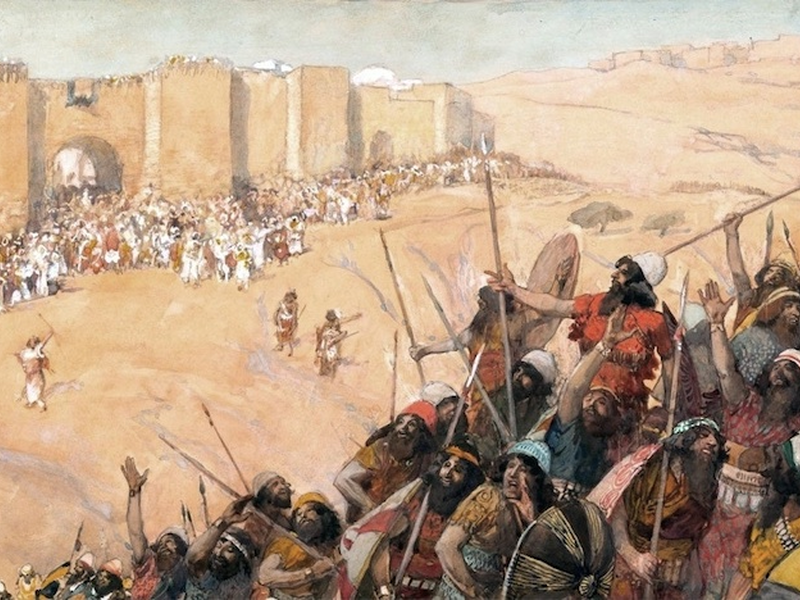
Richard Ounsworth begins his Joshua Typology in the New Testament with an excellent discussion of what he calls "ontological" typology, which he handily summarizes in four points. Typology involves "correspondences between real historical events, personalities, institutions, etc. described in scripture," a correspondence that is discerned (not created) by the reader…

by Peter LeithartFebruary 26, 2014
alfons-morales-ylswjsy7stw-unsplash-1
Theopolis News

Book Release

Baylor University Press is sponsoring a reception to celebrate the official release of Peter Leithart's Gratitude: An Intellectual History . The reception will be held at the First Things offices in Manhattan on Thursday, March 6, at 6 PM. For more details, click here .

by Peter LeithartFebruary 26, 2014

Showing page 178 of 309

See all

Showing page 24 of 43

See all
Literature

Michel on Tragedy

Laurence Michel, exploring the “Possibility of a Christian Tragedy,” suggests that the creation account of Genesis opens the possibility for a “tragic sense of life.” How? “To have a world imitative of the simple perfection of God one must have multiplicity and diversity of goods. Various evils and contraries will…

January 15, 2004
Theology

Evil and Good

CS Lewis says in Pilgrim’s Regress : “Evil is fissiparous, and could never in a thousand eternities find any way to arrest its own reproduction. If it could, it could be no longer evil: for Form and Limit belong to the good.” But what then of a Good and Infinite…

January 15, 2004
Literature

Niebuhr on Christianity and Tragedy

In a chapter in Beyond Tragedy , Reinhold Niebuhr considers the relationship between Christianity and tragedy. He denies that Christianity is tragic: “The cross is not tragic but the resolution of tragedy.” In the course of his discussion he makes several intriguing points about the tragic outlook: 1) He highlights…

January 15, 2004
Literature

Weil on Tragedy

Simone Weil offered one of the most thorough-going Christian defenses of tragedy, though that defense comes at considerable cost to her orthodoxy. As Katherine Brueck points out in her study of Weil’s theory ( The Redemption of Tragedy ), Weil recognized that what was at stake in a discussion of…

January 15, 2004

More Thoughts from Segal

Some more thoughts from Segal’s book: 1) He points out the optimism that gripped Athens in the Periclean period, an optimism about the ability of human LOGOS and NOMOS to stave off the savage potential of man’s PHUSIS. But that was short-lived: The Peloponnesian wars broke out, marked by several…

January 15, 2004

civilization in Sophocles

In his study of Sophocles, Tragedy and Civilization , Charles Segal points to several Greek terms that might be translated as “civilization” and that capture various aspects of civilized life: NOMOS = the established institutions, customs, and norms of a people POLITEIA = the form of government, especially the constitutional…

January 15, 2004

Showing page 2136 of 2212

Browse by Category

In Medias Res

Your weekly digest for all things Theopolis.

Donate

Theopolis is nearly 100% donor-supported. Consider joining us on our mission.