Theopolis Logo

Writing

Explore our collection of theological essays, biblical studies, and reflections on faith and culture.

See all
tim-marshall-k2u71wv2ei4-unsplash
Apostasy

Regeneration and Lettuce

My good friend, Jason Ewert, recently posted a review of Pastor Douglas Wilson’s book, Against the Church . Jason correctly notes that Pastor Wilson’s main pastoral motivation in writing this book is to combat dead orthodoxy. Dead orthodoxy is a real problem in Reformed churches that celebrate the primacy of…

by Garry VanderveenJuly 31, 2014
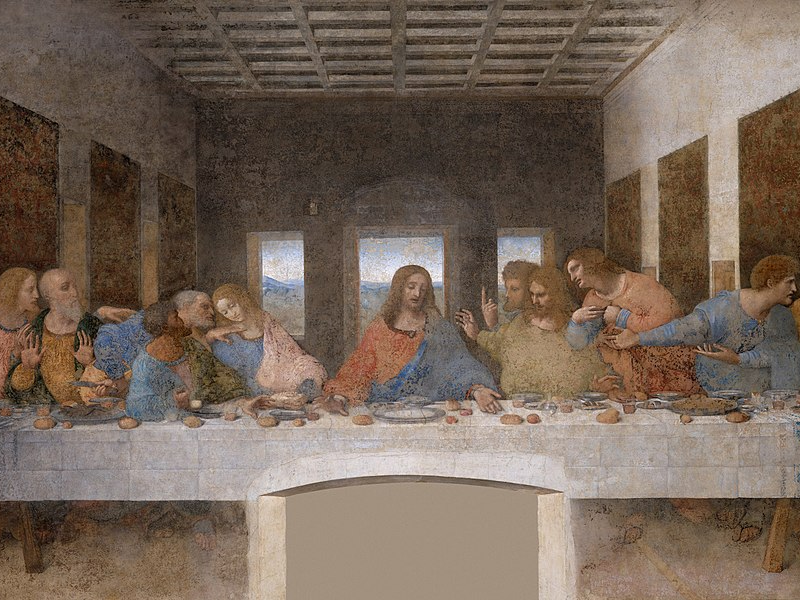
the_last_supper_-_leonardo_da_vinci_-_high_resolution_32x16-2
Eucharist

Jesus Eats First

At the church I pastor, we have four servers who distribute the communion elements to the congregation, and I distribute the elements to those in the foyer and nursery. The servers and I do not partake of the bread and wine until the congregation is served first. As this has…

by Burke ShadeJuly 28, 2014
markus-winkler-aid-xyrtlec-unsplash
Theopolis News

Church of the Present, Pastors of the Future

We at Trinity House believe that the church ought to raise and train her future pastors. Part of that training may be carried out by specialized institutions like Trinity House, but the church and her leaders are ultimately responsible for that training. To encourage churches to assume that responsibility, Trinity…

by Peter LeithartJuly 23, 2014
aaron-burden-1ebsmyrau-s-unsplash
Exodus

Mutilated Bodies

Sandra Jacobs's ​The Body as Property examines the role of physical disfigurement in the Hebrew Bible, with focus on the Torah, and more specifically on the (fictitious) Priestly document, P. After an introduction laying out a rationale for the comparative method that guides her research, she explores circumcision, the use…

by Peter LeithartJuly 23, 2014
Isaiah

Saving Judah

Yahweh saves. That’s what Isaiah’s name means, and that’s what Isaiah’s prophecy is about. Yah saves Judah when Aram and Israel pressure her. He saves Jerusalem from the Assyrian siege. He brings Judah back from the grave of Babylonian exile. But this triumphant message of Isaiah fizzles. The last few…

by Peter LeithartJuly 21, 2014
screen-shot-2019-11-12-at-5-58-16-pm
Apostasy

Apostasy and Assurance

Are apostasy and assurance mutually exclusive? Some seem to think so. But let’s consider this a bit: No Reformed man would ever say that a man who is “saved” today will be safe forever no matter what . Rather we say, “your sins are forgiven, now, walk faithfully, glorify the…

by Steve WilkinsJuly 16, 2014

Showing page 171 of 309

See all

Showing page 24 of 43

See all

Day of Wrath (Romans 2)

What about taking “day of wrath” in Romans 2 as AD 70? Some arguments: 1) Dunn lists the verses that use similar phrases for “wrath and indignation” and “tribulation and distress,” and most of them are about historical judgments on Israel. There’s a cluster of uses in Deut 28:55ff, which…

November 7, 2003
Theology

Intellectualism and Voluntarism both arise

Intellectualism and voluntarism both arise from the same theological error: from the assumption that there is some realm that is independent and autonomous. This is most obvious with intellectualism: For intellectualists, things have indepdendent value that God recognizes and evaluates. Voluntarists are, however, making the same error. They assume that…

November 6, 2003

Studebaker on Pauw

Steve Studebaker writers in the Scottish Journal of Theology (56:3) about Edwards’s trinitarian theology, and includes an extended critique of Amy Plantinga Pauw’s treatment of Edwards’s incipient “social trinitarianism.” According to Studebaker, Pauw’s analysis only works if one assumes that the history of Trinitarian theology can be sketched out as…

November 5, 2003

The Olive Tree (Romans 11)

In the same issue of JSNT, Philip Esler examines ancient oleiculture to illumine Paul’s use of the olive tree image in Romans 11. When he describes branches being grafted into an olive tree, Paul refers to a common practice. But the normal practice is to graft cultivated olive branches onto…

November 5, 2003

Acts 20:20

Jerome Neyrey has an interesting article on Acts 20:20 in the current issue of JSNT. He examines the cultural background to Paul’s use of the phrase “in public and from house to house” by examining various expressions in Greek and Latin writers that correspond to modern “public” and “private.” These,…

November 5, 2003
Literature

Modernity

To what extent is modernity merely a recovery of the tragic? Tragedy, to my knowledge, simply didn’t exist in the medieval world. Drama revived late in the medieval period, but tragedy was reintroduced by the Renaissance. In Shakespeare, the tragic is set in a larger Christian comic setting, with profoundly…

November 5, 2003

Showing page 2170 of 2212

Browse by Category

In Medias Res

Your weekly digest for all things Theopolis.

Donate

Theopolis is nearly 100% donor-supported. Consider joining us on our mission.