Theopolis Logo

Writing

Explore our collection of theological essays, biblical studies, and reflections on faith and culture.

See all
screen-shot-2022-08-04-at-9-36-57-am
Matthew

Paul Doesn't Care About Universal Individual Sinfulness or General Revelation

One reason readers assume Paul is trying to prove that all human beings are sinful is that they understand him to be arguing that no one can keep the law. That means, they think, his opponents must believe that human nature is potentially sinless. Taking Paul’s statement that, if you…

by Mark HorneJune 17, 2013

karsten-wurth-imegmbunara-unsplash
Mission

Dreams and Visions

[Note: This post was written prior to our name changing to Theopolis Institute.] What is Trinity House for? Three things: We aim to advance the reformation of the church and, through the church, to promote the renewal of culture; in furthering reformation, we aspire to be a site of fraternal,…

by Peter LeithartJune 12, 2013
sixteen-miles-out-al48tflf4e8-unsplash
Deuteronomy

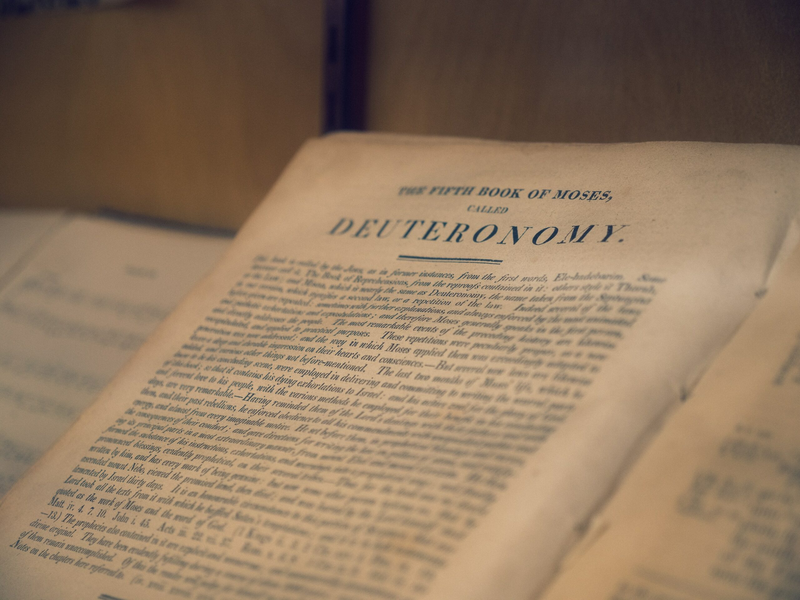
Sons to Yahweh your God!

This is the third in a series of studies of the Third Word, and especially of Deuteronomy 14. In 1979 Stephen Kaufman penned a groundbreaking essay on Deuteronomy, arguing that it was a meticulously structured and carefully composed book. In his view, chapters 12 to 26 in particular follow the…

by Ralph Allan SmithJune 10, 2013
kelly-sikkema-gpoh17dxqdm-unsplash
Romans

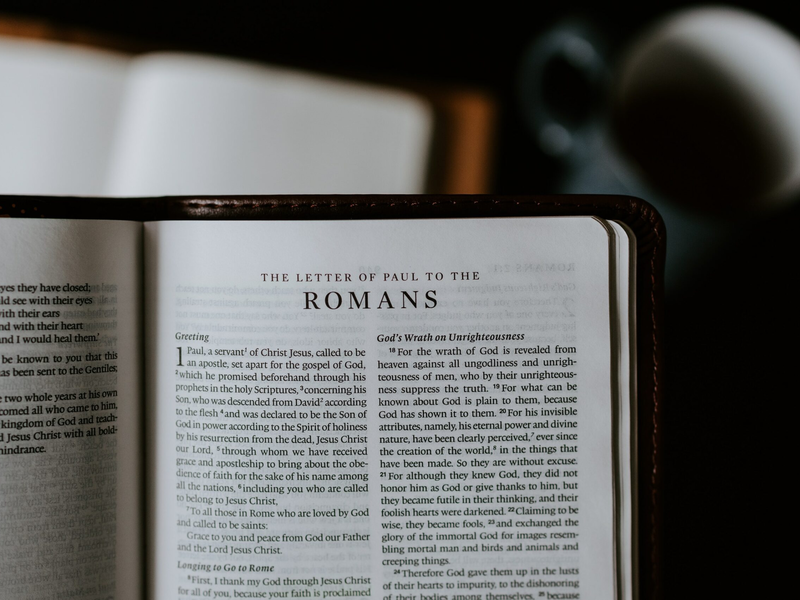
How is Wrath Revealed?

A large mistake is made in understanding Romans if one assumes that Paul is concerned with proving the fact that no one can ever live without sin—or that all attempts at obeying God’s commands are at least tainted with human sinfulness. The first problem with such an assumption is that…

by Mark HorneJune 5, 2013
chris-bair-ndczc5739ck-unsplash
Deuteronomy

The Third Word

This is the second in a series of studies on the Third Word, and especially on the food laws of Deuteronomy 14. In the second part of this series, I argue that Moses’ reworking of the Ten Words in Deuteronomy 5 includes adding nuance to the Third Word. This prepares…

by Ralph Allan SmithJune 3, 2013
yannis-papanastasopoulos-if_29sed7ta-unsplash
Culture

Turning Babel into a Beast

Recent months have brought a lively discussion of Christian participation in the culture war. On the one hand, the pro-life movement appears to be making some slow progress on the abortion issue. The trial of abortionist and serial murderer Kermit Gosnell has the potential to awaken those who are nominally…

by Joe RigneyMay 29, 2013

Showing page 193 of 309

See all

Showing page 24 of 43

See all
Eucharist

A Eucharistic Theory of Culture

The Lord’s Supper models a proper meal, but for that very reason it models a properly ordered community, the right order of human society. How we eat together, with whom we eat tells us what kind of community we are. It also presents a model of work, creativity, culture, the…

April 13, 2016

Les Stars

In a 1972 essay on Les stars , Edgar Morin explains the difference between actors and stars by referring to ancient heroic myths. Stars are heroes of adventure, action, tragedy, and love like the heroes of myths. They are “divinisee et mythique” (39). The star's mythical, quasi-divine status applies both…

April 13, 2016

Thomas, Dionysus, Scripture

In a paper on Academia.edu, Alan Darley of the University of Nottingham examines Thomas's revision of the Pseudo-Dionysian notion of hierarchy, stressing the importance of Scripture in Thomas's revisionary efforts. Along the way, following a number of recent scholars, he highlights the central role of Scripture in the Summa .…

April 12, 2016
Shakespeare

Shakespeare's Distributed Personality

Stephen Greenblatt uses the anthropological theory of Alfred Gell to explain Shakespeare's universal appeal, particularly Gell's notion of the “distributed personality”: This refers to “the ability of an artist to fashion something - Gell called it an ‘index' - that carries agency, his own and that of others, into the…

April 12, 2016

Paul's Chiastic Mission

In an essay in the 1978 collection, Perspectives on Luke-Acts , Donald Miesner explains the chiastic structure of Paul's missionary journey: A. Jerusalem to Antioch, Cyprus, Asia Minor, 12:25-13:14a B. Paul's initial address to Jews at Antioch, 13:14b-52 C. Paul is persecuted at Iconium, gives speech at Lystra, 14:1-28 D.…

April 12, 2016

Liturgical Discipleship

The liturgy provides a rich and holistic model of evangelism and discipleship, holding together dimensions of Christian living that often fly apart. The liturgy begins with a call to enter the presence of God; just so, our entry into Christ is not a product of our diligent efforts but the…

April 11, 2016

Showing page 300 of 2212

Browse by Category

In Medias Res

Your weekly digest for all things Theopolis.

Donate

Theopolis is nearly 100% donor-supported. Consider joining us on our mission.