Theopolis Logo

Writing

Explore our collection of theological essays, biblical studies, and reflections on faith and culture.

See all
tanner-mardis-xuxghzhibn4-unsplash-1-2
Biblical Studies

Tweets-turned-Notes on the Bible’s Chronology

Summary In what follows, I will consider the “year-stamps” employed in Scripture, i.e., statements of the form, “Such-and-such an event took place in the Xth year of Y.” In the process, I will suggest some ways in which the Biblical narrative might relate to events in the extra-Biblical world, though…

by James BejonJuly 16, 2019
durer-prodigal-son-2
Luke

Perspectives on the Prodigal, (Part 2)

In the first essay on the parable of the Prodigal Son, I suggested that the problems commentators and others encounter in interpreting Jesus three-part parable are not accidental. These are not just problems in our ignorance of cultural background. They are intentional features of the stories —stories designed to poke…

by Ralph Allan SmithJuly 11, 2019
durer-prodigal-son-2
Luke

Perspectives on the Prodigal, (Part 1)

The story of the Prodigal Son is perhaps the most well-known story in the Bible. As others have observed, it may also be one of the most misunderstood. In two short essays, I will point out features of this story that are commonly neglected, aspects of Jesus’ parable that might…

by Ralph Allan SmithJuly 9, 2019
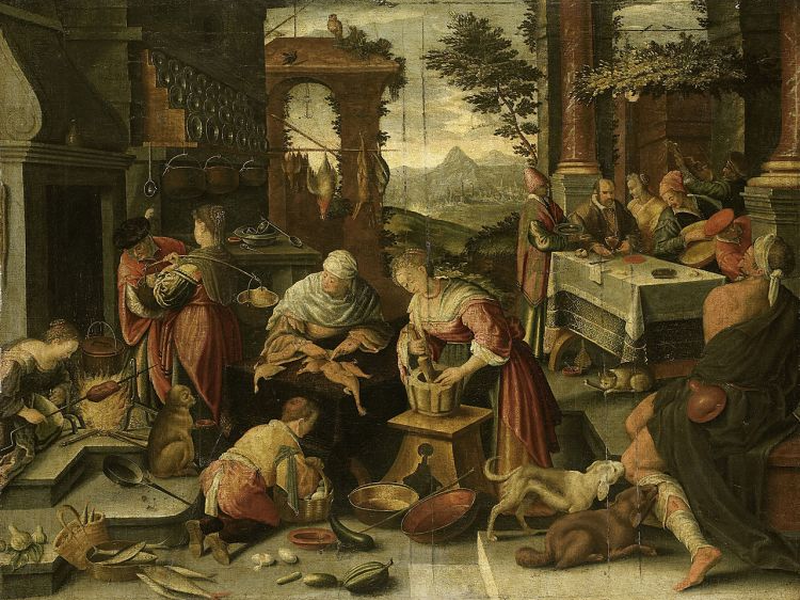
de-rijke-man-en-de-arme-lazarus-by-jacopo-da-ponte-16th-century
Luke

Lazarus and the Rich Man

The parable of Lazarus and the nameless rich man is not an independent story. It is part of a long context that begins in Luke 15:1, where Jesus is eating with tax collectors and sinners and the scribes and Pharisees grumble. In response to their hardheartedness, Jesus tells a three-part…

by Ralph Allan SmithJuly 4, 2019
aaron-burden-uynrnfdkjwg-unsplash
Luke

Everybody has Dropsy - Luke 14:1-24

The Bible is written so that even when a reader cannot pick up on what might be deeper or more detailed aspects of a text, there is virtually always a message to be heard. In the ancient world, where the “reader” of Scripture would likely be a church official facing…

by Ralph Allan SmithJuly 2, 2019
communion
Biblical Theology

Fruit Trees and Grain Plants

The distinction between garden (or vineyard) and field begins in Genesis 2. This relates to the ordering of the formless world. Plants of the field are contrasted with the garden planted by God in Genesis 2:5&8. Later on, under the Old Covenant the Israelites will be required to keep their…

by James B. JordanJune 27, 2019

Showing page 77 of 309

See all

Showing page 24 of 43

See all

City of Gems and Song

In her contribution to Envisaging Heaven in the Middle Ages , Beverly Mayne Kienzle summarizes Hildegard of Bingen's understanding of heaven and of the new Jerusalem. For Hildegard, “Jerusalem represents the vision of peace and salvation, the final resting place for those who perform good works in this life.” She…

January 13, 2016

Two Idolatries

In a 1998 article in VT, Giancarlo Biguzzi argues that John describes two different forms of idolatry in the book of Revelation. The first is the traditional idolatry of idols; the second is the beast idolatry that is the focus of the book. John “speaks explicitly of that given to…

January 13, 2016

Superheroes and Modernity

“Faster than a speeding bullet, more powerful than a locomotive, able to leap tall buildings in a single bound.” The comparisons are not random, argues Aldo Regalado in Bending Steel : “By measuring Superman’s powers against those of the bullet, the train, and the skyscraper, these phrases offer clues that…

January 13, 2016

Christless Worship?

In a recent article, Loren Stuckenbruck makes this striking comment about the heavenly worship of Revelation 4: “John’s vision of a ‘Christ-less' worship in chapter 4 is so different from chapter 5; indeed, it is different from the visions described in the rest of the book in which Jesus plays…

January 12, 2016

Rodin and Tradition

The last time we had a Rodin revival was during the 1960s, writes Jed Perl. He seemed to capture the revolutionary 60s “ambiguous, contradictory, and conflicted” relation to tradition. Rodin is enjoying something of a revival again today, and Perl thinks it is for much the same reasons.” Despite his…

January 12, 2016

Writtenness

Near the end of her book on The Heavenly Book Motif , Leslie Baynes notes the “negative attitude about writing that Plato’s Socrates expresses in the Phaedrus ” is absent from early Christianity. For early Christians, “Words are ephemeral and disappear as soon as they are spoken, but writing remains.…

January 12, 2016

Showing page 333 of 2212

Browse by Category

In Medias Res

Your weekly digest for all things Theopolis.

Donate

Theopolis is nearly 100% donor-supported. Consider joining us on our mission.