Theopolis Logo

Writing

Explore our collection of theological essays, biblical studies, and reflections on faith and culture.

See all
aaron-burden-h8s0pf2rcqs-unsplash
Galatians

The Restoration of the Galatians

While controversies over the writings of Paul continue in various corners of the intellectual globe, the word of God given through Paul and his scribe and all of the church’s interpreters and translators over the last two millennia is still readily available to the lofty and the lowly. Paul, as…

by Grace LangnessMarch 25, 2013

kiwihug-l4gw27xzn1i-unsplash
Deuteronomy

Law and History: How to Read the Law of Moses (Part 2)

The second in a series of studies in Deuteronomy. Deuteronomy 22:30: A man shall not take his father’s wife, and shall not uncover his father’s wing (Hebrew: kanaf ). There are a number of unusual features in this law that mark it out from the previous context, indicating that it…

by Ralph Allan SmithMarch 20, 2013
200403-moss-pilate-tease_pncfq5
History

Victimhood and the Gospel

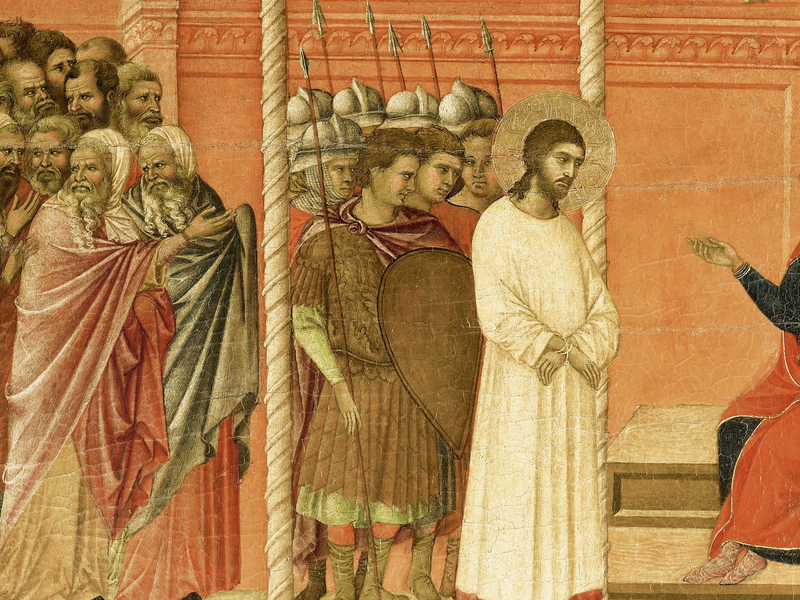
The texts of Christianity have been slowly at work, under the power of the Holy Spirit for 2000 years now. If we could be magically transported back into the world of two millennia ago, modern Americans would be shocked at the cruelty of that world. There was no concern for…

by Richard BledsoeMarch 18, 2013
aaron-burden-1ebsmyrau-s-unsplash
Luke

The Dysfunctional Family of the Gadarene Madman

The Story of the Gadarene Madman is told in all three synoptic Gospels (Matthew 8:28-34, Mark 5:1-20, Luke 8:26-37). Jesus ventures into a Gentile area when He passes over the Sea of Galilee. Upon disembarking from his boat, he is immediately met by a demon-possessed madman. Upon meeting Jesus, he…

by Richard BledsoeMarch 13, 2013
aaron-burden-1ebsmyrau-s-unsplash
Deuteronomy

Law and History: How to Read the Law of Moses

Part 1 of a multi-part series of studies on Deuteronomy 22:30-23:8. Eric Auerbach, in his classic work on Western literature, devotes his first chapter to contrasting Homer with the Bible. Of Homer, he writes of the “need of Homeric style to leave nothing which it mentions half in darkness and…

by Ralph Allan SmithMarch 12, 2013
markus-winkler-aid-xyrtlec-unsplash
Theopolis News

James Jordan in Korea, Japan

Trinity House Fellow James B. Jordan will be a speaker at an International Conference on Biblical Symbolism that will be held in Seoul on Monday, May 27 in 2013. He will address "The Importance of Biblical Symbolism and Symbolic Interpretation of the Bible." The conference will have three other speakers…

by Peter LeithartMarch 9, 2013

Showing page 197 of 309

See all

Showing page 24 of 43

See all

Monster to Music

In Rune 40 of the Finnish epic, Kalevala , the hero, Wainamoinen, is sailing with his friends to Pohjola, where he intends to recover the Sampo, a talisman of good luck and extraordinary, mysterious power. No one today quite knows what the Sampo was, but many of the episodes of…

April 28, 2015

Chaucer and the Greeks

Chaucer, like Shakespeare after him, set some of his poems in ancient Greece. The “Knight's Tale” takes place in Athens, ruled by the same “Duke” Theseus who rules Athens in Midsummer Nights Dream . Troilus and Cresyde is a Trojan love tragedy. Neither of these works, however, shows much deep…

April 28, 2015

Greece in the English Renaissance

According to C. S. Lewis ( English Literature in the Sixteenth Century , 27-28), English humanists were most interested in style, but the style was mostly Latin: “Greek was given abundance of ‘mouth honor,’ but only the minor Greek authors (Plutarch, Heliodrous, Chilles Tatius, the Anthology) were really relished. Greek…

April 28, 2015

Make Love and War: The Knight's Tale

Emily, the lady-love of Chaucer's “Knight's Tale,” the first of the Canterbury Tales, appears in a garden, and the poet describes her as if where were part of the garden. She is Eve in Eden. But this is no Edenic world. The men who see her are locked out of…

April 28, 2015

Universal Tragedy

Tragic stories are fall stories. Whether through moral wrong or through some inadvertent hamartia , the tragic hero falls from a high place. Others are engulfed in the tragedy to one extent or another, but not everyone. Those who watch can experience the catharsis of pity and fear by watching…

April 28, 2015

Invention of Allegory

C S. Lewis describes the formation of medieval allegorism in his classic Allegory of Love . He begins by distinguishing between an allegorical and a sacramental or symbolic turn of mind. Allegory begins, he says, with “an immaterial fact, such as the passions which you actually experience” and finds ways…

April 27, 2015

Showing page 434 of 2212

Browse by Category

In Medias Res

Your weekly digest for all things Theopolis.

Donate

Theopolis is nearly 100% donor-supported. Consider joining us on our mission.