Theopolis Logo

Writing

Explore our collection of theological essays, biblical studies, and reflections on faith and culture.

See all
tianyi-ma-wionhd_zyi4-unsplash-1
Technology

Simulation as Inoculation

Every advent of new media creates the justifiable reaction from some that the necessarily accompanied amputation may not be worth the extension made possible by the new tools. This is not unique to the Digital Age. Lamoignon Malesherbes, the French politician who was counsel for the defense of Louis XVI,…

by Garrett SoucyApril 2, 2024

kevin-butz-ona0c3vqoae-unsplash
Eschatology

Reject Optimism

A response to Gage Crowder's " The Hole in our Hope ?" Already, the first pages of the Bible promise a bright future. The story starts with the creation of heaven and earth, where heaven is perfect, but the earth is in a state of formless emptiness. Yet, God takes…

by Bogumil JarmulakMarch 27, 2024
kelly-sikkema-aageorr0iqs-unsplash
Eschatology

The Hole in our Hope? A Rejoinder

A rejoinder to Bubu Jarmulak's essay, " Embrace Pessimism ." Whereas calumnious critiques are reflections of more on the critic than the work criticized, good critiques are always opportunities for reassessment and improvement if they are received as such . Since its renaissance, the biblical doctrine of postmillennialism—or “optimistic eschatology,”…

by Gage CrowderMarch 26, 2024
k-mitch-hodge-ljyzwxftv44-unsplash
Biblical Studies

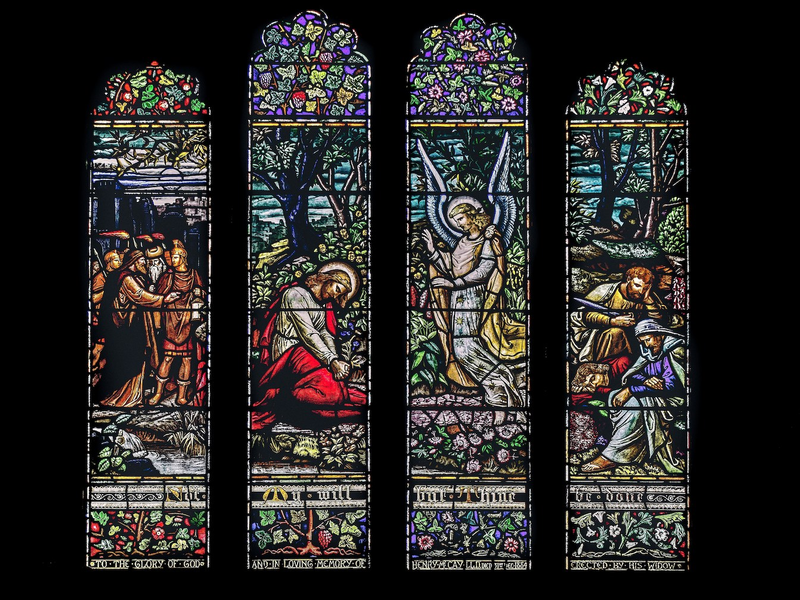
Jesus Did Not Pray to Avoid the Cross at Gethsemane

Several decades ago, a pastor (and friend) mentioned in passing at one of our regular breakfasts together that he wasn’t satisfied with the usual reading of Jesus’s prayer in Gethsemane, the usual reading being that Jesus asked the Father to avoid the Cross at Gethsemane. We turned to the passage,…

by James R. RogersMarch 19, 2024
alexandre-dinaut-alh1npgebd4-unsplash
Church Music

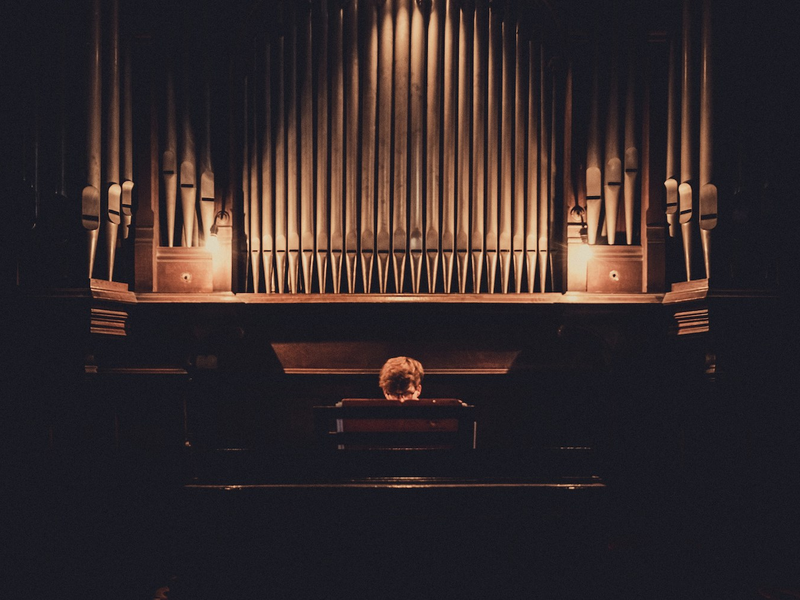
Holy Toledo: A Critique of Eclecticism

On May 21, 1604, the cathedral of Toledo in Spain held job interviews for the post of choirmaster, the head of music at the church. The position had been vacated when the previous occupant, Alonso Lobo, was poached by the nearby cathedral of Seville, and Toledo needed a replacement who…

by John AhernMarch 5, 2024
kelly-sikkema-ggs0_g6wi-i-unsplash
Covenant

The Docetic Covenant and Phantom Church Membership

Imagine — counterfactually: on the night he was betrayed, the Lord Jesus held up an empty hand and said, ‘This is the blood of the covenant poured out for you. Drink of it.’ But there was no cup, no wine, nothing. If there’s no sign of the covenant, is there…

by John CarpenterFebruary 27, 2024

Showing page 22 of 309

See all

Showing page 25 of 43

See all
Philosophy

Mead again

Mead says clock time and calendar time is time only “in a manner of speaking.” He also argues that clock and calendar time is not “absolute” but relative to one’s frame of reference. True that, as my kids say: “Monday” spells gloom within the framework of a certain organization of…

June 19, 2008
Philosophy

Abstract time?

George Herbert Mead focused his thought on temporality (especially in Philosophy of the Present ), and particularly on “time in” events and roles rather than time as a background of events. Time in the strictest sense is the moment of present emergence that reflects into the past and changes its…

June 19, 2008
Science

Scientific laws

Nobel chemist Ilya Prigogine’s work on dissipative structures, complex systems, and irreversibility, Barbara Adam argues, not only challenged particular scientific laws but the classical notion of a scientific law. In classical physics, to arrive at a law was to arrive at a timeless substructure of natural reality. Adam summarizes the…

June 19, 2008
Philosophy

Clock time

Barbara Adam says that the time of clocks is “an idea in practice,” and elaborates: “as a material expression of a particular understanding of the natural world, in which time is conceptualised through motion without change, as a spatial quantity which is infinitely divisible into units, which can be numerically…

June 19, 2008
History

Monastic time

Since Lewis Mumford and Max Weber, historians and sociologists have recognized the importance of the Benedictine monastery in the development of time-keeping, scheduling, and Western notions of time in general. Zerubavel notes that in developing their regulated common life, the Benedictines deliberately broke with the natural and temporal rhythms of…

June 18, 2008
History

Private and public time

We’re used to thinking of privacy in terms of protected spaces, and often hear comments about how isolated individuals and families are in modern society. A guy opens his garage door remotely so his Lexus can slip into the garage, and the door is closed before he’s out of the…

June 18, 2008

Showing page 1503 of 2212

Browse by Category

In Medias Res

Your weekly digest for all things Theopolis.

Donate

Theopolis is nearly 100% donor-supported. Consider joining us on our mission.