Theopolis Logo

Writing

Explore our collection of theological essays, biblical studies, and reflections on faith and culture.

See all
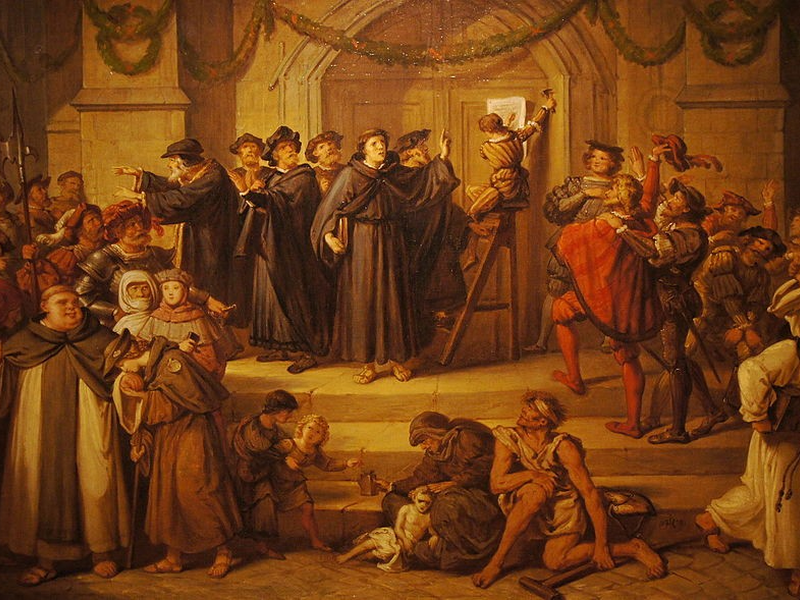
der_anschlag_von_luthers_95_thesen-1024x589
Church Calendar

Five Misconceptions of Reformation Day

For many people the date October 31 is significant not only for being the Eve of All Saints (All Hallows Eve, Halloween) but as the day in 1517 when Martin Luther nailed his 95 theses to the door of the Castle Church in Wittenburg. These theses were a list of…

by Timothy LeCroyOctober 31, 2017

sacre-bleu-r__kixb0i5m-unsplash
Church Calendar

Concerning Halloween

It has become routine in October for some Christian schools to send out letters warning parents about the evils of Halloween, and it has become equally routine for me to be asked questions about this matter. "Halloween" is simply a contraction for All Hallows’ Eve. The word "hallow" means "saint,"…

by James B. JordanOctober 26, 2017
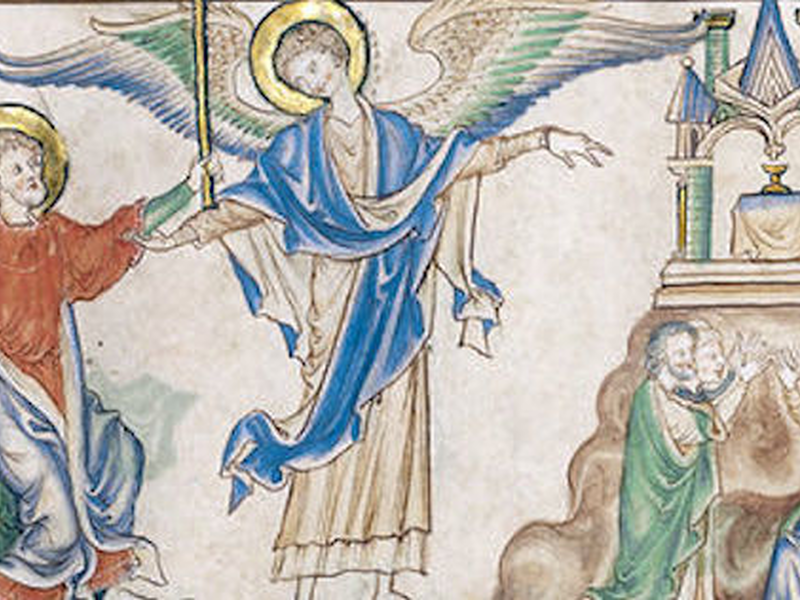
revelation-john-with-rod
Revelation

Preaching, An Art of Division

The following is an excerpt from Peter Leithart's forthcoming two-volume commentary on Revelation (T&T Clark). Y ou must prophesy again concerning many peoples and nations and tongues and kings,” a voice tells John (Rev. 10:11). Then someone gives him a “reed like a rod” and instructs him to measure (11:1).…

by Peter LeithartOctober 24, 2017
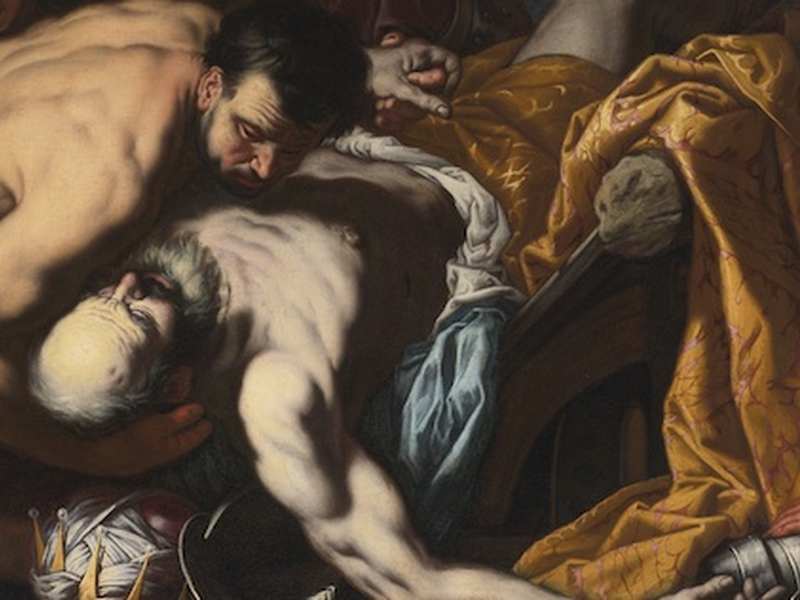
josiah-death

Back To Egypt

Josiah is an ideal Davidic king in many ways. He not only “did right,” but he “walked in the ways of his father David” and “did not turn aside to the right or to the left” (2 Chronicles 34:2). At the age of 16, he began to seek Yahweh, and…

by Peter LeithartOctober 19, 2017
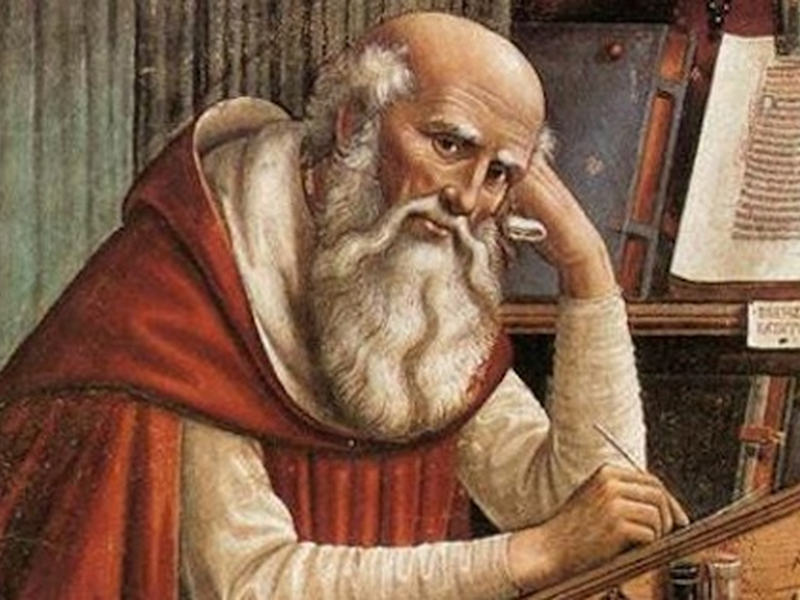
augustine
Augustine

Augustine and the Music of Time

One of the best discussions of Augustine’s views on time comes from Jeremy Begbie’s Theology, Music, and Time (ch. 3). Following Paul Ricoeur, Begbie claims that Augustine’s distentio “is conceived as the three-fold present, and the threefold present as distentio . The distentio consists in the non-coincidence of the mind’s…

by Peter LeithartOctober 17, 2017
img_1043
How to Worship

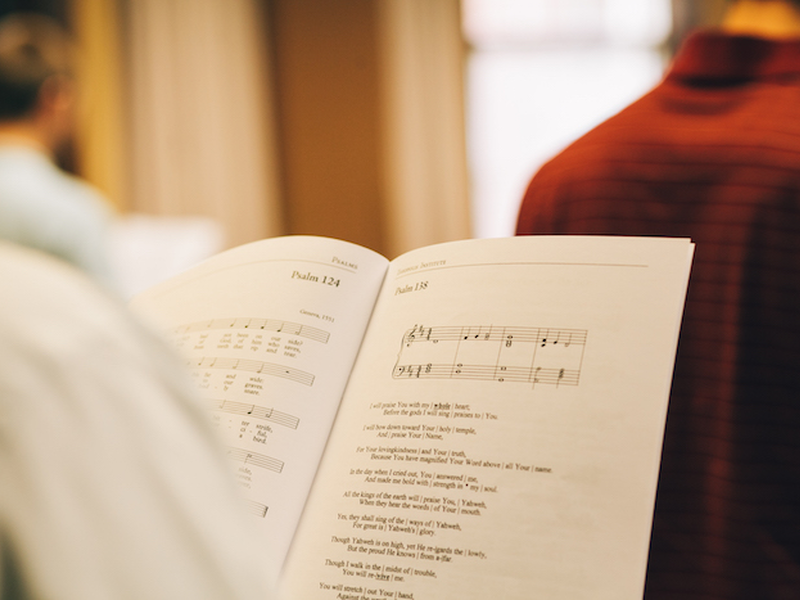
The Psalter Should be Woven into the Fabric of Worship

This has always been the position of the Christian Church, and from an historical perspective the present situation in evangelicalism is appalling. The early liturgies of the Church, which are still used in Episcopal and Lutheran worship, are laced with psalm phrases. The early hymns, such as the Te Deum…

by James B. JordanOctober 12, 2017

Showing page 104 of 309

See all

Showing page 25 of 43

See all

Class consciousness

Lawrence Stone records the following in his classic Crisis of the Aristocracy : “So deep [was] feeling of a fundamental distinction of ranks that gentlemen did not hesitate to behave in ways which would today be considered base and even cowardly. When Lord Herbert of Cherbury was shipwrecked at Dover…

August 9, 2006

Death of the author

A hypothesis to explore: What is the connection between the postmodern “death of the author” and higher critical methods of biblical interpretation? Did the dissolution of the text in biblical studies contribute to a dissolution of the author in texts generally? To what extent is Wellhausen responsible for Barthes and…

August 9, 2006

Type and Antitype

At times, I’ve felt that my polemics against semi-marcionitism in sacramental theology and hermeneutics finds no actual targets. And then I read something like this. In his book on hermeneutics, Louis Berkhof characterizes the difference between type and antitype: “The one represents truth on a lower, the other, the same…

August 9, 2006
History

Left to Right

Butler cleverly suggests that postmodernism’s leftism ends up underwriting rightist politics: “a left-inspired distrust of authority . . . makes recognition of difference possible, and yet those who are perhaps most in favor of leaving differently defined groups in isolation, to compete and fight it out, are those on the…

August 9, 2006
History

Liberal to postmodern

Poor Christopher Butler: He really doesn’t like postmodernism, but he keeps saying that postmodernism at its most sane is just repeating what liberals have always believed and doing what liberals have always done. Postmodernists challenge “the boundaries of our social roles,” and liberals join in; in fact, “the postmodernist deconstructive…

August 9, 2006
Politics

Discourses of power

Postmodernists claim that discourses are inevitably exercises of power. To theorize is to classify, and classification, well, puts things in classes, asserts authority over them. Butler offers this example: “You believe what the young surgeon tells you, and so you give him permission to anaesthetize you, cut you up, and…

August 9, 2006

Showing page 1815 of 2212

Browse by Category

In Medias Res

Your weekly digest for all things Theopolis.

Donate

Theopolis is nearly 100% donor-supported. Consider joining us on our mission.