Theopolis Logo

Writing

Explore our collection of theological essays, biblical studies, and reflections on faith and culture.

See all
woman-bw
Grace

Never Be Dismayed

I'm afraid of messing up. Not just of messing up in general, but of messing this up—the big This that is the story that is my life, the story that God is attempting to tell with me as His material. The question casts its shadow over all my decisions. Can…

by Leta SundetOctober 6, 2015
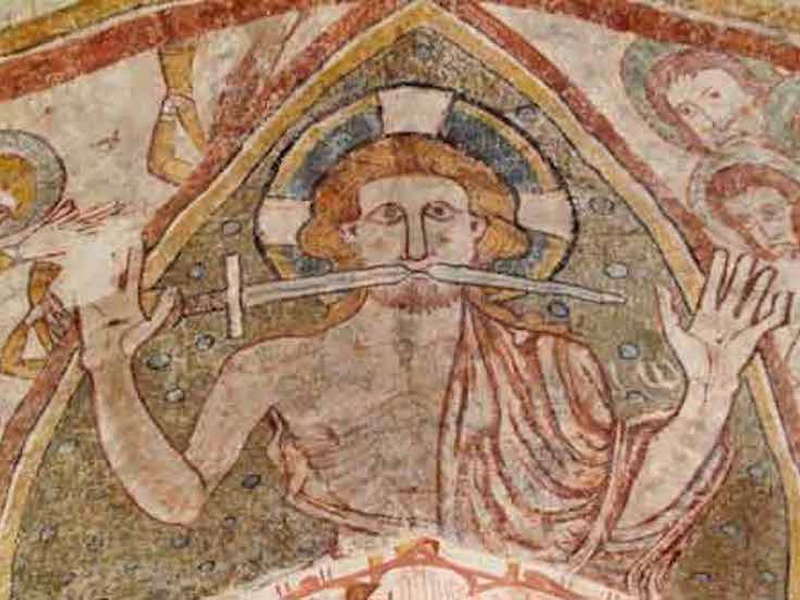
jesus-with-sword
Revelation

Greater Phinehas

Jesus’ letter to Pergamum mentions Balaam and Balak (Revelation 2:14), and that is a signal that the whole message is running along the lines of Numbers 22-25. The death of the high priest is a sacrificial moment in the life of Israel. According to the rules of the cities of…

by Peter LeithartOctober 1, 2015
marriage
Marriage

The Glory of Self-Giving: A Wedding Homily

As you come to be joined in marriage today, I want to take a moment to focus on one important dimension of what it means to be married as Christians: that is as those who know Jesus and are being made into His likeness. This is a glorious day, full…

by Joshua AppelSeptember 29, 2015
jesus-centurion
Authority

Authority and Faith

When Jesus was entered into Capernaum, there came unto him a centurion, beseeching him, saying, “Lord, my servant lieth at home sick of the palsy, grievously tormented.” Jesus saith unto him, “I will come and heal him.” The centurion answered and said, “Lord, I am not worthy that thou shouldest…

by Lindsey TollefsonSeptember 24, 2015
creation-eve-2
Genesis

The Two Shall Become One Flesh: A Wedding Homily

Philosophers have measured mountains, Fathom'd the depths of seas, of states, and kings, Walk'd with a staff to heaven, and traced fountains But there are two vast, spacious things, The which to measure it doth more behove: Yet few there are that sound them; Sin and Love. The Agonie –…

by Joshua AppelSeptember 22, 2015
john-baptist-pointing
Luke

Of Sandals and Heroes

The third chapter of Luke famously opens with a list of mighty men, seven mighty men, potential heroes of the Mediterranean world. Beginning with Tiberius Caesar and Pontius Pilate, passing on to Herod the Tetrarch and his brothers, and ending with two High Priests, Luke says that the word of…

by Toby SumpterSeptember 17, 2015

Showing page 143 of 309

See all

Showing page 25 of 43

See all
Theology

Grace and nature

According to Fergus Kerr, it was Bonaventure, not Thomas, who first employed the axiom “grace does not destroy nature, but perfects it,” in his commentary on Peter Lombard’s Sentences.

March 31, 2006
Politics

Neutral public space

Markus wants to distinguish between the fact that people who act in the public realm always act with ultimate ends in view, and that their actions are either moral or immoral from the notion that there is a neutral public space. The public sphere, he claims, shouldn’t be thought of…

March 30, 2006
History

Constantinianism and Protest

RA Markus (Christianity and the Secular) argues that as the church celebrated the triumph of Christianity in the fourth century, they also wanted to maintain their continuity with the church that gave them birth - the persecuted church of the martyrs: “The great need felt by Christians of the post-Constantinian…

March 30, 2006
Politics

Two Modes of Secularism

Charles Taylor has suggested that secularism was an “exit strategy” from religious conflict. There were two exit strategies. In the summary by RA Markus, “The first, ‘the common ground strategy,’ assumes a certain range of beliefs shared by all Christians (or all theists) and minimises or eliminates confessional differences that…

March 30, 2006
Politics

Locke on religion

John Locke drew up the basic contours of the modern conception of religion as internal and private in his “Letter Concerning Toleration.” He made a sharp distinction between religious and civil realms: “The end of a religious society, as has already been said, is the public worship of God, and,…

March 30, 2006
Theology

Aquinas on Gratitude

Comments primarily on Aquinas on Gratitude/Ingratitude (primarily ST, II-II, qs 106-7). Aquinas describes gratitude as a virtue “annexed” to justice, and so to understand his discussion of gratitude, we must get some handle on what he means by justice. In ST II-II, q. 58, he describes justice as a virtue.…

March 30, 2006

Showing page 1864 of 2212

Browse by Category

In Medias Res

Your weekly digest for all things Theopolis.

Donate

Theopolis is nearly 100% donor-supported. Consider joining us on our mission.