Theopolis Logo

Writing

Explore our collection of theological essays, biblical studies, and reflections on faith and culture.

See all
tanner-mardis-xuxghzhibn4-unsplash-1-2
Biblical Studies

Tweets-turned-Notes on the Bible’s Chronology

Summary In what follows, I will consider the “year-stamps” employed in Scripture, i.e., statements of the form, “Such-and-such an event took place in the Xth year of Y.” In the process, I will suggest some ways in which the Biblical narrative might relate to events in the extra-Biblical world, though…

by James BejonJuly 16, 2019
durer-prodigal-son-2
Luke

Perspectives on the Prodigal, (Part 2)

In the first essay on the parable of the Prodigal Son, I suggested that the problems commentators and others encounter in interpreting Jesus three-part parable are not accidental. These are not just problems in our ignorance of cultural background. They are intentional features of the stories —stories designed to poke…

by Ralph Allan SmithJuly 11, 2019
durer-prodigal-son-2
Luke

Perspectives on the Prodigal, (Part 1)

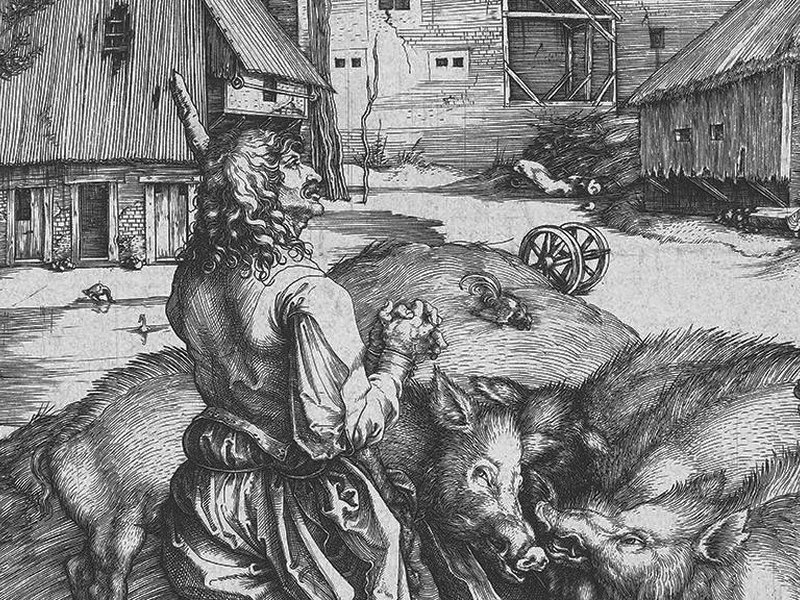
The story of the Prodigal Son is perhaps the most well-known story in the Bible. As others have observed, it may also be one of the most misunderstood. In two short essays, I will point out features of this story that are commonly neglected, aspects of Jesus’ parable that might…

by Ralph Allan SmithJuly 9, 2019
de-rijke-man-en-de-arme-lazarus-by-jacopo-da-ponte-16th-century
Luke

Lazarus and the Rich Man

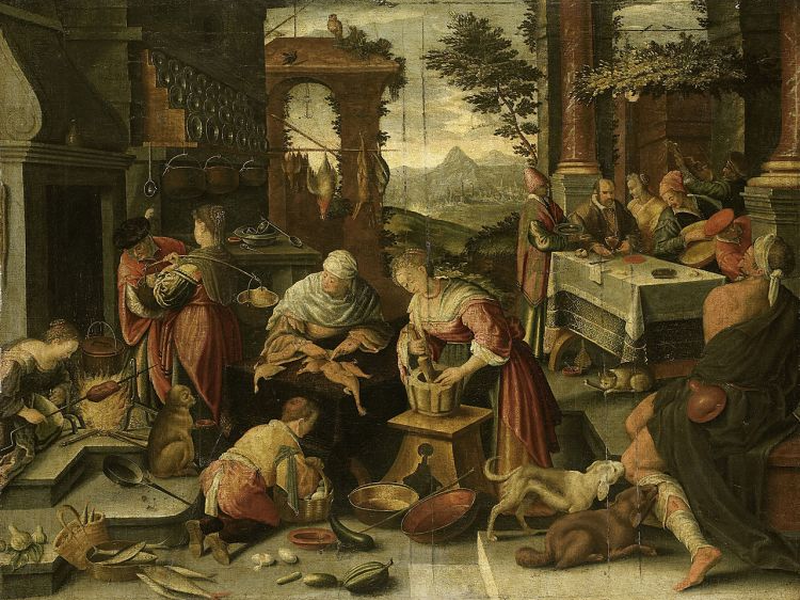
The parable of Lazarus and the nameless rich man is not an independent story. It is part of a long context that begins in Luke 15:1, where Jesus is eating with tax collectors and sinners and the scribes and Pharisees grumble. In response to their hardheartedness, Jesus tells a three-part…

by Ralph Allan SmithJuly 4, 2019
aaron-burden-uynrnfdkjwg-unsplash
Luke

Everybody has Dropsy - Luke 14:1-24

The Bible is written so that even when a reader cannot pick up on what might be deeper or more detailed aspects of a text, there is virtually always a message to be heard. In the ancient world, where the “reader” of Scripture would likely be a church official facing…

by Ralph Allan SmithJuly 2, 2019
communion
Biblical Theology

Fruit Trees and Grain Plants

The distinction between garden (or vineyard) and field begins in Genesis 2. This relates to the ordering of the formless world. Plants of the field are contrasted with the garden planted by God in Genesis 2:5&8. Later on, under the Old Covenant the Israelites will be required to keep their…

by James B. JordanJune 27, 2019

Showing page 77 of 309

See all

Showing page 25 of 43

See all
Philosophy

Postmodern Tragedy

Postmodern tragedy is also rooted in Freud: For Freud, the id desires but is blocked and opposed by the superego. The ego negotiates, and finds ways for the id to express itself without violating the standards of the superego. This is reasonable, submission to the reality principle. But it is…

October 30, 2003
American Religion

Just War

Christopher Lynch ends a review of several books on just war ( Weekly Standard , Nov 3), with the comment that “popular punditry’s now-routine use of the theory and the flood of recent books on the topic suggest that a change in the nation’s thinking has taken place.” Just in…

October 30, 2003
Philosophy

Worldview

Evangelicals these days are positively giddy about worldview. For many, developing a Christian worldview is the answer to all or most of the ills that plague the contemporary church. When I see a bandwagon, however, I tend to wonder why they are heading in that direction, and this contrarian bias…

October 30, 2003

Unitarianism

The internal contradictions of unitarianism: If God is finite, then there is a boundary, and he is hardly worthy of the name God. If he is infinite, then there is no boundary, but there is also no outside. But if there is no “outside,” where does this unitarian God “put”…

October 30, 2003
Philosophy

Plato and Fear

To what extent does Platonism arise out of fear of contaminants, of miasma, of impurity? On Derrida’s reading, Plato dreams of an uncontaminated origin and presence that can never be arrived at or achieved, and he sees every supplement as an unhappy contamination of the purity of the origin. That…

October 30, 2003

JSOT Articles

Several interesting articles in the current issue of JSOT : 1) Yairah Amit of Tel Aviv University writes on “Progression as a Rhetorical Device in Biblical Literature.” The concept is fairly simple: He’s pointing to places where, in narrative or speech, the biblical writers list a series of events or…

October 29, 2003

Showing page 2175 of 2212

Browse by Category

In Medias Res

Your weekly digest for all things Theopolis.

Donate

Theopolis is nearly 100% donor-supported. Consider joining us on our mission.