Theopolis Logo

Writing

Explore our collection of theological essays, biblical studies, and reflections on faith and culture.

See all
31-03-0213
Hermeneutics

Apocalyptic Eyes

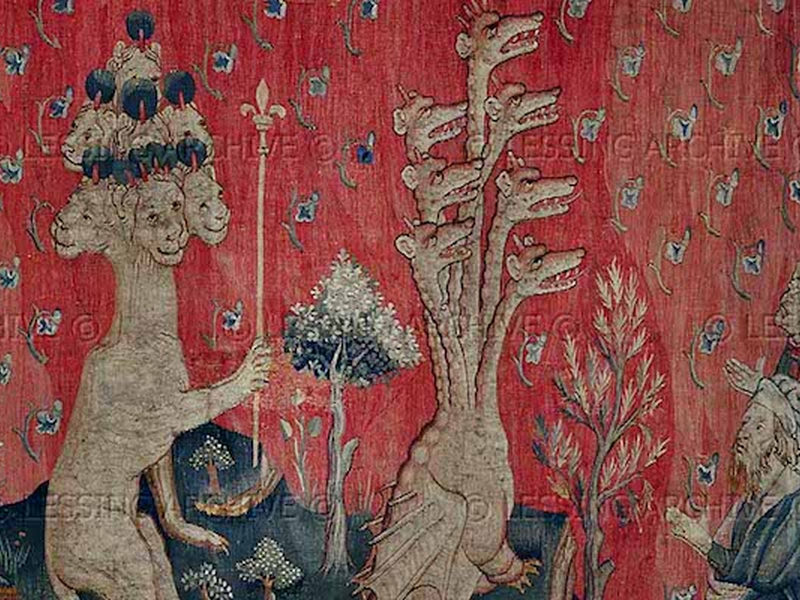
Flying scrolls. Red horses. Beasts coming out of the sea. Winged women. The list goes on. Apocalyptic literature in the Bible is like a cross between science fiction and Marvel comics. And the Bible has a fair bit of this sort of thing. Daniel sees visions in Babylon, Zechariah sees…

by Toby SumpterNovember 4, 2014

bhm-skyline-2
Theopolis News

New Name, New Look

Trinity House Institute has taken a new name, the Theopolis Institute. This striking new name expresses our unique vision and mission and captures the unified purpose behind all our specific programs and activities. We still have Bible, liturgy, and culture in our tagline. We still offer the same courses on…

by TheopolisNovember 4, 2014
istock_000012860926small
Atonement

Not Fearing the Devil

Adam Kotsko offers a socio-political variation on the Christus Victor atonement theory in his 2010 study, The Politics of Redemption: The Social Logic of Salvation . He does this by explaining "the devil" in terms of the Hegelian concept of "objective spirit," Geist . As Kotsko puts it, Geist "refers…

by Peter LeithartOctober 13, 2014
jez-timms-8muutamcwu4-unsplash
Leviticus

The Meaning of Sacrifice

Two factors keep Nahtali Meshel from discussing the meaning of sacrifice until late in his The "Grammar" of Sacrifice . The first has to do with the texts he draws from: "P says little about the meaning of its rituals" (174). The other has to do with the grammatical theory…

by Peter LeithartOctober 8, 2014
jez-timms-8muutamcwu4-unsplash
Leviticus

Praxemics

Chapter 5 of Naphtali Meshel's The "Grammar" of Sacrifice focuses on "praxemics," the physical actions of sacrificial ritual. Praxemes are constituted by six elements: an "atomact," an elementary physical act or gesture; an actor; an object that is acted up; a target for the action and often for the object…

by Peter LeithartOctober 6, 2014
markus-winkler-aid-xyrtlec-unsplash
Leviticus

Jugation and Hierarchy

Two chapters of Naphtali Meshel’s The “Grammar” of Sacrifice cover what he calls “jugation” and “hierarchies.” The first involves the addition of other materials to an animal offering. Jugates include wine, cereal, and oil that are added to the animals (zoemes) that are offered in sacrifice. Some jugates are coordinated…

by Peter LeithartOctober 1, 2014

Showing page 167 of 309

See all

Showing page 25 of 43

See all

Sea and the Dry

When a storm breaks out at sea on a voyage to Tarshish, the sailors want to know who Jonah is. He tells them, “I am a Hebrew, and I fear Yahweh God of heaven who made the sea and dry land” (Jonah 1:9; Hebrew for “the dry” is yabbashah ).…

June 26, 2015

Like Father, Like Son

Psalm 101 begins as praise to the Lord (v. 1), but it quickly becomes a description of David's reign as king. He thinks of his royal house, and his rule, as a replica of Yahweh's palace and His rule. One must be pure to enter the courts of Yahweh, and…

June 26, 2015
American Religion

Euro-centric Theory

In an essay entitled “The World is Not Flat,” sociologist Stephen Warner describes his growing realization of the limits of sociological theories of religion. Initially attracted to the “sacred canopy” ideas of Berger and Luckman, he came to the insight that the theories were forged from European rather than American…

June 26, 2015

Protestants All

I n a seminal 2001 essay, Fenggang Yang and Helen Rose Ebaugh studied 13 Houston-area religious institutions to discover how the religious lives of new immigrants are changed by their move to America. They discovered three processes: The congregations adapt “in organizational structure and ritual”; they return to “theological foundations”;…

June 26, 2015
Biblical Studies

Divine Imperator

To our modern democratic ear, “King of kings, Lord of lords” (1 Timothy 6:15; Revelation 17:14; 19:16) sounds redundant. It's not. The two superlatives are drawn from quite different contexts. Yahweh is “Lord of lords” (Deuteronomy 10:17; Psalm 136:3). But the only figures described as “king of kings” in the…

June 25, 2015

Sons and Daughters

We are the temple of the living God, Paul says (2 Corinthians 6:16), and he supports the claim with a string of quotations. God says, “I will dwell in them and walk among them” (Exodus 29:45). He says, “I will be their God and they shall be My people” (Genesis…

June 25, 2015

Showing page 406 of 2212

Browse by Category

In Medias Res

Your weekly digest for all things Theopolis.

Donate

Theopolis is nearly 100% donor-supported. Consider joining us on our mission.