Theopolis Logo

Writing

Explore our collection of theological essays, biblical studies, and reflections on faith and culture.

See all
aaron-burden-h8s0pf2rcqs-unsplash
Galatians

The Restoration of the Galatians

While controversies over the writings of Paul continue in various corners of the intellectual globe, the word of God given through Paul and his scribe and all of the church’s interpreters and translators over the last two millennia is still readily available to the lofty and the lowly. Paul, as…

by Grace LangnessMarch 25, 2013

kiwihug-l4gw27xzn1i-unsplash
Deuteronomy

Law and History: How to Read the Law of Moses (Part 2)

The second in a series of studies in Deuteronomy. Deuteronomy 22:30: A man shall not take his father’s wife, and shall not uncover his father’s wing (Hebrew: kanaf ). There are a number of unusual features in this law that mark it out from the previous context, indicating that it…

by Ralph Allan SmithMarch 20, 2013
200403-moss-pilate-tease_pncfq5
History

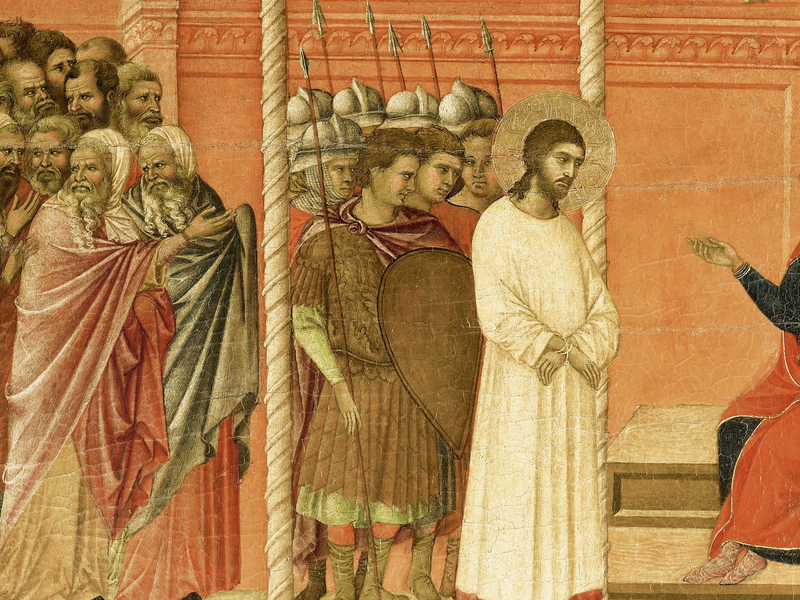
Victimhood and the Gospel

The texts of Christianity have been slowly at work, under the power of the Holy Spirit for 2000 years now. If we could be magically transported back into the world of two millennia ago, modern Americans would be shocked at the cruelty of that world. There was no concern for…

by Richard BledsoeMarch 18, 2013
aaron-burden-1ebsmyrau-s-unsplash
Luke

The Dysfunctional Family of the Gadarene Madman

The Story of the Gadarene Madman is told in all three synoptic Gospels (Matthew 8:28-34, Mark 5:1-20, Luke 8:26-37). Jesus ventures into a Gentile area when He passes over the Sea of Galilee. Upon disembarking from his boat, he is immediately met by a demon-possessed madman. Upon meeting Jesus, he…

by Richard BledsoeMarch 13, 2013
aaron-burden-1ebsmyrau-s-unsplash
Deuteronomy

Law and History: How to Read the Law of Moses

Part 1 of a multi-part series of studies on Deuteronomy 22:30-23:8. Eric Auerbach, in his classic work on Western literature, devotes his first chapter to contrasting Homer with the Bible. Of Homer, he writes of the “need of Homeric style to leave nothing which it mentions half in darkness and…

by Ralph Allan SmithMarch 12, 2013
markus-winkler-aid-xyrtlec-unsplash
Theopolis News

James Jordan in Korea, Japan

Trinity House Fellow James B. Jordan will be a speaker at an International Conference on Biblical Symbolism that will be held in Seoul on Monday, May 27 in 2013. He will address "The Importance of Biblical Symbolism and Symbolic Interpretation of the Bible." The conference will have three other speakers…

by Peter LeithartMarch 9, 2013

Showing page 197 of 309

See all

Showing page 25 of 43

See all

Primal Wound

During the night before Jacob returns from his sojourn with Laban in Haran, a man confronts him and they wrestle (Genesis 32). Jacob refuses to let the man go and the man touches him in the yerekh - usually translated as “socket of his thigh.” He returns to the land,…

June 25, 2015
American Religion

Techno-Ecumenism

Robert Wuthnow points out ( Boundless Faith , 115-6) that improvements in technology enabled leaders to transcend denominational boundaries: “Communication and travel increased the opportunities to organize transnational ministries in new ways, just as philanthropy and fund-raising techniques did. The earlier denominational boards depended on corresponding secretaries to stay in…

June 25, 2015

Confederate Civil Religion

I n an essay in Judgment & Grace in Dixie , Charles Wilson Reagan traces the evolution of Southern civil religion from 1920 to 1980. He argues that over the decades the civil religion of the lost cause “evolved from a public faith celebrating the virtues of a religiously sanctioned…

June 25, 2015

Sacrificing Babylon

The ten horns join with the beast in slaughtering the harlot city Babylon. It's a macabre scene, marked by five relentless verbs - hate, desolate, make naked, eat, burn - and by a bizarre sequence of actions. It's a sacrificial sequence. An ascension offering (Leviticus 1) was prepared for offering…

June 24, 2015
Denominationalism

Denomination—Creed, Organization, Culture

N ancy Ammerman's contribution to Denominationalism is outstanding. She asks what we're studying when we study denominations, and she comes up with three answers: A group of Christian communities defined by a common set of beliefs and practices; an organization; and a cultural profile (evident, for instance, in Episcopalian jokes).…

June 24, 2015
Denominationalism

Fundamentalism and Modernism

Nancy Ammerman briefly examines the “shifting terrain” at the close of her essay in Denominationalism . Choice seems to have taken over the religious landscape, displacing ethnic associations, family and upbringing. Many change denominations during their lifetimes; fewer think it important to marry within their denominations. Congregations function independently of…

June 24, 2015

Showing page 407 of 2212

Browse by Category

In Medias Res

Your weekly digest for all things Theopolis.

Donate

Theopolis is nearly 100% donor-supported. Consider joining us on our mission.