
Theopolis Logo

Writing

Explore our collection of theological essays, biblical studies, and reflections on faith and culture.

See all
giammarco-zeh-ljawhtg-unsplash
Biblical Horizons

OPEN BOOK: Views and Reviews

Isaac E. Mozeson, The Word: The Dictionary that Reveals the Hebrew Sources of English (Northvale, NJ: Jacob Aaronson Inc., 1995), 310 pp. Reviewed by James B. Jordan. Once there was only one language in the world, the language God spoke to Adam. At the Tower of Babel, there came to…

by James B. JordanJune 28, 1996
tim-wildsmith-j6jv-mkdzqs-unsplash
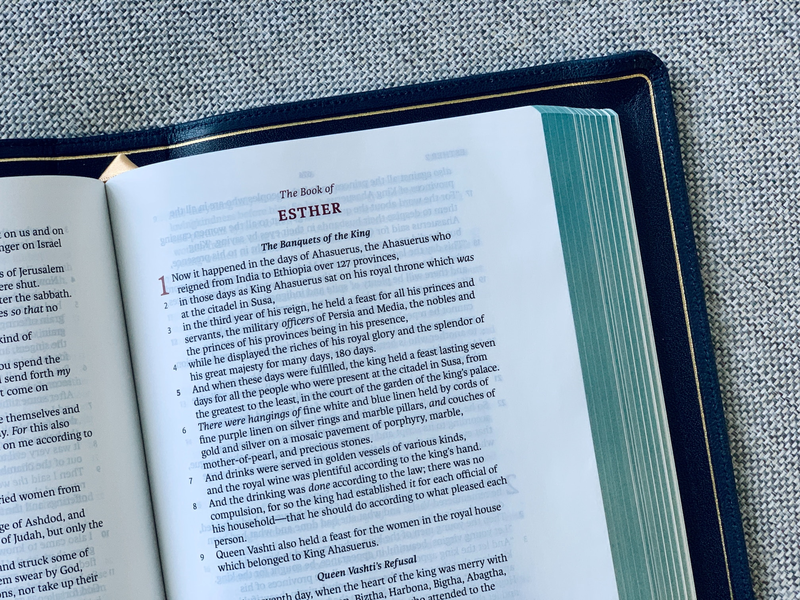
Esther

Esther: Historical & Chronological Comments (IV)

2. The Setting of the Book of Esther A. Xerxes (continued from previous issue) Ezra 6:14 says that the Jews finished building "according to the command of the God of Israel and the decree of Cyrus and Darius and Artaxerxes king of Persia." The problem with this verse is that…

by James B. JordanJune 28, 1996
ales-krivec-4mibe6zg5r0-unsplash
Acts

Jesus and Amalek

This essay goes with our previous study of the Amalek pattern back in Biblical Horizons No. 2. Since many do not have this essay, entitled "The Battle of Gog and Magog," let me cite the relevant paragraphs: Note in Genesis 12-15 that Abram moves into the land after escaping Pharaoh…

by James B. JordanJune 28, 1996

aaron-burden-1ebsmyrau-s-unsplash
Proverbs

The Strange Woman

Proverbs 7:6-23 is one of several passages early in the Proverbs in which Solomon warns his son about the wiles and dangers of the "strange woman." It is certainly quite proper to take these as straightforward warnings against sexual sins, and these are certainly warnings that need to be impressed…

by Peter LeithartJune 27, 1996
jan-kahanek-g3o5ztrk2e4-unsplash
Biblical Studies

Some Observations

1. In Luke 4:20 we read that after Jesus finished reading from Isaiah, "the eyes of all in the synagogue were fixed upon Him." This is usually taken in a psychological sense: They were amazed at Jesus somehow. I suggest that, as always, a merely psychological reading is a modern…

by James B. JordanMay 28, 1996
tim-wildsmith-j6jv-mkdzqs-unsplash
Esther

Esther: Historical & Chronological Comments (III)

2. The Setting of the Book of Esther Up to now we have assumed what we must prove, that the king in Esther is Darius the Great. While Biblical chronologists have usually taken this position, commentators on the book of Esther have often taken others as the king. One view,…

by James B. JordanMay 28, 1996

Showing page 265 of 309

See all

Showing page 25 of 43

See all

Truth or Tribalism?

One Body Through the Cross , the Princeton Proposal for Christianity Unity, criticizes the ecumenical movement for “liberal indifference” to orthodoxy, which has sometimes provoked a reaction of “divisive sectarianism.” For some, the solution is to stress traditional doctrinal formulations, but this cure is part of the disease. As Margaret…

February 25, 2015

Be What We Are

The Princeton Proposal for Christian Unity ( One Body Through the Cross ) works within two “poles”: On the one hand, there is an already-established unity, “a bond of faith and communion in Christ, established by the action of God.” On the other hand, we are called to “a deeper…

February 25, 2015

Division Breeds Diversion

The Princeton Proposal on Christian Unity ( In One Body Through the Cross ) claims that “division breeds never-ending diversion from authentic mission” (section 35), and offers a shrewd diagnosis of how this occurs. It happens when “the distinct identities of our churches tempt us to relish the special marks…

February 25, 2015

Making Church Visible

In his Unitive Protestantism , John T. McNeill sketches the “communio” ecclesiology of the Reformers: “They interpreted the creedal tenet of ‘the Holy Catholic Church’ in terms of the communio sanctorum , and identified the latter both with the invisible communion of the saved and with the true visible church…

February 25, 2015

Witness of Abstinence

Jeremiah 35 introduces the Rechabites. This is a clan within Israel that had refrained from wine, lived in tents, and refused to sow seed or plant vineyards for generations. The sole basis for this abstinence from normal life was the command of Jonadab the son of Rechab who commanded “You…

February 24, 2015
Modernity

Gullible Rationalists

One of the delights of Philip Ball’s forthcoming Invisible is to see how frequently rationalists and materialists were have been taken in by charlatans. One might have thought that those who came-of-age and were Enlightened by reason would be immune to tricks, beliefs in ghosts, and in fairies and sprites.…

February 24, 2015

Showing page 459 of 2212

Browse by Category

In Medias Res

Your weekly digest for all things Theopolis.

Donate

Theopolis is nearly 100% donor-supported. Consider joining us on our mission.