Theopolis Logo

Writing

Explore our collection of theological essays, biblical studies, and reflections on faith and culture.

See all
aaron-burden-h8s0pf2rcqs-unsplash
Galatians

The Restoration of the Galatians

While controversies over the writings of Paul continue in various corners of the intellectual globe, the word of God given through Paul and his scribe and all of the church’s interpreters and translators over the last two millennia is still readily available to the lofty and the lowly. Paul, as…

by Grace LangnessMarch 25, 2013

kiwihug-l4gw27xzn1i-unsplash
Deuteronomy

Law and History: How to Read the Law of Moses (Part 2)

The second in a series of studies in Deuteronomy. Deuteronomy 22:30: A man shall not take his father’s wife, and shall not uncover his father’s wing (Hebrew: kanaf ). There are a number of unusual features in this law that mark it out from the previous context, indicating that it…

by Ralph Allan SmithMarch 20, 2013
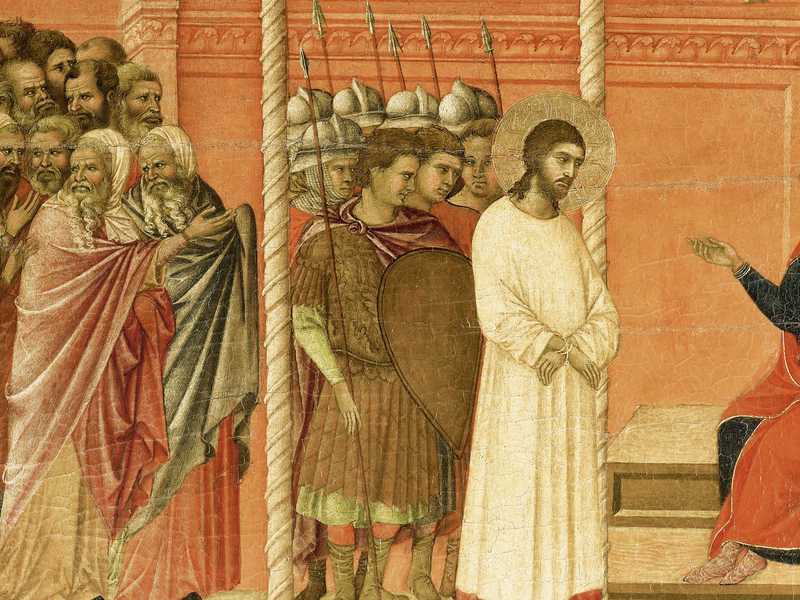
200403-moss-pilate-tease_pncfq5
History

Victimhood and the Gospel

The texts of Christianity have been slowly at work, under the power of the Holy Spirit for 2000 years now. If we could be magically transported back into the world of two millennia ago, modern Americans would be shocked at the cruelty of that world. There was no concern for…

by Richard BledsoeMarch 18, 2013
aaron-burden-1ebsmyrau-s-unsplash
Luke

The Dysfunctional Family of the Gadarene Madman

The Story of the Gadarene Madman is told in all three synoptic Gospels (Matthew 8:28-34, Mark 5:1-20, Luke 8:26-37). Jesus ventures into a Gentile area when He passes over the Sea of Galilee. Upon disembarking from his boat, he is immediately met by a demon-possessed madman. Upon meeting Jesus, he…

by Richard BledsoeMarch 13, 2013
aaron-burden-1ebsmyrau-s-unsplash
Deuteronomy

Law and History: How to Read the Law of Moses

Part 1 of a multi-part series of studies on Deuteronomy 22:30-23:8. Eric Auerbach, in his classic work on Western literature, devotes his first chapter to contrasting Homer with the Bible. Of Homer, he writes of the “need of Homeric style to leave nothing which it mentions half in darkness and…

by Ralph Allan SmithMarch 12, 2013
markus-winkler-aid-xyrtlec-unsplash
Theopolis News

James Jordan in Korea, Japan

Trinity House Fellow James B. Jordan will be a speaker at an International Conference on Biblical Symbolism that will be held in Seoul on Monday, May 27 in 2013. He will address "The Importance of Biblical Symbolism and Symbolic Interpretation of the Bible." The conference will have three other speakers…

by Peter LeithartMarch 9, 2013

Showing page 197 of 309

See all

Showing page 25 of 43

See all

De-Priesting, Re-Priesting

When Aaron and his sons were ordained, they were washed, vested, and anointed (Leviticus 8:6-9). When Aaron approached the Most Holy Place on the Day of Atonement, he puts on linen clothes and washes (16:4). There is no anointing, he removes the garments of glory. The ordination rite goes in…

February 19, 2014

Faith, Not Sight

Faith is the discernment of things unseen. Faith looks for a city yet to come, not made with hands. To any visible arrangement of things, faith stands with Faust in his refusal of “Stay, you are so fair.” Faith says to every human construction, “Good, but not it .” Faith’s…

February 19, 2014

Incinerating enemies

In a contribution to Ancient Mediterranean Sacrifice , David Frankfurter analyzes several contexts of Egyptian religion on the way to a critique of the whole category of “sacrifice.” In some of these contexts, no animals were slaughtered; no violence done. In some contexts, though, animals were killed. He elaborates on…

February 18, 2014

Symbolic rites

Jonathan Klawans asserts in an essay in Ancient Mediterranean Sacrifice that “symbolic action was an undeniably central feature of ancient Israelite culture” (114). As evidence, he points to passages in the Hebrew Bible that highlight the memorial function of rituals. Passover, Sukkot, Sabbath, circumcision, phylacteries are all presents as communicative…

February 18, 2014

Sacrifice or Silence

In his treatise On Abstinence from Killing Animals , Porphyry states a principle of philosophical sacrifice: Different strokes for different deities. For “intelligible gods,” the best worship is “hymn-singing in words,” since “sacrifice is an offering to each god from what he has given, with which he sustains us and…

February 18, 2014

Backfire

John Steven explains at Slate why the ceasefire in South Sudan, like many ceasefires, could well backfire” “The cease-fire is making it worse. Indeed, this uncomfortable truth isn’t even unique to South Sudan. Cease-fires almost always make a conflict worse, delaying political deals, prolonging the killing, and ensuring that the…

February 18, 2014

Showing page 679 of 2212

Browse by Category

In Medias Res

Your weekly digest for all things Theopolis.

Donate

Theopolis is nearly 100% donor-supported. Consider joining us on our mission.