Theopolis Logo

Writing

Explore our collection of theological essays, biblical studies, and reflections on faith and culture.

See all
tanner-mardis-xuxghzhibn4-unsplash-1-2
Biblical Studies

Tweets-turned-Notes on the Bible’s Chronology

Summary In what follows, I will consider the “year-stamps” employed in Scripture, i.e., statements of the form, “Such-and-such an event took place in the Xth year of Y.” In the process, I will suggest some ways in which the Biblical narrative might relate to events in the extra-Biblical world, though…

by James BejonJuly 16, 2019
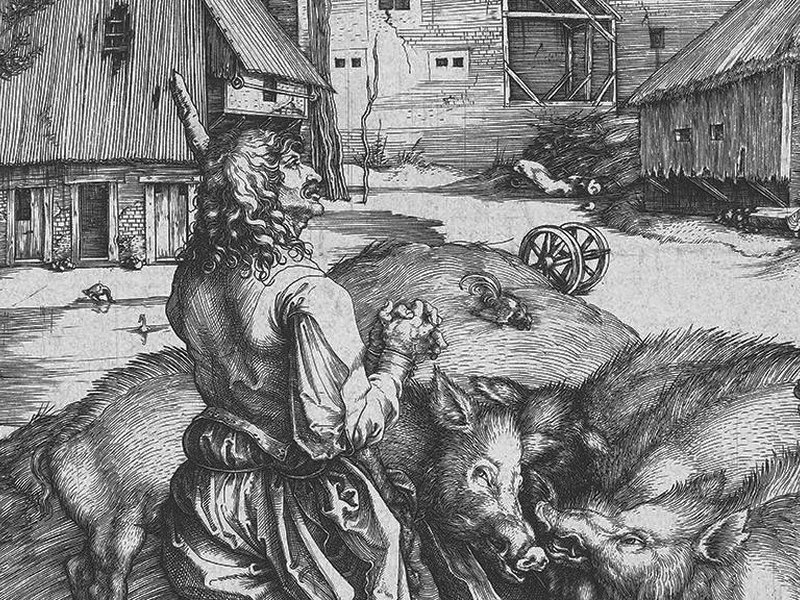
durer-prodigal-son-2
Luke

Perspectives on the Prodigal, (Part 2)

In the first essay on the parable of the Prodigal Son, I suggested that the problems commentators and others encounter in interpreting Jesus three-part parable are not accidental. These are not just problems in our ignorance of cultural background. They are intentional features of the stories —stories designed to poke…

by Ralph Allan SmithJuly 11, 2019
durer-prodigal-son-2
Luke

Perspectives on the Prodigal, (Part 1)

The story of the Prodigal Son is perhaps the most well-known story in the Bible. As others have observed, it may also be one of the most misunderstood. In two short essays, I will point out features of this story that are commonly neglected, aspects of Jesus’ parable that might…

by Ralph Allan SmithJuly 9, 2019
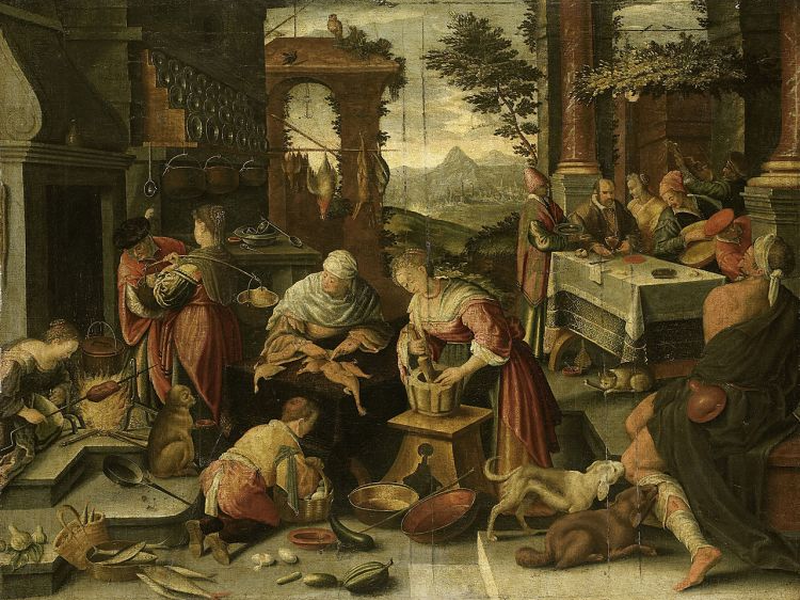
de-rijke-man-en-de-arme-lazarus-by-jacopo-da-ponte-16th-century
Luke

Lazarus and the Rich Man

The parable of Lazarus and the nameless rich man is not an independent story. It is part of a long context that begins in Luke 15:1, where Jesus is eating with tax collectors and sinners and the scribes and Pharisees grumble. In response to their hardheartedness, Jesus tells a three-part…

by Ralph Allan SmithJuly 4, 2019
aaron-burden-uynrnfdkjwg-unsplash
Luke

Everybody has Dropsy - Luke 14:1-24

The Bible is written so that even when a reader cannot pick up on what might be deeper or more detailed aspects of a text, there is virtually always a message to be heard. In the ancient world, where the “reader” of Scripture would likely be a church official facing…

by Ralph Allan SmithJuly 2, 2019
communion
Biblical Theology

Fruit Trees and Grain Plants

The distinction between garden (or vineyard) and field begins in Genesis 2. This relates to the ordering of the formless world. Plants of the field are contrasted with the garden planted by God in Genesis 2:5&8. Later on, under the Old Covenant the Israelites will be required to keep their…

by James B. JordanJune 27, 2019

Showing page 77 of 309

See all

Showing page 25 of 43

See all

Economics and Work

Modernity, especially as theorized in modern economics, treats work as "instrumental to the acquisition of goods" (Stephen Marglin, The Dismal Science , 44). Modernity "closes off thinking of hard work as something other than drudgery" (43). As a counterpoint, Marglin calls attention to work in Amish communities: "In physical terms,…

March 23, 2018

Greater Father?

"The Father is greater than I," says Jesus (John 14:28). Eunomius uses this to prove the ontological interiority of the Son. Basil of Caesarea rejects that reading, of course. But his way of rejecting it is worth attending to. He doesn't claim that Jesus is talking about His inferiority as…

March 23, 2018

Secularization Theory As Contestant

Ian Hunter argues that "secularization" as "transition from divine reverencing to rational autonomy" didn't happen during the centuries after Reformation. Confessional Christianity didn't disappear but was more deeply entrenched during that time. "Secular" referred not to the imposition or incursion of rational atheism but to the formation of purely political…

March 22, 2018

Simplicity’s Not So Simple

Is God simple? Christian theologians from the Cappadocians to Aquinas and beyond said Yes. But we need to probe this consensus: Did they mean the same thing by saying Yes? Andrew Radde-Gallwitz says No ( Basil of Caesarea, Gregory of Nyssa, and the Transformation of Divine Simplicity ). What is…

March 22, 2018

Confessionalization v. Secularization

In a debunking paper on "secularization" and the "secular," Ian Hunter argues that "nobody in early modernity spoke of secularization in terms of a transition from divine reverencing to rational autonomy, but also that there is no evidence of such a transition taking place there and, further, that there is…

March 21, 2018

Disdain for Lesser Talent

Richard Spady's eye-opening piece in First Things examines the consequences that follow when economics becomes an ideology, that is, when economics "will­fully projects its own first principles on its subject matter and actively seeks, perhaps unconsciously, material changes to bring social realities into conformity with these first principles." He offers…

March 20, 2018

Showing page 84 of 2212

Browse by Category

In Medias Res

Your weekly digest for all things Theopolis.

Donate

Theopolis is nearly 100% donor-supported. Consider joining us on our mission.