Theopolis Logo

Writing

Explore our collection of theological essays, biblical studies, and reflections on faith and culture.

See all
tanner-mardis-xuxghzhibn4-unsplash-1-2
Biblical Studies

Tweets-turned-Notes on the Bible’s Chronology

Summary In what follows, I will consider the “year-stamps” employed in Scripture, i.e., statements of the form, “Such-and-such an event took place in the Xth year of Y.” In the process, I will suggest some ways in which the Biblical narrative might relate to events in the extra-Biblical world, though…

by James BejonJuly 16, 2019
durer-prodigal-son-2
Luke

Perspectives on the Prodigal, (Part 2)

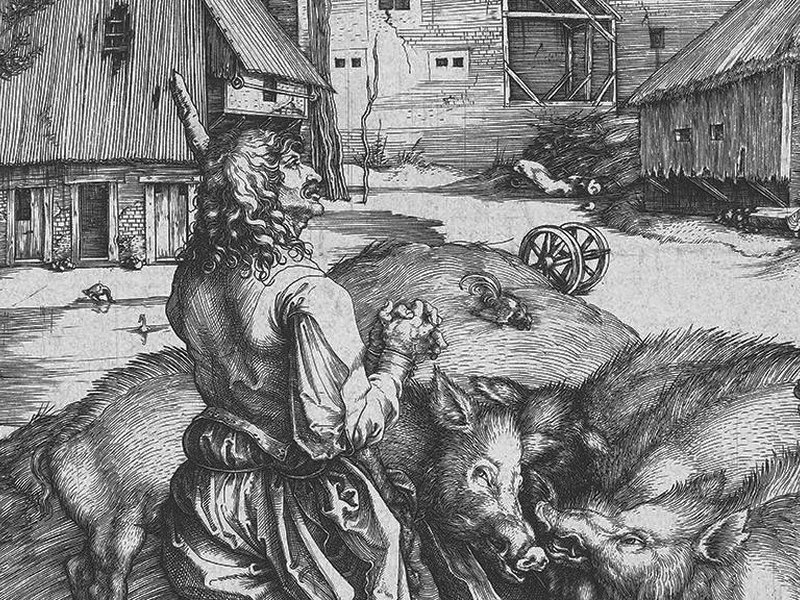
In the first essay on the parable of the Prodigal Son, I suggested that the problems commentators and others encounter in interpreting Jesus three-part parable are not accidental. These are not just problems in our ignorance of cultural background. They are intentional features of the stories —stories designed to poke…

by Ralph Allan SmithJuly 11, 2019
durer-prodigal-son-2
Luke

Perspectives on the Prodigal, (Part 1)

The story of the Prodigal Son is perhaps the most well-known story in the Bible. As others have observed, it may also be one of the most misunderstood. In two short essays, I will point out features of this story that are commonly neglected, aspects of Jesus’ parable that might…

by Ralph Allan SmithJuly 9, 2019
de-rijke-man-en-de-arme-lazarus-by-jacopo-da-ponte-16th-century
Luke

Lazarus and the Rich Man

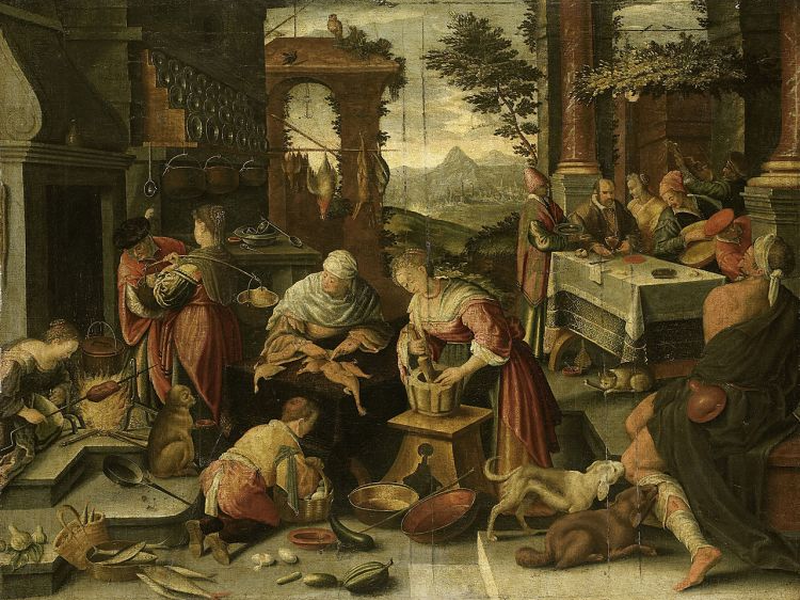
The parable of Lazarus and the nameless rich man is not an independent story. It is part of a long context that begins in Luke 15:1, where Jesus is eating with tax collectors and sinners and the scribes and Pharisees grumble. In response to their hardheartedness, Jesus tells a three-part…

by Ralph Allan SmithJuly 4, 2019
aaron-burden-uynrnfdkjwg-unsplash
Luke

Everybody has Dropsy - Luke 14:1-24

The Bible is written so that even when a reader cannot pick up on what might be deeper or more detailed aspects of a text, there is virtually always a message to be heard. In the ancient world, where the “reader” of Scripture would likely be a church official facing…

by Ralph Allan SmithJuly 2, 2019
communion
Biblical Theology

Fruit Trees and Grain Plants

The distinction between garden (or vineyard) and field begins in Genesis 2. This relates to the ordering of the formless world. Plants of the field are contrasted with the garden planted by God in Genesis 2:5&8. Later on, under the Old Covenant the Israelites will be required to keep their…

by James B. JordanJune 27, 2019

Showing page 77 of 309

See all

Showing page 25 of 43

See all

Apolitical Liberalism

Judd Owen’s Religion and the Demise of Liberal Rationalism calls on liberals to pay attention to the foundational issues raised by liberalism’s antifoundational critics. Owen recognizes that liberalism does not propose a “neutral” theory of politics. While political regimes do not take sides in religious disputes, and thus exercise a…

February 6, 2018

Symphonic Love

Robert Jenson writes: “our enjoyment of God is that we are taken into the triune singing. Perhaps we may say we are allowed to double the parts. And here too we must insist on concreteness. That the proclamation and prayer of the church regularly bursts into beauty, indeed seems to…

February 6, 2018

Mill at an Impasse

John Gray ( Liberalisms ) argues that the “argument from ignorance” is at the heart of certain liberal theorizing, that it cannot hold up to scrutiny. Human knowledge is limited, and that puts constraints on political certainty. Besides, it is argued that human knowledge advances best when freedom is maximized.…

February 5, 2018
Economics

Un-Tragic Commons?

In his Out of the Wreckage , George Monbiot cites the famous 1968 article of Garrett Hardin on the "Tragedy of the Commons." In Monbiot's summary, Hardin argued that "common property will always be destroyed, because the gain that individuals make by over-exploiting it will outweigh the loss they suffer…

February 2, 2018
Work

God the Laborer

Heiner Ruschaupt writes: “In Greek society labor was viewed as an inescapable fate imposed by the gods. To be like the gods meant to live free from labor. In the world of the ancient Orient, labor was viewed as a burden, as slave labor for the gods, who therefore were…

February 2, 2018

Love Song

Markus Rathey ( Bach's Major Vocal Works ) argues that Bach's Christmas Oratorio is a love song. Several threads of argument support this conclusion. In composing the Oratorio , Bach recycled music from earlier compositions, including the quasi-operatic Lasst uns sorgen , which renders a myth about Hercules in musical…

February 2, 2018

Showing page 98 of 2212

Browse by Category

In Medias Res

Your weekly digest for all things Theopolis.

Donate

Theopolis is nearly 100% donor-supported. Consider joining us on our mission.