Theopolis Logo

Writing

Explore our collection of theological essays, biblical studies, and reflections on faith and culture.

See all
31-03-0213
Hermeneutics

Apocalyptic Eyes

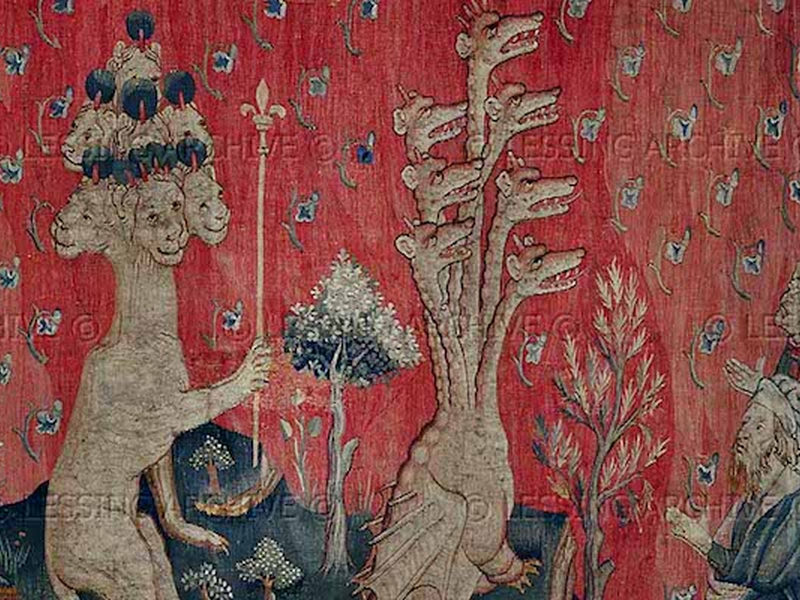
Flying scrolls. Red horses. Beasts coming out of the sea. Winged women. The list goes on. Apocalyptic literature in the Bible is like a cross between science fiction and Marvel comics. And the Bible has a fair bit of this sort of thing. Daniel sees visions in Babylon, Zechariah sees…

by Toby SumpterNovember 4, 2014

bhm-skyline-2
Theopolis News

New Name, New Look

Trinity House Institute has taken a new name, the Theopolis Institute. This striking new name expresses our unique vision and mission and captures the unified purpose behind all our specific programs and activities. We still have Bible, liturgy, and culture in our tagline. We still offer the same courses on…

by TheopolisNovember 4, 2014
istock_000012860926small
Atonement

Not Fearing the Devil

Adam Kotsko offers a socio-political variation on the Christus Victor atonement theory in his 2010 study, The Politics of Redemption: The Social Logic of Salvation . He does this by explaining "the devil" in terms of the Hegelian concept of "objective spirit," Geist . As Kotsko puts it, Geist "refers…

by Peter LeithartOctober 13, 2014
jez-timms-8muutamcwu4-unsplash
Leviticus

The Meaning of Sacrifice

Two factors keep Nahtali Meshel from discussing the meaning of sacrifice until late in his The "Grammar" of Sacrifice . The first has to do with the texts he draws from: "P says little about the meaning of its rituals" (174). The other has to do with the grammatical theory…

by Peter LeithartOctober 8, 2014
jez-timms-8muutamcwu4-unsplash
Leviticus

Praxemics

Chapter 5 of Naphtali Meshel's The "Grammar" of Sacrifice focuses on "praxemics," the physical actions of sacrificial ritual. Praxemes are constituted by six elements: an "atomact," an elementary physical act or gesture; an actor; an object that is acted up; a target for the action and often for the object…

by Peter LeithartOctober 6, 2014
markus-winkler-aid-xyrtlec-unsplash
Leviticus

Jugation and Hierarchy

Two chapters of Naphtali Meshel’s The “Grammar” of Sacrifice cover what he calls “jugation” and “hierarchies.” The first involves the addition of other materials to an animal offering. Jugates include wine, cereal, and oil that are added to the animals (zoemes) that are offered in sacrifice. Some jugates are coordinated…

by Peter LeithartOctober 1, 2014

Showing page 167 of 309

See all

Showing page 26 of 43

See all

German Reforvolution

Eugen Rosenstock-Huessy claims that the German Reformation qualifies for inclusion as one of the epochal revolutions of Western history ( Out of Revolution ). This is so partly because the German Reformation gave to Europe a new social role, the civil servant: “In the German revolution the drab, grey life…

October 25, 2017

Preaching, An Art of Division

The following is an excerpt from Peter Leithart's forthcoming two-volume commentary on Revelation (T&T Clark). Y ou must prophesy again concerning many peoples and nations and tongues and kings,” a voice tells John (Rev. 10:11). Then someone gives him a “reed like a rod” and instructs him to measure (11:1).…

October 24, 2017

Deep Comedy

The following is an excerpt from the introduction to my Deep Comedy (Canon, 2006). Viewed as a whole, the Christian account of history is eschatological not only in the sense that it comes to a definitive and everlasting end, but in the sense that the end is a glorified beginning,…

October 24, 2017

Time, Natural and Social

"To date," writes Norbert Elias in his Essay on Time , "enquiries into the sociology of time are almost non-existent” (38). This deficit, he suggests, is due to a dichotomy of the natural and human worlds, a dichotomy reflected in academic specializations (71). He blames the “conventional tendency to explore…

October 23, 2017

Two Kingdoms, Two Christs?

David VanDrunen, has worked out an understanding of natural law and the “two kingdoms” Christologically. He writes, “The Son of God rules the temporal kingdom as an eternal member of the Divine Trinity but does not rule it in his capacity as the incarnate mediator/redeemer” ( Natural Law and the…

October 20, 2017

Love Uber Alles

Benedict rejects the notion that Catholic social theory treats social and political institutions – the state, the economy, civil society, for instance – as – autonomous, extrinsically-related “subjects” with different logics. On this view, the economy would be the sphere of wealth-generation, politics the sphere of power, and civil society…

October 20, 2017

Showing page 130 of 2212

Browse by Category

In Medias Res

Your weekly digest for all things Theopolis.

Donate

Theopolis is nearly 100% donor-supported. Consider joining us on our mission.