Theopolis Logo

Writing

Explore our collection of theological essays, biblical studies, and reflections on faith and culture.

See all
img_1456
Epistemology

Seeking Integration in a Fragmented World: Covenant Epistemology: The Integrative Regard of the Other

Fragmentation characterizes our era. Bits, bytes, chips, data points. Ourselves as reducible to the meaningless. We can feel dehumanized and lost. We seek wholeness, integration. We rightly believe that integration brings meaningfulness, somehow doing better credit to ourselves as humans and to the world. More than that, integration somehow aligns…

by Esther Lightcap MeekJune 5, 2018

hebrew-manuscript-2
Proverbs

The Dramatic Structure of Proverbs

The book of Proverbs appears as a largely random collection of aphorisms drawn from experience saturated in law. Despite its random arrangement, however, the book does have an over-arching structure that reinforces its main themes. One way to gather clues regarding the structure of a biblical book (or any book)…

by Peter LeithartMay 31, 2018
infant-baptism
Baptism

Infant Baptism in the History of the Church

Ancient practice in the Church sets an important precedent for present day practice. This certainly doesn’t mean that Christians are bound to only do things as they have always been done, but the principles of catholicity and unity move us not to break from historic church practice on a particular…

by Timothy LeCroyMay 29, 2018
tower-of-babel
Biblical Studies

Babel Academy, Part 2

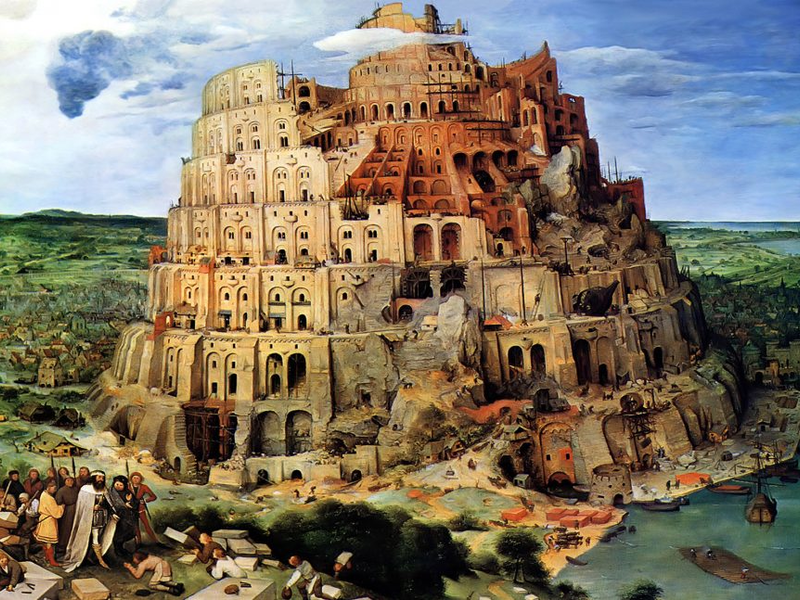
For Part 1, click HERE . Genesis 1 describes the creation of the physical order. Genesis 2 recapitulates the pattern of Genesis 1 as it describes the creation of the social order. Genesis 3 describes the intended founding of an ethical order. It was here that sin entered into the…

by Mike BullMay 24, 2018
babelhead
Biblical Studies

Babel Academy, Part 1

The Business of Keeping the Saints in the Dark Let there be light! The first recorded “spoken” words of God. Curiously, even this creative decree was a deed whose fruit required an appraisal. God judged the light and separated it from the darkness. As the cardinal act within a newborn…

by Mike BullMay 22, 2018
markus-winkler-aid-xyrtlec-unsplash
Course Announcement

A Week with Esther Meek - An Introduction to Covenant Epistemology

We are very pleased to announce that Esther Lightcap Meek will be the instructor for our 2018 Trinity Course in August. The course is titled "Loving to Know: Introducing Covenant Epistemology" and will be held August 13-17 at Beeson Divinity School. Esther Meek, Ph.D., is Professor of Philosophy at Geneva…

by TheopolisMay 21, 2018

Showing page 93 of 309

See all

Showing page 26 of 43

See all
Philosophy

Mead again

Mead says clock time and calendar time is time only “in a manner of speaking.” He also argues that clock and calendar time is not “absolute” but relative to one’s frame of reference. True that, as my kids say: “Monday” spells gloom within the framework of a certain organization of…

June 19, 2008
Philosophy

Abstract time?

George Herbert Mead focused his thought on temporality (especially in Philosophy of the Present ), and particularly on “time in” events and roles rather than time as a background of events. Time in the strictest sense is the moment of present emergence that reflects into the past and changes its…

June 19, 2008
Science

Scientific laws

Nobel chemist Ilya Prigogine’s work on dissipative structures, complex systems, and irreversibility, Barbara Adam argues, not only challenged particular scientific laws but the classical notion of a scientific law. In classical physics, to arrive at a law was to arrive at a timeless substructure of natural reality. Adam summarizes the…

June 19, 2008
Philosophy

Clock time

Barbara Adam says that the time of clocks is “an idea in practice,” and elaborates: “as a material expression of a particular understanding of the natural world, in which time is conceptualised through motion without change, as a spatial quantity which is infinitely divisible into units, which can be numerically…

June 19, 2008
History

Monastic time

Since Lewis Mumford and Max Weber, historians and sociologists have recognized the importance of the Benedictine monastery in the development of time-keeping, scheduling, and Western notions of time in general. Zerubavel notes that in developing their regulated common life, the Benedictines deliberately broke with the natural and temporal rhythms of…

June 18, 2008
History

Private and public time

We’re used to thinking of privacy in terms of protected spaces, and often hear comments about how isolated individuals and families are in modern society. A guy opens his garage door remotely so his Lexus can slip into the garage, and the door is closed before he’s out of the…

June 18, 2008

Showing page 1503 of 2212

Browse by Category

In Medias Res

Your weekly digest for all things Theopolis.

Donate

Theopolis is nearly 100% donor-supported. Consider joining us on our mission.