Theopolis Logo

Writing

Explore our collection of theological essays, biblical studies, and reflections on faith and culture.

See all
sixteen-miles-out-al48tflf4e8-unsplash
Food

Gluttony In The Bible (As Opposed To Gluttony In The American Church)

In the Bible, fatness is such a blessing, that it is especially hard to understand why wicked men are permitted to enjoy such a state. It requires a theodicy and faith in God. Thus: “For they have no pangs until death; their bodies are fat and sleek . They are…

by Mark HorneAugust 12, 2013

jeremy-yap-j39x2xx_8cq-unsplash
How to Worship

Biblical Worship (Video with James B. Jordan)

[fve]http://vimeo.com/71901553[/fve]

by Peter LeithartAugust 8, 2013
chris-bair-ndczc5739ck-unsplash
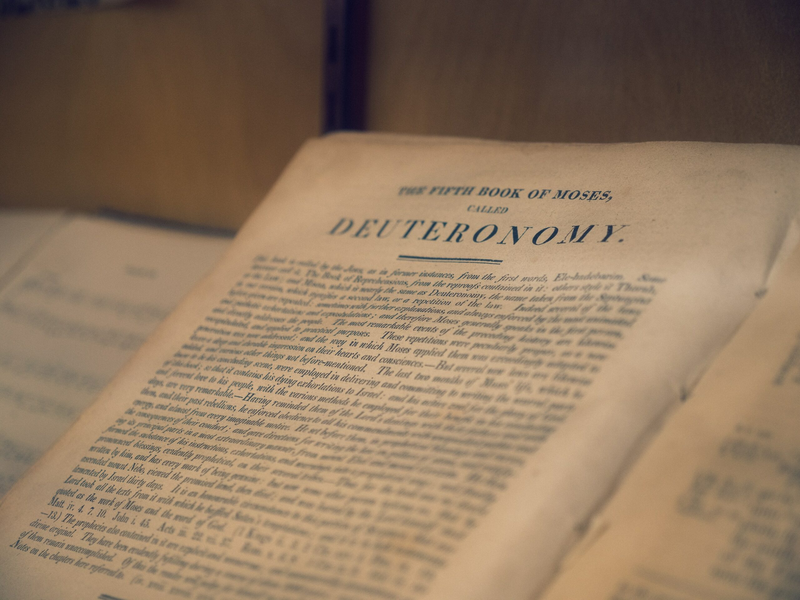
Deuteronomy

Holy Things for Holy People

The allusion to the Exodus story is contained in the first words of Deuteronomy 14:1 — “ye are the sons of Yahweh your God” — as well as in 14:2 in the use of the technical term translated “treasured possession,” “His own possession,” “peculiar people,” “precious people,” and so forth.…

by Ralph Allan SmithAugust 5, 2013
adam-and-eve-in-the-garden-of-eden-wenzel-peter
Deuteronomy

Forbidden Foods

I have argued that Deuteronomy 14:1-21 is an independent literary unit that applies the Third Word to the lives of Israelites from the time of Moses and Joshua. In this short pericope, Moses suggests broad and deep meaning by means of literary allusion to the stories of the creation and…

by Ralph Allan SmithJuly 31, 2013
david-weber-fwuo_zluhnw-unsplash
How to Worship

Pro-Sacramental Reformation

In his recently republished The New Creation , the late, delightful Herbert McCabe defends the priesthood of the plebs as roundly as anyone could want. Citing Hebrews, he claims that "there is an essential difference between the Christian community and the community of the Old Law, or any other religious…

by Peter LeithartJuly 29, 2013
eric-ward-7kqe_8meex8-unsplash
Augustine

Sexual Idolatry

Augustine famously prayed, “Our hearts our restless until they rest in You.” True indeed. Being creatures, we inherently sense our ontological poverty—our innate condition of dependence—and are compelled to find a sense of security. And it is also true—as Augustine’s own narrative painfully illustrates—that one of the things we most…

by Gerald HiestandJuly 24, 2013

Showing page 190 of 309

See all

Showing page 26 of 43

See all

Multiple Meanings

What do we do when we disagree about what the Scriptures say? Augustine's answer to that question has rarely been put into practice. This from The Literal Meaning of Genesis : “And when we read in the divine books such a vast array of true meanings, which can be extracted…

August 11, 2017

Searching for Sincerity

Jon Baskin's piece on David Foster Wallace is the best thing I've come across on Wallace. He starts with the arresting claim that in time “it will be recognized that Wallace had less in common with Eggers and Franzen than he did with Dostoevsky and Joyce.” His fiction is a…

August 10, 2017

Creative Destruction

H ezekiah “completes” a Passover (2 Chronicles 31:1a), then starts breaking things. He continues until the destruction is also “complete” (2 Chronicles 31:1b; Heb. kalah ). He breaks pillars, cuts down Asherim, and pulls down high places and altars. Hezekiah's purge is described in a single complex verse, 2 Chronicles…

August 9, 2017

Kantian Emotions

A “Kantian chapter on emotion and responsibility,” write John Sabini and Maury Silver ( Emotion, Character, and Responsibility ), ...is easy to write and quick to read: the domain of the moral is the domain of the will expressed in action; it is the domain of that for which we…

August 8, 2017

Reformation Disenchantment?

S ince at least Max Weber, historians and sociologists have assumed that the Reformation contributed to what Weber called the “disenchantment” of the world. The thesis has inspired rich historical, sociological, and philosophical studies, from Keith Thomas's Religion and the Decline of Magic to Charles Taylor's A Secular Age .…

August 8, 2017

Liturgical Repentance

T he Chronicler's account of Hezekiah's Passover (2 Chronicles 30:1–12) is arranged in a neat chiasm: A. Hezekiah sent letters of invitation to Israel to join in Passover, vv. 1–4 B. Couriers take decree throughout the land, vv. 5–6a C. Content of the invitation/decree, vv. 6b–9 B'. Couriers pass through…

August 7, 2017

Showing page 154 of 2212

Browse by Category

In Medias Res

Your weekly digest for all things Theopolis.

Donate

Theopolis is nearly 100% donor-supported. Consider joining us on our mission.