Theopolis Logo

Writing

Explore our collection of theological essays, biblical studies, and reflections on faith and culture.

See all
woman-bw
Grace

Never Be Dismayed

I'm afraid of messing up. Not just of messing up in general, but of messing this up—the big This that is the story that is my life, the story that God is attempting to tell with me as His material. The question casts its shadow over all my decisions. Can…

by Leta SundetOctober 6, 2015
jesus-with-sword
Revelation

Greater Phinehas

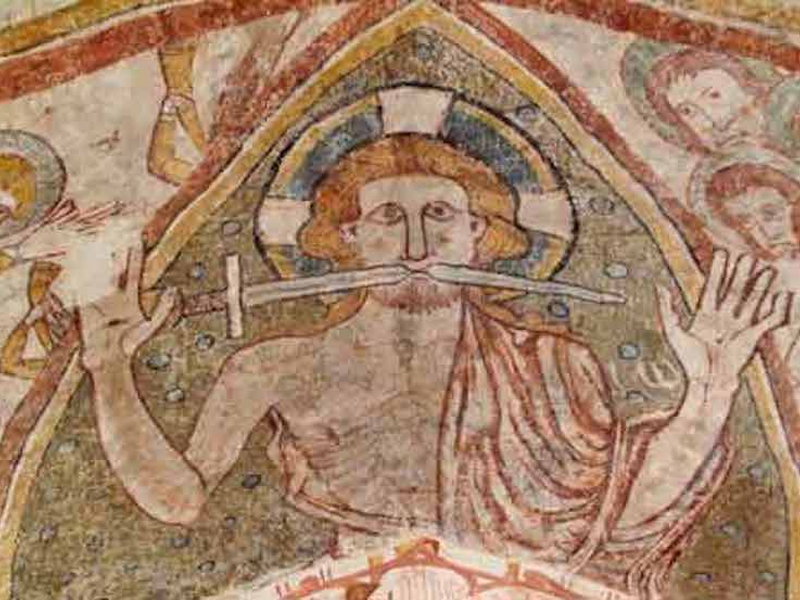
Jesus’ letter to Pergamum mentions Balaam and Balak (Revelation 2:14), and that is a signal that the whole message is running along the lines of Numbers 22-25. The death of the high priest is a sacrificial moment in the life of Israel. According to the rules of the cities of…

by Peter LeithartOctober 1, 2015
marriage
Marriage

The Glory of Self-Giving: A Wedding Homily

As you come to be joined in marriage today, I want to take a moment to focus on one important dimension of what it means to be married as Christians: that is as those who know Jesus and are being made into His likeness. This is a glorious day, full…

by Joshua AppelSeptember 29, 2015
jesus-centurion
Authority

Authority and Faith

When Jesus was entered into Capernaum, there came unto him a centurion, beseeching him, saying, “Lord, my servant lieth at home sick of the palsy, grievously tormented.” Jesus saith unto him, “I will come and heal him.” The centurion answered and said, “Lord, I am not worthy that thou shouldest…

by Lindsey TollefsonSeptember 24, 2015
creation-eve-2
Genesis

The Two Shall Become One Flesh: A Wedding Homily

Philosophers have measured mountains, Fathom'd the depths of seas, of states, and kings, Walk'd with a staff to heaven, and traced fountains But there are two vast, spacious things, The which to measure it doth more behove: Yet few there are that sound them; Sin and Love. The Agonie –…

by Joshua AppelSeptember 22, 2015
john-baptist-pointing
Luke

Of Sandals and Heroes

The third chapter of Luke famously opens with a list of mighty men, seven mighty men, potential heroes of the Mediterranean world. Beginning with Tiberius Caesar and Pontius Pilate, passing on to Herod the Tetrarch and his brothers, and ending with two High Priests, Luke says that the word of…

by Toby SumpterSeptember 17, 2015

Showing page 143 of 309

See all

Showing page 26 of 43

See all

Radical Penance

According to the Muslim commentator Ibn Abbas, “after the fall, Adam and Eve fasted for forty days and Adam abstained from having sex with Eve for a hundred years.”

July 13, 2007
History

Longing for myth

George Williamson argues in Longing for Myth in Germany (Chicago, 2004) that the search for a “new mythology” developed from “the postrevolutionary experience of historical rupture and religious crisis.” Nationalist writers gave a particular spin to this by calling for a “German mythology.” Originally, in the early German romantics, the…

July 13, 2007
Philosophy

Fruhromantik and postmodernism

It is widely argued today that the early German romantic movement anticipates postmodernism; the early romantics were postmoderns before their time. Frederick Beiser differs, and notes three critical differences between German romanticism and the mainstream of postmodern philosophy. First, the early romantics were Platonists “in their belief in a single…

July 13, 2007
Philosophy

Germans Against Descartes

German idealism is often seen as the completion of the subjectivization of knowledge and reality begun by Descartes. Not so, says Frederick Beiser in his massive 2002 history of German idealism (Harvard): “In fundamental respects it is more accurate to say the exact opposite: that the development of German idealism…

July 13, 2007
Philosophy

Amo, ergo sum

Jean-Luc Marion challenges the Cartesian cogito by stressing the primacy of the erotic. According to Descartes’s formula ( Ego sum res cogitans ), “it follows by omission that I am no longer supposed to love, nor to hate; or better: I am of such a sort that I have neither…

July 12, 2007
Theology

Reasonable Christianity

Barth argues that 18th-century rational theology was rooted in prior commitments to peaceable citizenship and morality. The dynamic goes something like this: Christianity is interpreted pragmatically - it’s about the transformation of human life; but it doesn’t work - human life isn’t transformed; there must therefore be something wrong with…

July 12, 2007

Showing page 1656 of 2212

Browse by Category

In Medias Res

Your weekly digest for all things Theopolis.

Donate

Theopolis is nearly 100% donor-supported. Consider joining us on our mission.