Theopolis Logo

Writing

Explore our collection of theological essays, biblical studies, and reflections on faith and culture.

See all
woman-bw
Grace

Never Be Dismayed

I'm afraid of messing up. Not just of messing up in general, but of messing this up—the big This that is the story that is my life, the story that God is attempting to tell with me as His material. The question casts its shadow over all my decisions. Can…

by Leta SundetOctober 6, 2015
jesus-with-sword
Revelation

Greater Phinehas

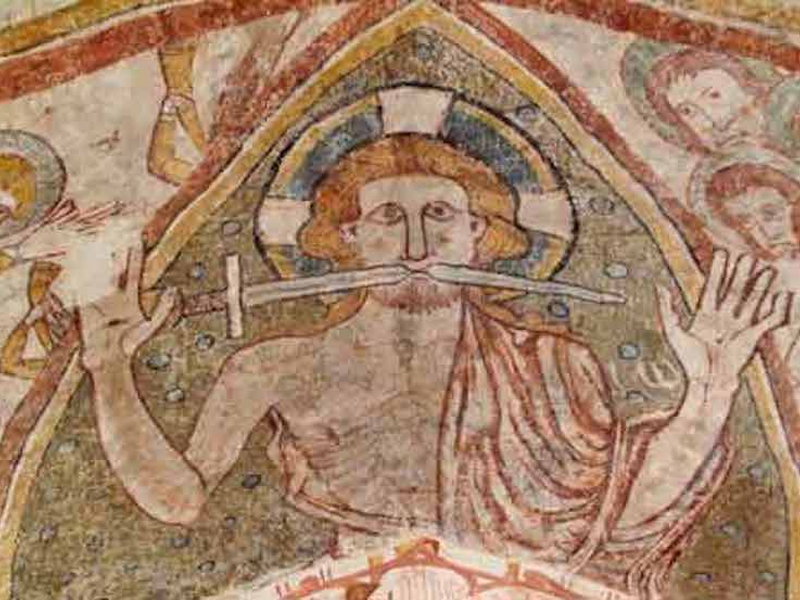
Jesus’ letter to Pergamum mentions Balaam and Balak (Revelation 2:14), and that is a signal that the whole message is running along the lines of Numbers 22-25. The death of the high priest is a sacrificial moment in the life of Israel. According to the rules of the cities of…

by Peter LeithartOctober 1, 2015
marriage
Marriage

The Glory of Self-Giving: A Wedding Homily

As you come to be joined in marriage today, I want to take a moment to focus on one important dimension of what it means to be married as Christians: that is as those who know Jesus and are being made into His likeness. This is a glorious day, full…

by Joshua AppelSeptember 29, 2015
jesus-centurion
Authority

Authority and Faith

When Jesus was entered into Capernaum, there came unto him a centurion, beseeching him, saying, “Lord, my servant lieth at home sick of the palsy, grievously tormented.” Jesus saith unto him, “I will come and heal him.” The centurion answered and said, “Lord, I am not worthy that thou shouldest…

by Lindsey TollefsonSeptember 24, 2015
creation-eve-2
Genesis

The Two Shall Become One Flesh: A Wedding Homily

Philosophers have measured mountains, Fathom'd the depths of seas, of states, and kings, Walk'd with a staff to heaven, and traced fountains But there are two vast, spacious things, The which to measure it doth more behove: Yet few there are that sound them; Sin and Love. The Agonie –…

by Joshua AppelSeptember 22, 2015
john-baptist-pointing
Luke

Of Sandals and Heroes

The third chapter of Luke famously opens with a list of mighty men, seven mighty men, potential heroes of the Mediterranean world. Beginning with Tiberius Caesar and Pontius Pilate, passing on to Herod the Tetrarch and his brothers, and ending with two High Priests, Luke says that the word of…

by Toby SumpterSeptember 17, 2015

Showing page 143 of 309

See all

Showing page 26 of 43

See all
Theology

Practical preaching

In his history of Protestant theology in the 19th century, Barth lists some of the sermon topics of one Traugott Gunther Roller of Schonfels in Kur-Saxony: Fourth Sunday after Epiphany: The Duties of a Christian Congregation saved from the Grave Risk of Fire. Easter: Reasonable Rules for the Christian Burial…

July 12, 2007
Theology

Whose questions?

Bediako neatly describes the dualism that results when the church attempts to apply the questions and answers of European or American Christianity to Africa without addressing the questions of Africans themselves. He quotes John Taylor’s pointed question: “if Christ were to appear as the answer to the questions that Africans…

July 11, 2007
Theology

Against Theology

Bediako criticizes other African theologians who claim that there is no African theological tradition. There is, he admits, not much if we’re looking for school theology. But focusing on that lack misses the real action - the “grassroots” theology expressed in songs, worship, sermons, personal evangelism, etc. And this is…

July 11, 2007

Christos kurios

One of Afua Kuma’s hymns to Jesus describes Him as an arriving hero: “Children rush to meet Him crowds of young people rush about to make Him welcome. Chief of young women: they have strung a necklace of gold nuggets and beads and hung it around Your neck so we…

July 11, 2007

Jesus of the Deep Forest

In the songs and praises of the illiterate Ghanian Christian, Christina Afua Gyan (or Afua Kuma), Jesus is described as a powerful Protector in a world teeming with dangers. “Should the devil himself become a lion and chase us as his prey, we shall have no fear Lamb of God!…

July 11, 2007
Theology

Good/evil or finite/infinite

What Milbank describes as “postmodern Kantianism” (in Zizek, Nancy, and others) wants to take evil seriously, which means “positively.” They do not think Augustine’s theory adequately accounts for modern evil, complaining that the Augustinian account’s weakness left Europe open to the possibility of radical evil. Milbank suggests on the contrary…

July 11, 2007

Showing page 1657 of 2212

Browse by Category

In Medias Res

Your weekly digest for all things Theopolis.

Donate

Theopolis is nearly 100% donor-supported. Consider joining us on our mission.