Theopolis Logo

Writing

Explore our collection of theological essays, biblical studies, and reflections on faith and culture.

See all
sixteen-miles-out-al48tflf4e8-unsplash
Food

Gluttony In The Bible (As Opposed To Gluttony In The American Church)

In the Bible, fatness is such a blessing, that it is especially hard to understand why wicked men are permitted to enjoy such a state. It requires a theodicy and faith in God. Thus: “For they have no pangs until death; their bodies are fat and sleek . They are…

by Mark HorneAugust 12, 2013

jeremy-yap-j39x2xx_8cq-unsplash
How to Worship

Biblical Worship (Video with James B. Jordan)

[fve]http://vimeo.com/71901553[/fve]

by Peter LeithartAugust 8, 2013
chris-bair-ndczc5739ck-unsplash
Deuteronomy

Holy Things for Holy People

The allusion to the Exodus story is contained in the first words of Deuteronomy 14:1 — “ye are the sons of Yahweh your God” — as well as in 14:2 in the use of the technical term translated “treasured possession,” “His own possession,” “peculiar people,” “precious people,” and so forth.…

by Ralph Allan SmithAugust 5, 2013
adam-and-eve-in-the-garden-of-eden-wenzel-peter
Deuteronomy

Forbidden Foods

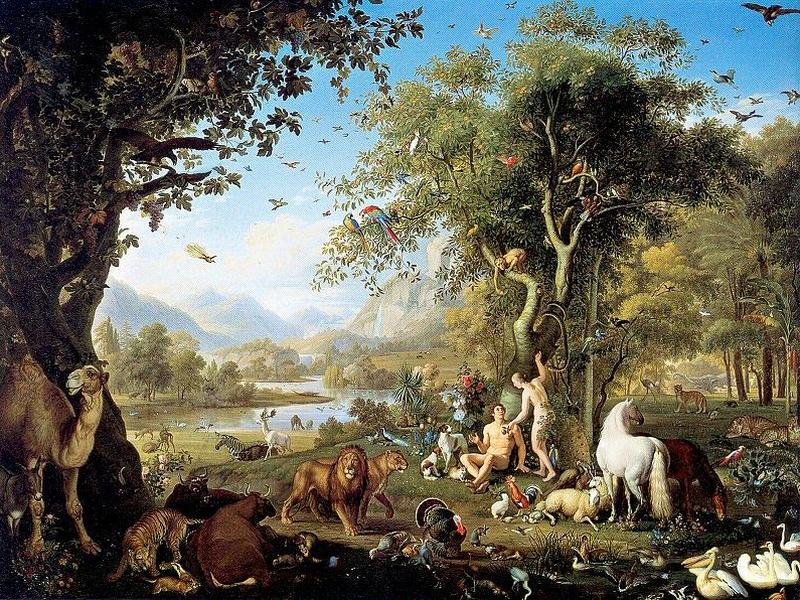
I have argued that Deuteronomy 14:1-21 is an independent literary unit that applies the Third Word to the lives of Israelites from the time of Moses and Joshua. In this short pericope, Moses suggests broad and deep meaning by means of literary allusion to the stories of the creation and…

by Ralph Allan SmithJuly 31, 2013
david-weber-fwuo_zluhnw-unsplash
How to Worship

Pro-Sacramental Reformation

In his recently republished The New Creation , the late, delightful Herbert McCabe defends the priesthood of the plebs as roundly as anyone could want. Citing Hebrews, he claims that "there is an essential difference between the Christian community and the community of the Old Law, or any other religious…

by Peter LeithartJuly 29, 2013
eric-ward-7kqe_8meex8-unsplash
Augustine

Sexual Idolatry

Augustine famously prayed, “Our hearts our restless until they rest in You.” True indeed. Being creatures, we inherently sense our ontological poverty—our innate condition of dependence—and are compelled to find a sense of security. And it is also true—as Augustine’s own narrative painfully illustrates—that one of the things we most…

by Gerald HiestandJuly 24, 2013

Showing page 190 of 309

See all

Showing page 26 of 43

See all

Sermon outline

INTRODUCTION John’s readers are in danger of being misled, and John writes to warn them about false teachers and deceivers. John is confident that his “little children” will be delivered from the deceivers because they have an “anointing” from God. THE TEXT “Little children, it is the last hour; and…

October 31, 2006
Theology

Liberalism

Christopher Insole wants theologians who attack “liberalism” to be more careful about what they’re attacking. He favorably cites Robert Song, who distinguishes the constitutional liberalism of Locke and Kant from the laissez-faire liberalism of Hayek from the welfare liberalism of Hobhouse. Fair enough. But Insole’s own definition of liberalism seems…

October 23, 2006

Eucharistic meditation

1 John 2:15-16: Do not love the world, nor the things in the world. If anyone loves the world, the love of the Father is not in him. When John talks about “the world,” he’s talking, as we’ve seen, about a cultural, social, and political system organized in hostility or…

October 22, 2006

Exhortation

Cultures have traditionally been rivers (Z. Bauman). The current carries everyone along in the same direction, whether or not they like where they’re going. When someone asks, “Why are we going this way?” it’s a sufficient answer to say, “We always have.” The only way to go a different direction…

October 22, 2006
History

Legitimacy of modernity

Modernity arose to tame the chaos and carnage of 16th and 17th-century European wars. To form a Europe reduced to formlessness, modern thinkers and politicians drew boundaries - the boundaries between Protestant and Catholic established in the Peace of Westphalia and the boundaries between religion and political life, among others.…

October 19, 2006
History

High and Low Theater

Katherine Newey suggests that “a class-based divide between popular culture and literary or ‘high,’ remaining to this day, emerged in debates over the reform of the theatre [in the 19th century]. Much of what still endures of the concept of ‘legitimate’ theatre in the early twenty-first century was formed out…

October 18, 2006

Showing page 1773 of 2212

Browse by Category

In Medias Res

Your weekly digest for all things Theopolis.

Donate

Theopolis is nearly 100% donor-supported. Consider joining us on our mission.