Theopolis Logo

Writing

Explore our collection of theological essays, biblical studies, and reflections on faith and culture.

See all
tanner-mardis-xuxghzhibn4-unsplash-1-2
Biblical Studies

Tweets-turned-Notes on the Bible’s Chronology

Summary In what follows, I will consider the “year-stamps” employed in Scripture, i.e., statements of the form, “Such-and-such an event took place in the Xth year of Y.” In the process, I will suggest some ways in which the Biblical narrative might relate to events in the extra-Biblical world, though…

by James BejonJuly 16, 2019
durer-prodigal-son-2
Luke

Perspectives on the Prodigal, (Part 2)

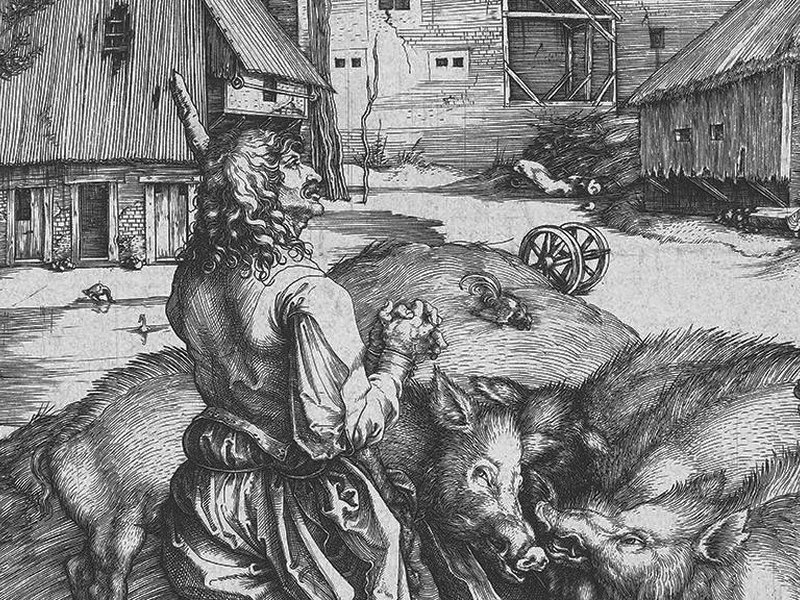
In the first essay on the parable of the Prodigal Son, I suggested that the problems commentators and others encounter in interpreting Jesus three-part parable are not accidental. These are not just problems in our ignorance of cultural background. They are intentional features of the stories —stories designed to poke…

by Ralph Allan SmithJuly 11, 2019
durer-prodigal-son-2
Luke

Perspectives on the Prodigal, (Part 1)

The story of the Prodigal Son is perhaps the most well-known story in the Bible. As others have observed, it may also be one of the most misunderstood. In two short essays, I will point out features of this story that are commonly neglected, aspects of Jesus’ parable that might…

by Ralph Allan SmithJuly 9, 2019
de-rijke-man-en-de-arme-lazarus-by-jacopo-da-ponte-16th-century
Luke

Lazarus and the Rich Man

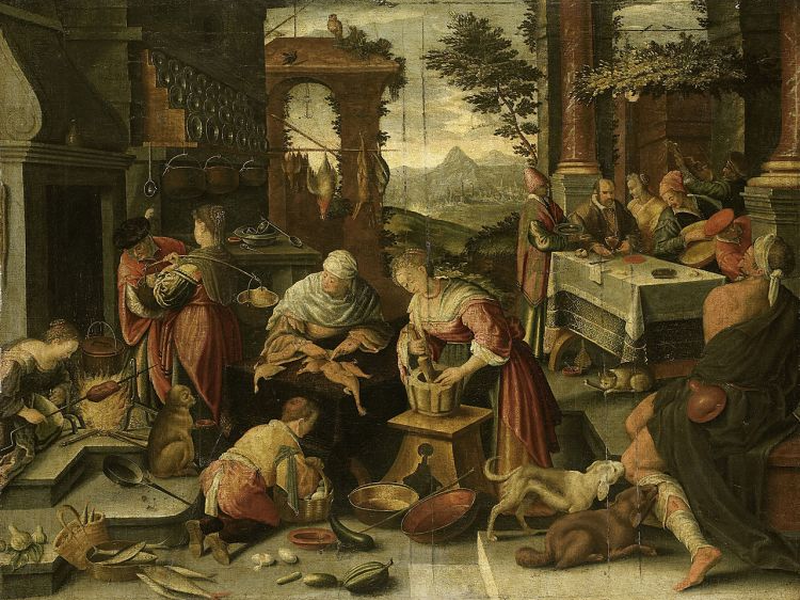
The parable of Lazarus and the nameless rich man is not an independent story. It is part of a long context that begins in Luke 15:1, where Jesus is eating with tax collectors and sinners and the scribes and Pharisees grumble. In response to their hardheartedness, Jesus tells a three-part…

by Ralph Allan SmithJuly 4, 2019
aaron-burden-uynrnfdkjwg-unsplash
Luke

Everybody has Dropsy - Luke 14:1-24

The Bible is written so that even when a reader cannot pick up on what might be deeper or more detailed aspects of a text, there is virtually always a message to be heard. In the ancient world, where the “reader” of Scripture would likely be a church official facing…

by Ralph Allan SmithJuly 2, 2019
communion
Biblical Theology

Fruit Trees and Grain Plants

The distinction between garden (or vineyard) and field begins in Genesis 2. This relates to the ordering of the formless world. Plants of the field are contrasted with the garden planted by God in Genesis 2:5&8. Later on, under the Old Covenant the Israelites will be required to keep their…

by James B. JordanJune 27, 2019

Showing page 77 of 309

See all

Showing page 26 of 43

See all

Primal Wound

During the night before Jacob returns from his sojourn with Laban in Haran, a man confronts him and they wrestle (Genesis 32). Jacob refuses to let the man go and the man touches him in the yerekh - usually translated as “socket of his thigh.” He returns to the land,…

June 25, 2015
American Religion

Techno-Ecumenism

Robert Wuthnow points out ( Boundless Faith , 115-6) that improvements in technology enabled leaders to transcend denominational boundaries: “Communication and travel increased the opportunities to organize transnational ministries in new ways, just as philanthropy and fund-raising techniques did. The earlier denominational boards depended on corresponding secretaries to stay in…

June 25, 2015

Confederate Civil Religion

I n an essay in Judgment & Grace in Dixie , Charles Wilson Reagan traces the evolution of Southern civil religion from 1920 to 1980. He argues that over the decades the civil religion of the lost cause “evolved from a public faith celebrating the virtues of a religiously sanctioned…

June 25, 2015

Sacrificing Babylon

The ten horns join with the beast in slaughtering the harlot city Babylon. It's a macabre scene, marked by five relentless verbs - hate, desolate, make naked, eat, burn - and by a bizarre sequence of actions. It's a sacrificial sequence. An ascension offering (Leviticus 1) was prepared for offering…

June 24, 2015
Denominationalism

Denomination—Creed, Organization, Culture

N ancy Ammerman's contribution to Denominationalism is outstanding. She asks what we're studying when we study denominations, and she comes up with three answers: A group of Christian communities defined by a common set of beliefs and practices; an organization; and a cultural profile (evident, for instance, in Episcopalian jokes).…

June 24, 2015
Denominationalism

Fundamentalism and Modernism

Nancy Ammerman briefly examines the “shifting terrain” at the close of her essay in Denominationalism . Choice seems to have taken over the religious landscape, displacing ethnic associations, family and upbringing. Many change denominations during their lifetimes; fewer think it important to marry within their denominations. Congregations function independently of…

June 24, 2015

Showing page 407 of 2212

Browse by Category

In Medias Res

Your weekly digest for all things Theopolis.

Donate

Theopolis is nearly 100% donor-supported. Consider joining us on our mission.