Theopolis Logo

Writing

Explore our collection of theological essays, biblical studies, and reflections on faith and culture.

See all
tanner-mardis-xuxghzhibn4-unsplash-1-2
Biblical Studies

Tweets-turned-Notes on the Bible’s Chronology

Summary In what follows, I will consider the “year-stamps” employed in Scripture, i.e., statements of the form, “Such-and-such an event took place in the Xth year of Y.” In the process, I will suggest some ways in which the Biblical narrative might relate to events in the extra-Biblical world, though…

by James BejonJuly 16, 2019
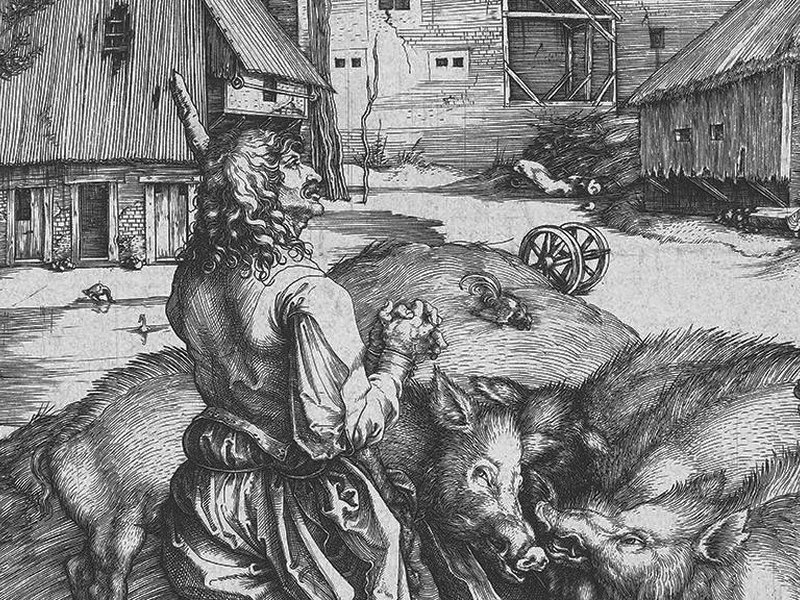
durer-prodigal-son-2
Luke

Perspectives on the Prodigal, (Part 2)

In the first essay on the parable of the Prodigal Son, I suggested that the problems commentators and others encounter in interpreting Jesus three-part parable are not accidental. These are not just problems in our ignorance of cultural background. They are intentional features of the stories —stories designed to poke…

by Ralph Allan SmithJuly 11, 2019
durer-prodigal-son-2
Luke

Perspectives on the Prodigal, (Part 1)

The story of the Prodigal Son is perhaps the most well-known story in the Bible. As others have observed, it may also be one of the most misunderstood. In two short essays, I will point out features of this story that are commonly neglected, aspects of Jesus’ parable that might…

by Ralph Allan SmithJuly 9, 2019
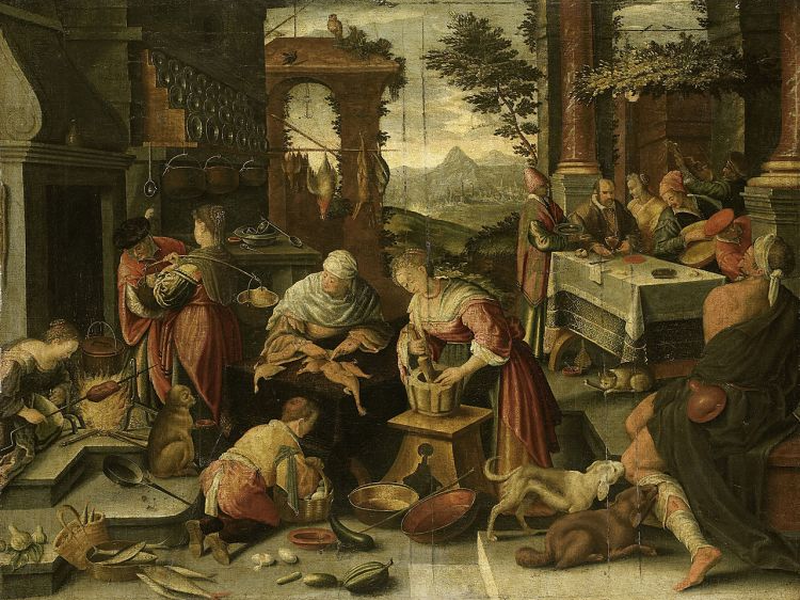
de-rijke-man-en-de-arme-lazarus-by-jacopo-da-ponte-16th-century
Luke

Lazarus and the Rich Man

The parable of Lazarus and the nameless rich man is not an independent story. It is part of a long context that begins in Luke 15:1, where Jesus is eating with tax collectors and sinners and the scribes and Pharisees grumble. In response to their hardheartedness, Jesus tells a three-part…

by Ralph Allan SmithJuly 4, 2019
aaron-burden-uynrnfdkjwg-unsplash
Luke

Everybody has Dropsy - Luke 14:1-24

The Bible is written so that even when a reader cannot pick up on what might be deeper or more detailed aspects of a text, there is virtually always a message to be heard. In the ancient world, where the “reader” of Scripture would likely be a church official facing…

by Ralph Allan SmithJuly 2, 2019
communion
Biblical Theology

Fruit Trees and Grain Plants

The distinction between garden (or vineyard) and field begins in Genesis 2. This relates to the ordering of the formless world. Plants of the field are contrasted with the garden planted by God in Genesis 2:5&8. Later on, under the Old Covenant the Israelites will be required to keep their…

by James B. JordanJune 27, 2019

Showing page 77 of 309

See all

Showing page 26 of 43

See all
Eucharist

Apotheosis of Consumerism

Though the presence of Christ has been central to Eucharistic theology, Thomas O'Loughlin ( The Eucharist ) argues that in Tridentine Catholicism”the dominant thinking about the event of physical engagement with the Eucharist was imagined in terms of a sacred commodity. The priest ‘confected' the Eucharist, it was reserved for…

May 6, 2015

Victorian Forgiveness

Early in his Forgiveness in Victorian Literature , Richard Gibson quotes Sarah Beckwith's observation that “promising and forgiving [are] acts of making community” (27). Gibson draws on Hannah Arendt's analysis to fill out the picture. Promises reduce the unpredictability of the future, while “forgiveness confronts the crisis of the past.…

May 6, 2015
Jane Austen

Jane Austen's Names

Margaret Doody's Jane Austen's Names is a treasure chest. On the assumption that “an artist cannot do anything slovenly,” Doody explores the historical significance of the real place names that appear in Austen's novels, teases out the puns in the characters' names, suggests that Austen was sensitive to the ethnic…

May 6, 2015

Evangelizing Metaphysics

Key terms of ancient philosophy are rare or entirely absent in the New Testament. Aristotle considered the study of causes ( aitia ) and principles ( archai ) to be the subject matter of first philosophy ( Metaphysics A.1,981b28), and he defines metaphysics as the study “of the things which…

May 6, 2015

Nature and Equality

Norberto Bobbio ( Left and Right ) claims that left and right are different because of their different evaluations of equality. He starts from the uncontroversial fact that people are equal in certain respects, unequal in others, and claims that “We can then correctly define as egalitarians those who ,…

May 5, 2015

Difference Principle

John Rawls's notion of “difference principle” is an alternative to a meritocratic regime, but it is also different from equality of result. As Michael Sandell explains in Liberalism and the Limits of Justice , Rawls denies that the difference principle eliminates distinctions between persons. The difference principle aims at the…

May 5, 2015

Showing page 430 of 2212

Browse by Category

In Medias Res

Your weekly digest for all things Theopolis.

Donate

Theopolis is nearly 100% donor-supported. Consider joining us on our mission.