Theopolis Logo

Writing

Explore our collection of theological essays, biblical studies, and reflections on faith and culture.

See all
tanner-mardis-xuxghzhibn4-unsplash-1-2
Biblical Studies

Tweets-turned-Notes on the Bible’s Chronology

Summary In what follows, I will consider the “year-stamps” employed in Scripture, i.e., statements of the form, “Such-and-such an event took place in the Xth year of Y.” In the process, I will suggest some ways in which the Biblical narrative might relate to events in the extra-Biblical world, though…

by James BejonJuly 16, 2019
durer-prodigal-son-2
Luke

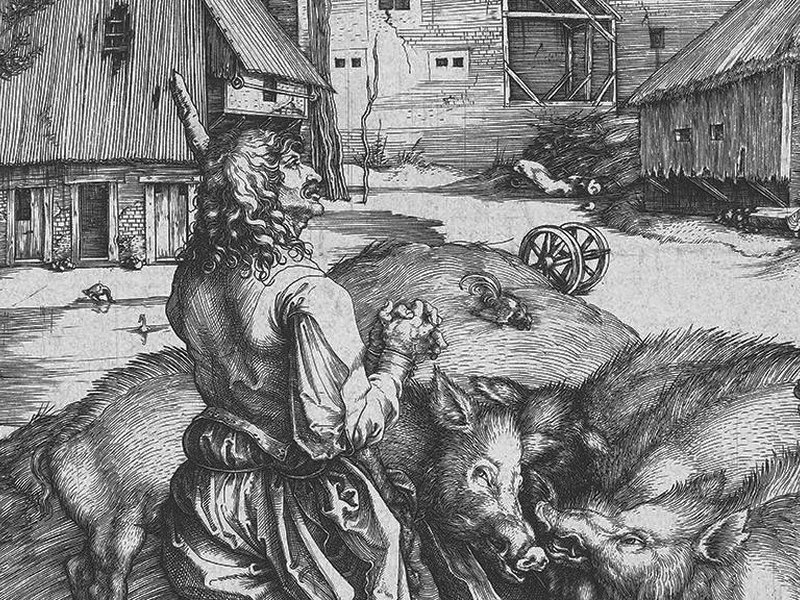
Perspectives on the Prodigal, (Part 2)

In the first essay on the parable of the Prodigal Son, I suggested that the problems commentators and others encounter in interpreting Jesus three-part parable are not accidental. These are not just problems in our ignorance of cultural background. They are intentional features of the stories —stories designed to poke…

by Ralph Allan SmithJuly 11, 2019
durer-prodigal-son-2
Luke

Perspectives on the Prodigal, (Part 1)

The story of the Prodigal Son is perhaps the most well-known story in the Bible. As others have observed, it may also be one of the most misunderstood. In two short essays, I will point out features of this story that are commonly neglected, aspects of Jesus’ parable that might…

by Ralph Allan SmithJuly 9, 2019
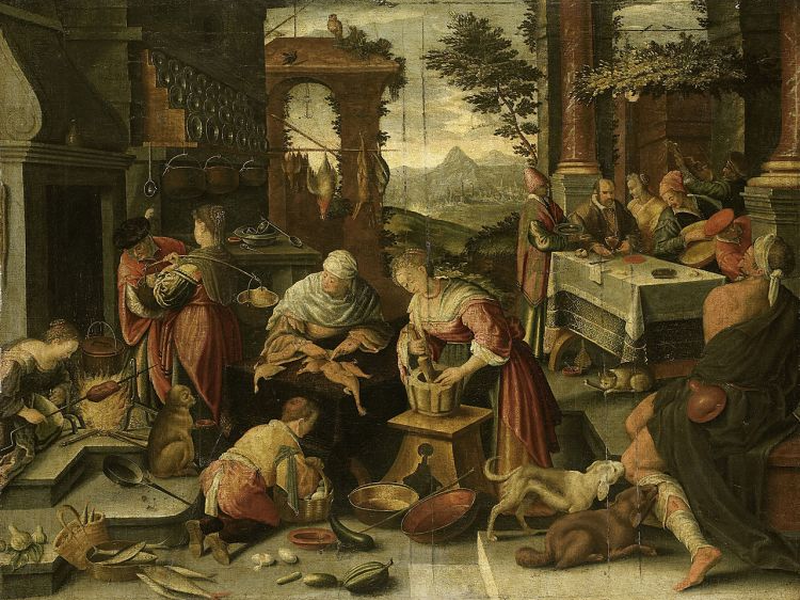
de-rijke-man-en-de-arme-lazarus-by-jacopo-da-ponte-16th-century
Luke

Lazarus and the Rich Man

The parable of Lazarus and the nameless rich man is not an independent story. It is part of a long context that begins in Luke 15:1, where Jesus is eating with tax collectors and sinners and the scribes and Pharisees grumble. In response to their hardheartedness, Jesus tells a three-part…

by Ralph Allan SmithJuly 4, 2019
aaron-burden-uynrnfdkjwg-unsplash
Luke

Everybody has Dropsy - Luke 14:1-24

The Bible is written so that even when a reader cannot pick up on what might be deeper or more detailed aspects of a text, there is virtually always a message to be heard. In the ancient world, where the “reader” of Scripture would likely be a church official facing…

by Ralph Allan SmithJuly 2, 2019
communion
Biblical Theology

Fruit Trees and Grain Plants

The distinction between garden (or vineyard) and field begins in Genesis 2. This relates to the ordering of the formless world. Plants of the field are contrasted with the garden planted by God in Genesis 2:5&8. Later on, under the Old Covenant the Israelites will be required to keep their…

by James B. JordanJune 27, 2019

Showing page 77 of 309

See all

Showing page 26 of 43

See all

Bestial Covenant

The sea beast wages war against the saints (Revelation 13:7), assisted by the land beast (13:11-15), also known as the “false prophet” (16:13; 19:20; 20:10). That the land beast is a prophet gives us a big clue to what’s happening. Prophets end and initiate covenants; prophets are the sacred architects…

February 5, 2015

Thigh of the Peace Offering

In the Levitical law, the priests received two particular portions of each peace offering: the “wave offering” of the breast and the “heave offering” (or better, “contribution”) of the right thigh. The purpose of this essay is to attempt to determine the reason why the second of these, the thigh,…

February 5, 2015

Youthening

Robert Pogue Harrison glances at his father’s college yearbook and finds that “twelve-year-old boys looked like little adults, their faces furrowed by the depths of time” ( Juvenescence , x). We’re younger now: “the first-world face of today remains callow, even as it withers away with age, never attaining the…

February 5, 2015

Neoteny

Neoteny comes from two Greek words, “new” and “hold.” As Robert Pogue Harrison defines it ( Juvenescence , 18), evolutionary biology speaks of neoteny as the “persistence of fetal, larval, or juvenile features in adult organisms.” Harrison means something more broader, “a modified type of development that brings juvenile traits…

February 5, 2015

Structure and Style in Revelation 13

John’s description of the land beast and his work in Revelation 13:11-15 is organized in a fairly neat chiasm: A. Another beast like a lamb, speaking as a dragon, 13:11 B. He has the authority of the first beast, 13:12a C. He makes land-dwellers worship the first beast, who was…

February 4, 2015

UnProtestant Protestants

Robert McAfee Brown summarizes The Spirit of Protestantism as “an openness to the judging and renewing activity of the living God made known in Jesus Christ.” It’s a willingness to “submit to the corrective activity of God,” and “to live at risk.” Protestantism claims that it’s only in “constant renewal…

February 4, 2015

Showing page 467 of 2212

Browse by Category

In Medias Res

Your weekly digest for all things Theopolis.

Donate

Theopolis is nearly 100% donor-supported. Consider joining us on our mission.