Theopolis Logo

Writing

Explore our collection of theological essays, biblical studies, and reflections on faith and culture.

See all
sixteen-miles-out-al48tflf4e8-unsplash
Food

Gluttony In The Bible (As Opposed To Gluttony In The American Church)

In the Bible, fatness is such a blessing, that it is especially hard to understand why wicked men are permitted to enjoy such a state. It requires a theodicy and faith in God. Thus: “For they have no pangs until death; their bodies are fat and sleek . They are…

by Mark HorneAugust 12, 2013

jeremy-yap-j39x2xx_8cq-unsplash
How to Worship

Biblical Worship (Video with James B. Jordan)

[fve]http://vimeo.com/71901553[/fve]

by Peter LeithartAugust 8, 2013
chris-bair-ndczc5739ck-unsplash
Deuteronomy

Holy Things for Holy People

The allusion to the Exodus story is contained in the first words of Deuteronomy 14:1 — “ye are the sons of Yahweh your God” — as well as in 14:2 in the use of the technical term translated “treasured possession,” “His own possession,” “peculiar people,” “precious people,” and so forth.…

by Ralph Allan SmithAugust 5, 2013
adam-and-eve-in-the-garden-of-eden-wenzel-peter
Deuteronomy

Forbidden Foods

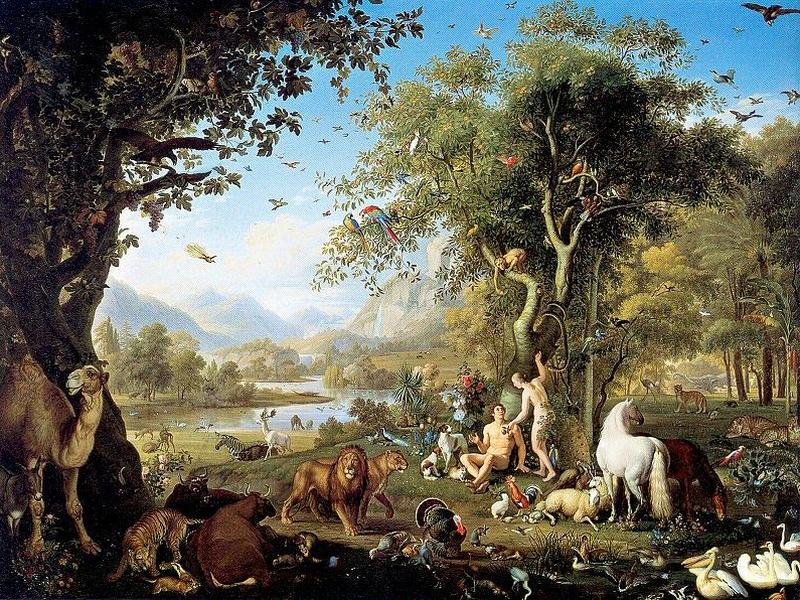
I have argued that Deuteronomy 14:1-21 is an independent literary unit that applies the Third Word to the lives of Israelites from the time of Moses and Joshua. In this short pericope, Moses suggests broad and deep meaning by means of literary allusion to the stories of the creation and…

by Ralph Allan SmithJuly 31, 2013
david-weber-fwuo_zluhnw-unsplash
How to Worship

Pro-Sacramental Reformation

In his recently republished The New Creation , the late, delightful Herbert McCabe defends the priesthood of the plebs as roundly as anyone could want. Citing Hebrews, he claims that "there is an essential difference between the Christian community and the community of the Old Law, or any other religious…

by Peter LeithartJuly 29, 2013
eric-ward-7kqe_8meex8-unsplash
Augustine

Sexual Idolatry

Augustine famously prayed, “Our hearts our restless until they rest in You.” True indeed. Being creatures, we inherently sense our ontological poverty—our innate condition of dependence—and are compelled to find a sense of security. And it is also true—as Augustine’s own narrative painfully illustrates—that one of the things we most…

by Gerald HiestandJuly 24, 2013

Showing page 190 of 309

See all

Showing page 27 of 43

See all

Suffer the Children

Judith Gundry's contribution to The Child in the Bible examines the place of children in Mark's gospel, with particular focus on the episode of Jesus blessing the children. It's an illuminating essay. Mark includes no infancy narratives, but regularly shows Jesus exerting the power of the kingdom to rescue and…

November 14, 2017

Justification in the Age of Emancipation

In his Happiness Paradox , Ziyad Marar explores the sources of "justification." Humiliation is a uniquely human form of suffering. How do we deal with it? Our strategies for staving off humiliation are strategies of "justification." Freud offers some possibilities, He "enumerates a range of ways we avoid this kind…

November 13, 2017

Mystical Atheism

Virginia Woolf, atheist though she was, couldn't avoid religious language when she spoke about her writing. Writing began from "a revelation of some order; it is a token of some real thing behind appearances; and I make it real by putting it into words." It was her "shock-receiving capacity is…

November 10, 2017

Tales of Reason

Robert Brandom ( Tales of the Mighty Dead , 13-14) observes a continuity between Hegel and Kant: Both take concepts as "norms for judgment. They determine proprieties of application to particulars of terms that, because of the normative role they play in such judgments, express universals." But then Hegel adds…

November 10, 2017

Tridentine Utraquism

Did the Council of Trent allow communion in both kinds, in bread and wine? The answer is complicated. Nathan Mitchell ( Oxford History of Christian Worship , 338-9) writes that "After intense behind-the-scenes negotiations, Pope Pius IV authorized communion in both species for German (16 April 1564). In effect, the…

November 10, 2017
Reformation

Misreading the Reformation

Reviewing Carlos Eire's Reformations at First Things , Eamon Duffy claims that "Protestantism 'desacralized' the world by accepting an essentially binary division of reality into spirit and matter. That division was expressed in Reformation iconoclasm and the rejection of the notion that material objects—the bread and wine of the Mass,…

November 10, 2017

Showing page 123 of 2212

Browse by Category

In Medias Res

Your weekly digest for all things Theopolis.

Donate

Theopolis is nearly 100% donor-supported. Consider joining us on our mission.