Theopolis Logo

Writing

Explore our collection of theological essays, biblical studies, and reflections on faith and culture.

See all
sixteen-miles-out-al48tflf4e8-unsplash
Food

Gluttony In The Bible (As Opposed To Gluttony In The American Church)

In the Bible, fatness is such a blessing, that it is especially hard to understand why wicked men are permitted to enjoy such a state. It requires a theodicy and faith in God. Thus: “For they have no pangs until death; their bodies are fat and sleek . They are…

by Mark HorneAugust 12, 2013

jeremy-yap-j39x2xx_8cq-unsplash
How to Worship

Biblical Worship (Video with James B. Jordan)

[fve]http://vimeo.com/71901553[/fve]

by Peter LeithartAugust 8, 2013
chris-bair-ndczc5739ck-unsplash
Deuteronomy

Holy Things for Holy People

The allusion to the Exodus story is contained in the first words of Deuteronomy 14:1 — “ye are the sons of Yahweh your God” — as well as in 14:2 in the use of the technical term translated “treasured possession,” “His own possession,” “peculiar people,” “precious people,” and so forth.…

by Ralph Allan SmithAugust 5, 2013
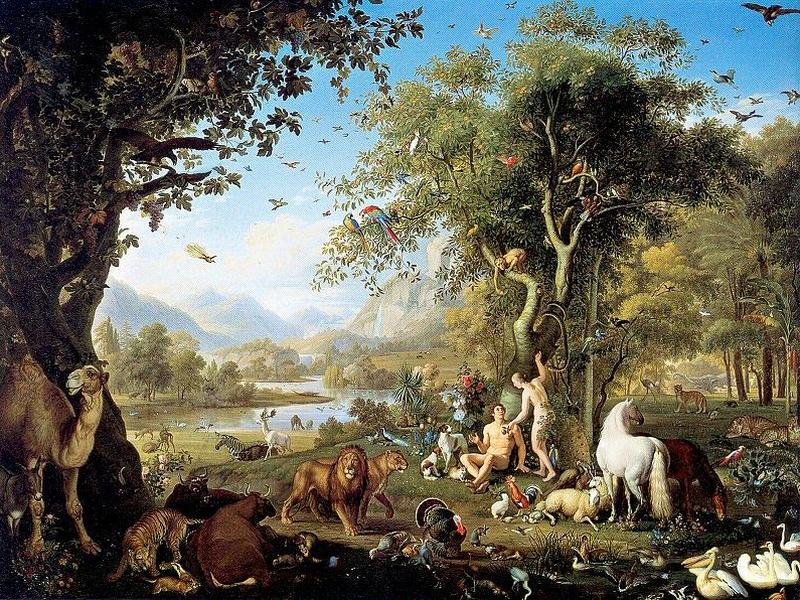
adam-and-eve-in-the-garden-of-eden-wenzel-peter
Deuteronomy

Forbidden Foods

I have argued that Deuteronomy 14:1-21 is an independent literary unit that applies the Third Word to the lives of Israelites from the time of Moses and Joshua. In this short pericope, Moses suggests broad and deep meaning by means of literary allusion to the stories of the creation and…

by Ralph Allan SmithJuly 31, 2013
david-weber-fwuo_zluhnw-unsplash
How to Worship

Pro-Sacramental Reformation

In his recently republished The New Creation , the late, delightful Herbert McCabe defends the priesthood of the plebs as roundly as anyone could want. Citing Hebrews, he claims that "there is an essential difference between the Christian community and the community of the Old Law, or any other religious…

by Peter LeithartJuly 29, 2013
eric-ward-7kqe_8meex8-unsplash
Augustine

Sexual Idolatry

Augustine famously prayed, “Our hearts our restless until they rest in You.” True indeed. Being creatures, we inherently sense our ontological poverty—our innate condition of dependence—and are compelled to find a sense of security. And it is also true—as Augustine’s own narrative painfully illustrates—that one of the things we most…

by Gerald HiestandJuly 24, 2013

Showing page 190 of 309

See all

Showing page 27 of 43

See all
History

Hyperreal

Baudrillard sounds like a nut when he says that we are now living in a hyperreal world, a virtual world. But there is certainly something to it. We’re still physical creatures, of course, surrounded by physical objects, and that doesn’t change when we get strapped in for some virtual experience.…

November 2, 2006
History

Community of the fearful

Postmodernity unleashes fear, Bauman says: “Modernity was a continuous and uncompromising effort to fill or to cover up the void; the modern mentality held a stern belief that the job can be done - if not today then tomorrow. The sin of postmodernity is to abandon the effort and to…

November 2, 2006
History

Chronopolitics

Johannes Fabian argues in his Time and the Other that “geopolitics has its ideological foundations in chronopolitics.” Bauman summarizes the argument: “The modern perspective ‘denied coevality’ to any form of life different from its own; it construed the Other of itself as ‘living in another time.’ The allochronic distancing device…

November 2, 2006
History

Slavery in America

In his recent history of slavery in the New World, David Brion Davis records some surprising facts about American slavery. Prior to 1820, for instance, African slaves were more numerous than European settlers by a ratio of 5 to 1. About 5-6 percent of slaves in the Western hemisphere were…

November 1, 2006
Politics

Toleration and absolutism

In his history of the idea of toleration, the late A.J. Conyers summarizes the arguments of Robert P. Kraynak on the development of Locke’s thought on religious toleration. The puzzle is this: Locke’s early works are absolutist in a Hobbesian vein, invoking the supreme magistrate’s power to oversee religion for…

November 1, 2006
Literature

Herbert on Pop Music

Zbigniew Herbert writes in a poem entitled “Mr Cogito and Pop” of a visit to a concert. “Mr Cogito,” a recurring character in Herbert’s poems, reflects on the “aesthetics of noise” and offers some penetrating observations on the character of contemporary pop music: “to be a god means to hurl…

November 1, 2006

Showing page 1772 of 2212

Browse by Category

In Medias Res

Your weekly digest for all things Theopolis.

Donate

Theopolis is nearly 100% donor-supported. Consider joining us on our mission.