Theopolis Logo

Writing

Explore our collection of theological essays, biblical studies, and reflections on faith and culture.

See all
der_anschlag_von_luthers_95_thesen-1024x589
Church Calendar

Five Misconceptions of Reformation Day

For many people the date October 31 is significant not only for being the Eve of All Saints (All Hallows Eve, Halloween) but as the day in 1517 when Martin Luther nailed his 95 theses to the door of the Castle Church in Wittenburg. These theses were a list of…

by Timothy LeCroyOctober 31, 2017
sacre-bleu-r__kixb0i5m-unsplash
Church Calendar

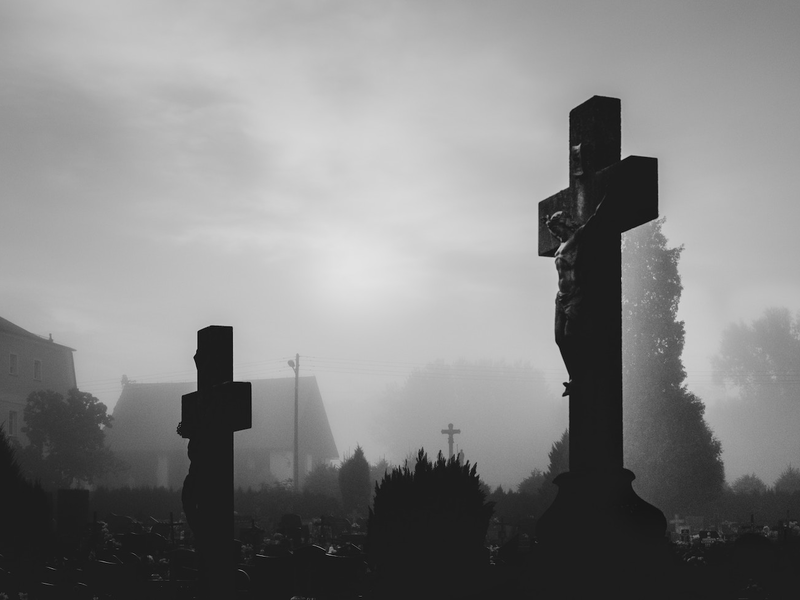
Concerning Halloween

It has become routine in October for some Christian schools to send out letters warning parents about the evils of Halloween, and it has become equally routine for me to be asked questions about this matter. "Halloween" is simply a contraction for All Hallows’ Eve. The word "hallow" means "saint,"…

by James B. JordanOctober 26, 2017
revelation-john-with-rod
Revelation

Preaching, An Art of Division

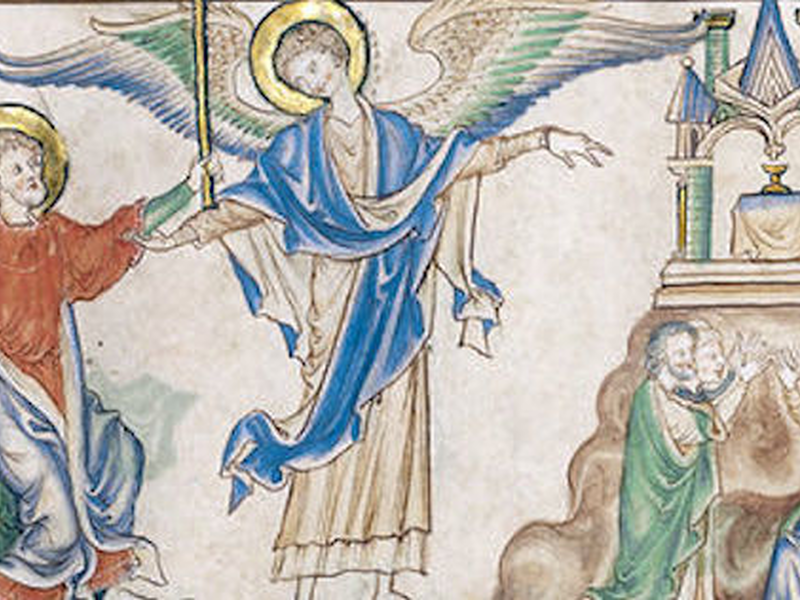
The following is an excerpt from Peter Leithart's forthcoming two-volume commentary on Revelation (T&T Clark). Y ou must prophesy again concerning many peoples and nations and tongues and kings,” a voice tells John (Rev. 10:11). Then someone gives him a “reed like a rod” and instructs him to measure (11:1).…

by Peter LeithartOctober 24, 2017
josiah-death

Back To Egypt

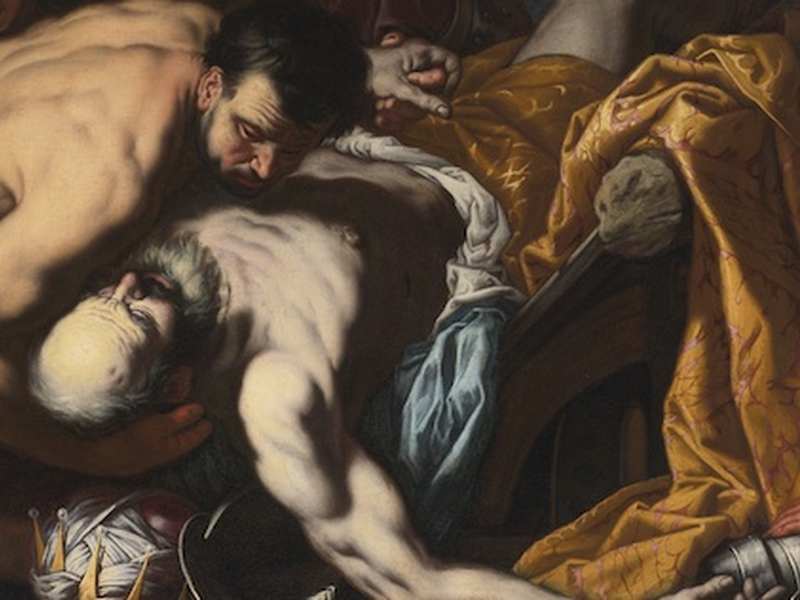
Josiah is an ideal Davidic king in many ways. He not only “did right,” but he “walked in the ways of his father David” and “did not turn aside to the right or to the left” (2 Chronicles 34:2). At the age of 16, he began to seek Yahweh, and…

by Peter LeithartOctober 19, 2017
augustine
Augustine

Augustine and the Music of Time

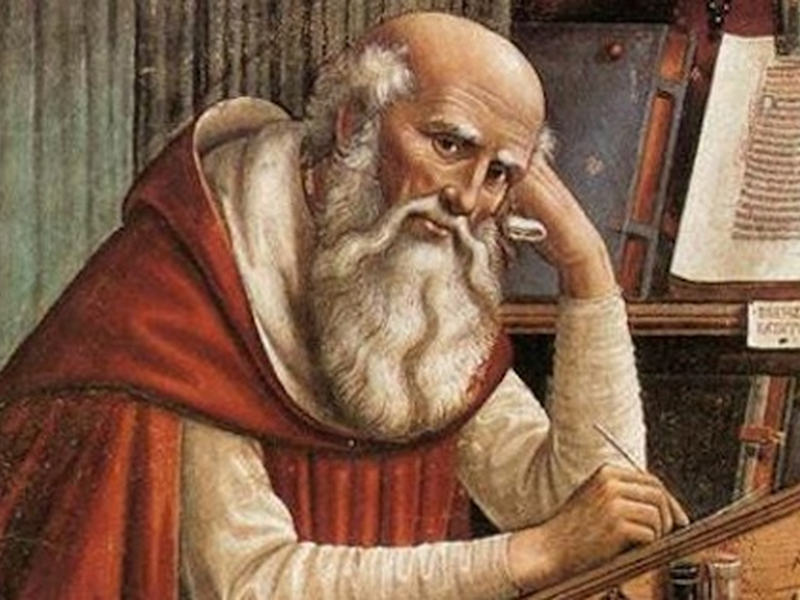
One of the best discussions of Augustine’s views on time comes from Jeremy Begbie’s Theology, Music, and Time (ch. 3). Following Paul Ricoeur, Begbie claims that Augustine’s distentio “is conceived as the three-fold present, and the threefold present as distentio . The distentio consists in the non-coincidence of the mind’s…

by Peter LeithartOctober 17, 2017
img_1043
How to Worship

The Psalter Should be Woven into the Fabric of Worship

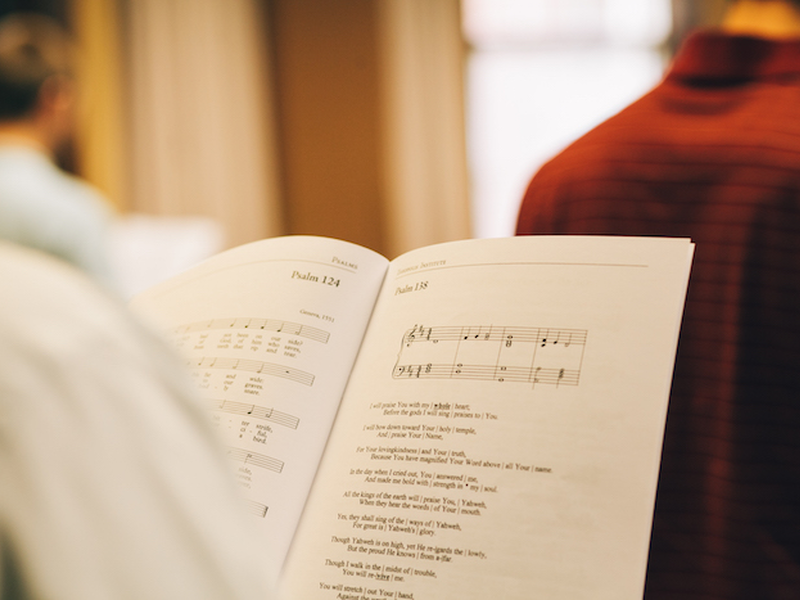
This has always been the position of the Christian Church, and from an historical perspective the present situation in evangelicalism is appalling. The early liturgies of the Church, which are still used in Episcopal and Lutheran worship, are laced with psalm phrases. The early hymns, such as the Te Deum…

by James B. JordanOctober 12, 2017

Showing page 104 of 309

See all

Showing page 27 of 43

See all

Hypocrisy and Motive

W hen Jesus condemns hypocrisy, argues Oliver O'Donovan ( Desire of Nations , 109–10), He is speaking of conformity to “public expectation.” O'Donovan suggests that the sense is captured by the word “performance.” Jesus is not speaking of motives in the modern sense of the word: “A motive, as we…

April 7, 2017
Slavery

Abolition

W hy didn't the apostles move more quickly to protest and attempt to abolish slavery? There are various answers to that, but Oliver O'Donovan's gets to the heart of the issue: The church “believed that Christ had abolished it” ( Desire of Nations , 185). Of course, the church had…

April 7, 2017

Kulturkampf

P hilip Rieff notes, “That word [ Kulturkampf ] first appeared in common German use in the early 1870s during the struggle of the National Liberal political party to disarm by law the moral/educational authority, and political punditry, of a triumphalist Roman Catholic hierarchy, revitalized as it then was by…

April 6, 2017

Fences and Neighbors

K. Luria examines the Sacred Boundaries (xxvii–xxxxi) of early modern France, in an effort to correct extremes of historiography. Some have argued that sacred boundaries between religious groups led to violence; other historians have pointed to continuous interaction between Catholics and Protestants. Both are right. Symbolic boundaries separated Catholic and…

April 6, 2017

Building the Confessional State

A 1989 article by Wolfgang Reinhard on the relationships among the Reformation, Counter-Reformation, and early modern state-building is an excellent brief summary of the relationship between Reformation and post-Reformation “confessionalization” and the formation of modern states and national identities. The Reformers' turn to the state was in the first instance…

April 5, 2017

What Solomon Made

O verall, the Chronicler's account of Solomon's temple construction (2 Chronicles 3:1-5:1) is arranged chiastically: A. Solomon begins to build, 3:1-2 B. What Solomon made, 3:3-4:10 C. What Huram-abi made, 4:11-17 B’. What Solomon made, 4:18-22 A’. Solomon completes ( shalam ) work, 5:1 The long section in B is…

April 4, 2017

Showing page 189 of 2212

Browse by Category

In Medias Res

Your weekly digest for all things Theopolis.

Donate

Theopolis is nearly 100% donor-supported. Consider joining us on our mission.