Theopolis Logo

Writing

Explore our collection of theological essays, biblical studies, and reflections on faith and culture.

See all
2001_a_space_odyssey_1-970x545
Biblical Horizons

2001: A Space Odyssey

In the November 1993 issue of Open Book Peter Leithart commented briefly on gnosticism. The film 2001 is a great specimen of gnosticism, and is worth viewing as a Sunday School project for an adult class. The author of the basic story was Arthur C. Clarke, an old-school science fiction…

by James B. JordanJanuary 6, 1994
alfred-hitchcock
Biblical Horizons

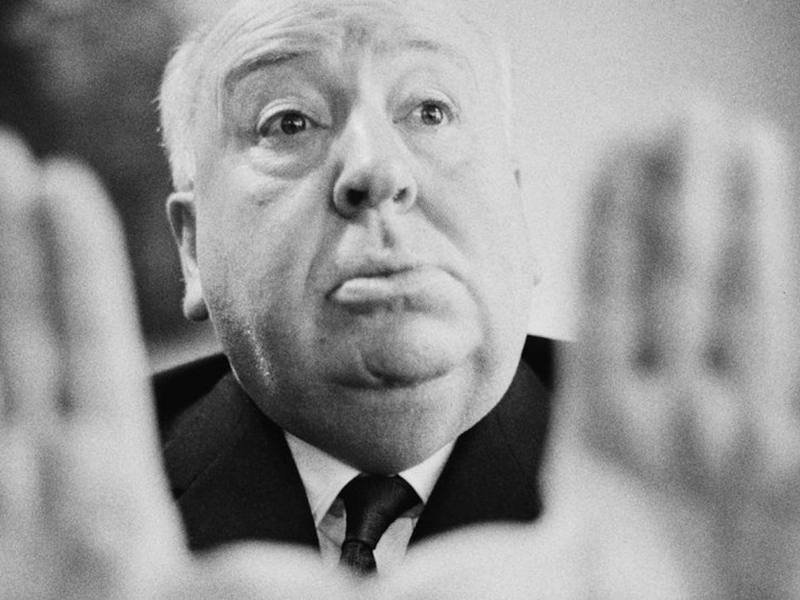
Two Films by Alfred Hitchcock

Alfred Hitchcock’s earlier movies display a strongly moral, even Christian, point of view, and certainly can be enjoyed by Christian viewers. His later works, such as Psycho , The Birds , and his television series, are not as clearly moral in tone. In these later efforts, Hitchcock brought humorous or…

by James B. JordanJanuary 6, 1994

david-weber-fwuo_zluhnw-unsplash
Leviticus

Cult and Communication

“What art thou, thou idol ceremony?” asked Henry V during his midnight rounds of the English camp near Agincourt. His answer was that ceremony was both nothing and everything. It was nothing in the sense that it offered no guarantee that the king would be fit for office. Contrary to…

by Peter LeithartDecember 20, 1993
screenshot-2023-07-27-at-10-25-35-am
Biblical Studies

Which Sacred Writings?

You, however, continue in the things you have learned and become convinced of, knowing from whom you have learned them; and that from childhood you have known the sacred writings which are able to give you the wisdom that leads to salvation through faith which is in Christ Jesus. All…

by Peter LeithartDecember 20, 1993
daniel-day-media-bzkf1nk-vpq-unsplash
Biblical Horizons

The Production of the New Testament Canon: A Revisionist Suggestion

My research has led me to the conviction that there are three major periods of Biblical history, which lead to a fourth. These are the Ages of the Father, the Word, and the Spirit. The First Age, that of the Father, is recorded in the book of Genesis. It focuses…

by James B. JordanDecember 6, 1993
Exodus

Egypt in Biblical History

Both Bible history and the current consensus chronology of the ancient world are tied up intimately with Egyptian history and chronology. Thus, as we broaden Biblical Chronology beyond the matter of adding up numbers and try to integrate Biblical chronology with the ancient world, the place to start would seem…

by James B. JordanDecember 6, 1993

Showing page 282 of 309

See all

Showing page 27 of 43

See all

New Face for the World

R owan Williams ( Sign and Sacrifice ) summarizes the Anselmian understanding of the atonement using the categories of sacrifice, obedience, and gift, all set within a Trinitarian frame. It's quite lovely. Citing Hebrews citing Psalm 40, Williams argues that the Old Testament sacrificial system existed to symbolize the true…

February 28, 2017

At the Parbar

D escribing the assignments of Levite gatekeepers, the Chronicler records that there were four at the “highway” at the western end of the temple, and two “at the Parbar,” which was also on the west (1 Chronicles 26:18). Scholars have proposed a variety of foreign etymologies for the term. From…

February 27, 2017
Architecture

How To Read Churches

D enis McNamara's How To Read Churches is an extraordinary book. Subtitled “a crash course in ecclesiastical architecture,” it covers building types, floor plans, sections of churches (nave, apse, choir), materials, windows, altars, ornaments in 256, 6 x 6-inch pages, each of which is stuffed with pictures and diagrams and…

February 24, 2017

Undemocratic Education

J ohn Milbank cites what he calls “Socrates's subversive realization” that “education can never be democratic” ( Being Reconciled , 182). This is in part because “the sheer singular uniqueness and contingency of wisdom is unable to subordinate itself to any majority,” partly because “if one is to learn, one…

February 24, 2017

Irrationality and Intellectual Flaws

T hrough a series of thought experiments, Richard Foley ( Intellectual Trust in Oneself and Others ) develops a concept of rationality as “a matter of making oneself invulnerable to intellectual self-criticism to the extent possible, of living up to one’s own deepest intellectual convictions and standards.” Rationality thus “requires…

February 24, 2017

Lockean Individualism

F ollowing Alvin Platinga, Richard Foley summarizes the principles of Locke's epistemology in three principles ( Intellectual Trust in Oneself and Others ): Evidence (the “obligation to base one's opinion on one's evidence,” the latter defined as “what one knows with certainty”); appraisal (the obligation “to appraise the probability of…

February 24, 2017

Showing page 202 of 2212

Browse by Category

In Medias Res

Your weekly digest for all things Theopolis.

Donate

Theopolis is nearly 100% donor-supported. Consider joining us on our mission.