
Theopolis Logo

Writing

Explore our collection of theological essays, biblical studies, and reflections on faith and culture.

See all
giammarco-zeh-ljawhtg-unsplash
Biblical Horizons

OPEN BOOK: Views and Reviews

Isaac E. Mozeson, The Word: The Dictionary that Reveals the Hebrew Sources of English (Northvale, NJ: Jacob Aaronson Inc., 1995), 310 pp. Reviewed by James B. Jordan. Once there was only one language in the world, the language God spoke to Adam. At the Tower of Babel, there came to…

by James B. JordanJune 28, 1996
tim-wildsmith-j6jv-mkdzqs-unsplash
Esther

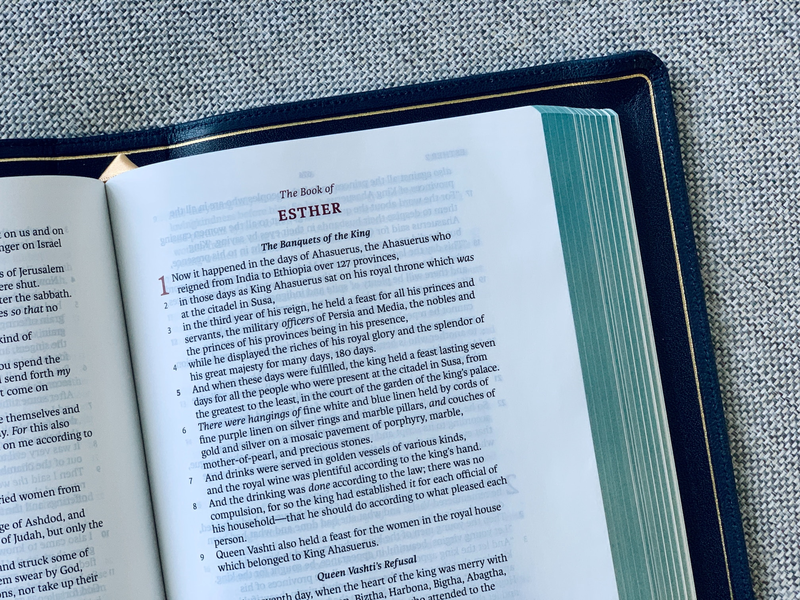
Esther: Historical & Chronological Comments (IV)

2. The Setting of the Book of Esther A. Xerxes (continued from previous issue) Ezra 6:14 says that the Jews finished building "according to the command of the God of Israel and the decree of Cyrus and Darius and Artaxerxes king of Persia." The problem with this verse is that…

by James B. JordanJune 28, 1996

ales-krivec-4mibe6zg5r0-unsplash
Acts

Jesus and Amalek

This essay goes with our previous study of the Amalek pattern back in Biblical Horizons No. 2. Since many do not have this essay, entitled "The Battle of Gog and Magog," let me cite the relevant paragraphs: Note in Genesis 12-15 that Abram moves into the land after escaping Pharaoh…

by James B. JordanJune 28, 1996
aaron-burden-1ebsmyrau-s-unsplash
Proverbs

The Strange Woman

Proverbs 7:6-23 is one of several passages early in the Proverbs in which Solomon warns his son about the wiles and dangers of the "strange woman." It is certainly quite proper to take these as straightforward warnings against sexual sins, and these are certainly warnings that need to be impressed…

by Peter LeithartJune 27, 1996
jan-kahanek-g3o5ztrk2e4-unsplash
Biblical Studies

Some Observations

1. In Luke 4:20 we read that after Jesus finished reading from Isaiah, "the eyes of all in the synagogue were fixed upon Him." This is usually taken in a psychological sense: They were amazed at Jesus somehow. I suggest that, as always, a merely psychological reading is a modern…

by James B. JordanMay 28, 1996
tim-wildsmith-j6jv-mkdzqs-unsplash
Esther

Esther: Historical & Chronological Comments (III)

2. The Setting of the Book of Esther Up to now we have assumed what we must prove, that the king in Esther is Darius the Great. While Biblical chronologists have usually taken this position, commentators on the book of Esther have often taken others as the king. One view,…

by James B. JordanMay 28, 1996

Showing page 265 of 309

See all

Showing page 27 of 43

See all
screenshot-2024-07-04-at-8-35-35-am
Ephesians

Chiasm in Ephesians 2:8

In the Greek text of Ephesians 2:8, the statement “and this not of ourselves, it is the gift of God” is chiastically structured. A wooden translation is: “and this not out of ourselves, of God the gift,” with the EX HUMON (“out of ourselves”) chiastically matching the genitive THEOU (“of…

September 19, 2003
main-qimg-677803682e526eb3d3440054b59433fe-lq
Philosophy

Milbank on Derrida

Here’s a summary of part of Milbank’s critique of Derrida (from Theology and Social Theory , pp. 307-311). Derrida attacks Western metaphysics by focusing on the attempt to separate a “meaning” out from the “play of signs.” In most Western systems, this meaning is associated with an original meaning that…

September 18, 2003
nicki-eliza-schinow-mg3nb1l2kdm-unsplash
Philosophy

A Note Against Empiricism: Derrida

A note against empiricism: Derrida quotes Scheler (in his essay on Levinas, “Violence and Metaphysics”) to this effect: “I see not only the eye of an other, I see also that he looks at me.” That is, what is seen is not only a thing, a dead object, but also…

September 17, 2003
jeremy-thomas-e0ahdsenmdg-unsplash
Philosophy

Levinas on Absolute Other

Levinas claims that an absolute other must necessarily be invisible. If the other is visible, I can at least “capture” and “grasp” and “encompass” him in my gaze, which is the first moment in a sequence that could lead to capturing, grasping, and encompassing and dominating him in other ways.…

September 17, 2003
505017ldsdl
BooksCulture

Yeats on the Classical World

Yeats said that the classical world was fundamentally tragic, with the Oedipus myth as the founding myth — the man kills his father and marries his mother. Yeats would have been better off pointing to the myth of Zeus, for that truly is the founding myth of the Olympian order,…

September 17, 2003
valentino-mazzariello-ndm1hhicwhc-unsplash-2
Philosophy

Progress

In his history of the ancient concept of progress, E. R. Dodds says that one fundamental limitation on the idea of progress was imposed by the theory of Forms, both in Platonic and in the Aristotelian version. For Plato all progress consists in approximation to a pre-existing model; the model…

September 17, 2003

Showing page 2196 of 2212

Browse by Category

In Medias Res

Your weekly digest for all things Theopolis.

Donate

Theopolis is nearly 100% donor-supported. Consider joining us on our mission.