Theopolis Logo

Writing

Explore our collection of theological essays, biblical studies, and reflections on faith and culture.

See all
tanner-mardis-xuxghzhibn4-unsplash-1-2
Biblical Studies

Tweets-turned-Notes on the Bible’s Chronology

Summary In what follows, I will consider the “year-stamps” employed in Scripture, i.e., statements of the form, “Such-and-such an event took place in the Xth year of Y.” In the process, I will suggest some ways in which the Biblical narrative might relate to events in the extra-Biblical world, though…

by James BejonJuly 16, 2019
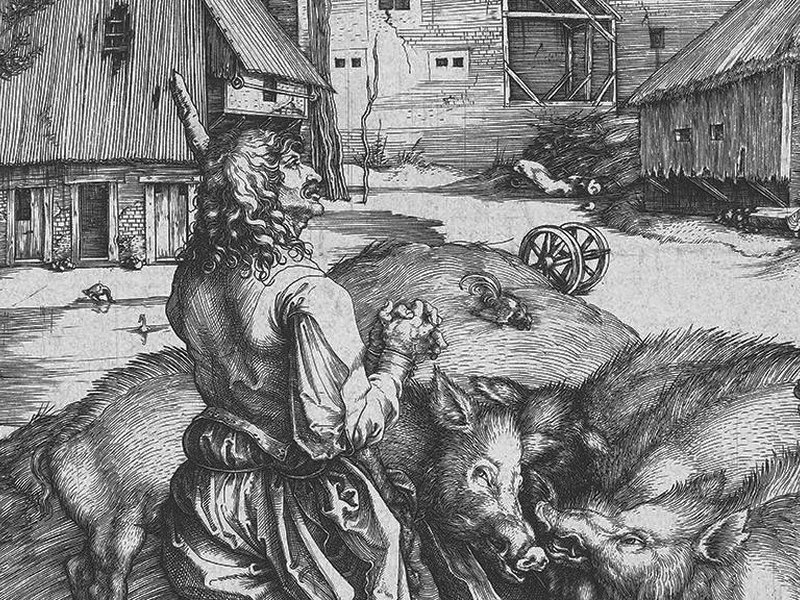
durer-prodigal-son-2
Luke

Perspectives on the Prodigal, (Part 2)

In the first essay on the parable of the Prodigal Son, I suggested that the problems commentators and others encounter in interpreting Jesus three-part parable are not accidental. These are not just problems in our ignorance of cultural background. They are intentional features of the stories —stories designed to poke…

by Ralph Allan SmithJuly 11, 2019
durer-prodigal-son-2
Luke

Perspectives on the Prodigal, (Part 1)

The story of the Prodigal Son is perhaps the most well-known story in the Bible. As others have observed, it may also be one of the most misunderstood. In two short essays, I will point out features of this story that are commonly neglected, aspects of Jesus’ parable that might…

by Ralph Allan SmithJuly 9, 2019
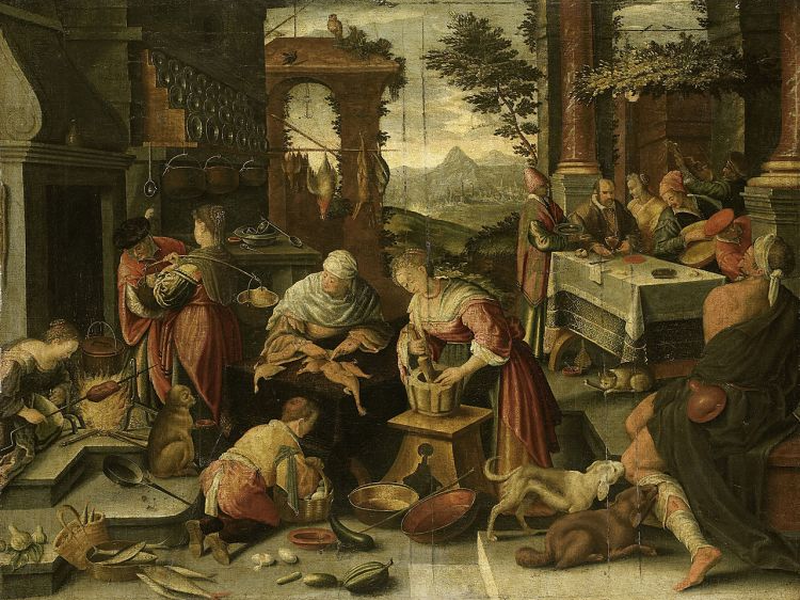
de-rijke-man-en-de-arme-lazarus-by-jacopo-da-ponte-16th-century
Luke

Lazarus and the Rich Man

The parable of Lazarus and the nameless rich man is not an independent story. It is part of a long context that begins in Luke 15:1, where Jesus is eating with tax collectors and sinners and the scribes and Pharisees grumble. In response to their hardheartedness, Jesus tells a three-part…

by Ralph Allan SmithJuly 4, 2019
aaron-burden-uynrnfdkjwg-unsplash
Luke

Everybody has Dropsy - Luke 14:1-24

The Bible is written so that even when a reader cannot pick up on what might be deeper or more detailed aspects of a text, there is virtually always a message to be heard. In the ancient world, where the “reader” of Scripture would likely be a church official facing…

by Ralph Allan SmithJuly 2, 2019
communion
Biblical Theology

Fruit Trees and Grain Plants

The distinction between garden (or vineyard) and field begins in Genesis 2. This relates to the ordering of the formless world. Plants of the field are contrasted with the garden planted by God in Genesis 2:5&8. Later on, under the Old Covenant the Israelites will be required to keep their…

by James B. JordanJune 27, 2019

Showing page 77 of 309

See all

Showing page 27 of 43

See all

Running from Boundaryless Love

B orn to Run is an anthem of escape, seemingly an exodus from the confinements of small-town America: “H-Oh, Baby this town rips the bones from your back / It’s a death trap, it’s a suicide rap / We gotta get out while we’re young / ‘Cause tramps like us,…

October 28, 2016

Horror for Kids

T errence Rafferty calls filmmaker Guillermo del Toro the “Master of Highbrow Horror” ( The Atlantic ). He traces del Toro’s aesthetic to a childlike mix of fear and fascination: “Toro’s work isn’t simply the something’s-out-to-get-you feeling of conventional scare pictures. It’s fear mixed with fascination, a childlike wonder at…

October 28, 2016

Unphilosophical Cosmopolitanism

I n an essay on the notion of “cosmopolitanism,” Wayne Cristaudo presents Franz Rosenzweig and Eugen Rosenstock-Huessy as thinkers who propose an un philosophical cosmopolitanism. That un- is critical, Crustaudo thinks, to a genuine recognition of and reckoning with difference: Both Rosenzweig and Rosenstock oppose “the more typical philosophical approach…

October 28, 2016
Shakespeare

Leaving the House of Judaism

J anet Adelman ( Blood Relations ) devotes an interesting chapter to analyzing Lancelot’s departure from Shylock’s house, and his strange reunion with his father Gobbo, in Merchant of Venice . Lancelot has been Shylock’s servant, but he has had enough and, like Shylock’s daughter Jessica, he leaves for the…

October 28, 2016

Gender, Sex, Economy

I n his provocative essay on Gender , Ivan Illich describes a shift from “vernacular gender” to “social sex.” By the former, he meant “a distinction in behavior, a distinction universal in vernacular cultures. It distinguishes places, times, tools, tasks, forms of speech, gestures, and perceptions that are associated with…

October 28, 2016

Shadow Work

Ivan Illich ( Gender ) points to the differences between the activities of a modern housewife and those of her grandmother. They are practically and economically quite distinct. “When a modern housewife goes to the market, picks up the eggs, drives them home in her car, takes the elevator to…

October 28, 2016

Showing page 238 of 2212

Browse by Category

In Medias Res

Your weekly digest for all things Theopolis.

Donate

Theopolis is nearly 100% donor-supported. Consider joining us on our mission.