Theopolis Logo

Writing

Explore our collection of theological essays, biblical studies, and reflections on faith and culture.

See all
tanner-mardis-xuxghzhibn4-unsplash-1-2
Biblical Studies

Tweets-turned-Notes on the Bible’s Chronology

Summary In what follows, I will consider the “year-stamps” employed in Scripture, i.e., statements of the form, “Such-and-such an event took place in the Xth year of Y.” In the process, I will suggest some ways in which the Biblical narrative might relate to events in the extra-Biblical world, though…

by James BejonJuly 16, 2019
durer-prodigal-son-2
Luke

Perspectives on the Prodigal, (Part 2)

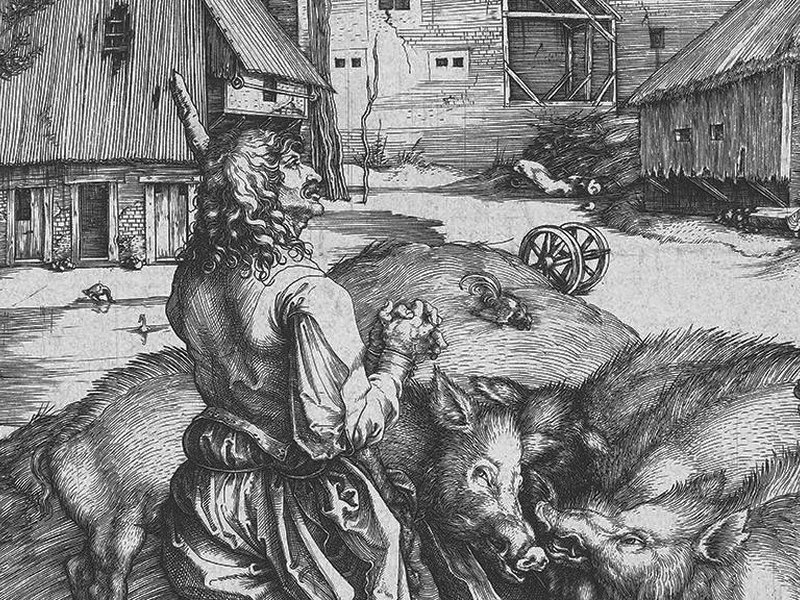
In the first essay on the parable of the Prodigal Son, I suggested that the problems commentators and others encounter in interpreting Jesus three-part parable are not accidental. These are not just problems in our ignorance of cultural background. They are intentional features of the stories —stories designed to poke…

by Ralph Allan SmithJuly 11, 2019
durer-prodigal-son-2
Luke

Perspectives on the Prodigal, (Part 1)

The story of the Prodigal Son is perhaps the most well-known story in the Bible. As others have observed, it may also be one of the most misunderstood. In two short essays, I will point out features of this story that are commonly neglected, aspects of Jesus’ parable that might…

by Ralph Allan SmithJuly 9, 2019
de-rijke-man-en-de-arme-lazarus-by-jacopo-da-ponte-16th-century
Luke

Lazarus and the Rich Man

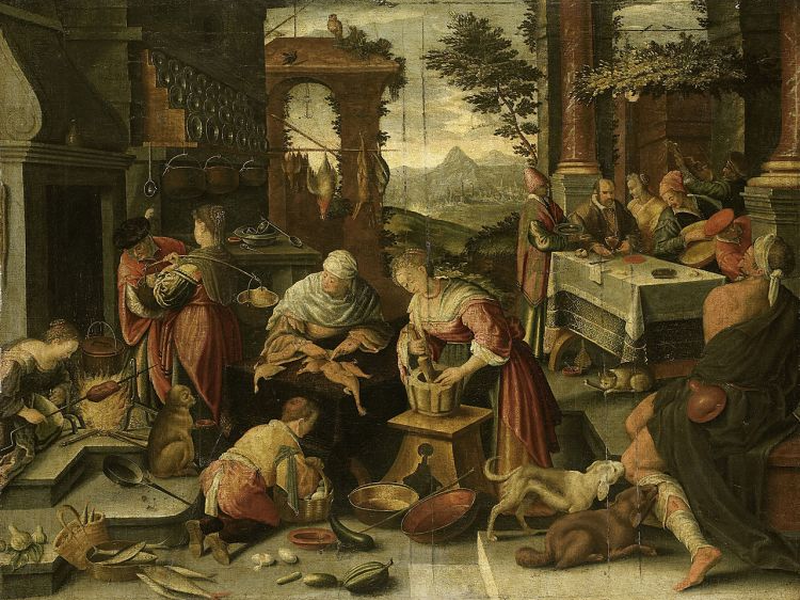
The parable of Lazarus and the nameless rich man is not an independent story. It is part of a long context that begins in Luke 15:1, where Jesus is eating with tax collectors and sinners and the scribes and Pharisees grumble. In response to their hardheartedness, Jesus tells a three-part…

by Ralph Allan SmithJuly 4, 2019
aaron-burden-uynrnfdkjwg-unsplash
Luke

Everybody has Dropsy - Luke 14:1-24

The Bible is written so that even when a reader cannot pick up on what might be deeper or more detailed aspects of a text, there is virtually always a message to be heard. In the ancient world, where the “reader” of Scripture would likely be a church official facing…

by Ralph Allan SmithJuly 2, 2019
communion
Biblical Theology

Fruit Trees and Grain Plants

The distinction between garden (or vineyard) and field begins in Genesis 2. This relates to the ordering of the formless world. Plants of the field are contrasted with the garden planted by God in Genesis 2:5&8. Later on, under the Old Covenant the Israelites will be required to keep their…

by James B. JordanJune 27, 2019

Showing page 77 of 309

See all

Showing page 27 of 43

See all

Donne and Sacramental Poetics

Sophie Read's Eucharist and the Poetic Imagination in Early Modern England examines six early modern English poets on the assumption that “particularities of belief can be made manifest in the verbal texture of a literary work: that there is an analogy between the rhetorical and theological plans of understanding, and…

April 29, 2016

Preaching to Spirits

Karen Jobes ( 1 Peter ) understates the point when she says that 1 Peter 3 is “more obscure than we might wish,” but she highlights the central point of Peter's odd claim that Jesus preached to spirits in prison: “(1)Being linked with 3:13-17 by hoti kai (because also, 3:18),…

April 28, 2016

Rabbinic Welfare

Susan Holman devotes a few pages of her The Hungry Are Dying , a study of “beggars and bishops” in Cappadocia, to a sketch of Rabbinic teaching on almsgiving, drawn from the writings of the Talmudim. The poor appear in three main contexts in rabbinic writing: “First, they are recognized…

April 28, 2016
Ritual

Biblical Terms for “Ritual”

English Bibles rarely employ the words “ceremony,” “rite,” or “ritual” to translate biblical terms. The NASB, for example, uses the words “ritual” and “rite” in only three instances, all having to do with the Passover (Exodus 12:25-26; 13:5). The Authorized Version uses the word “ritual” only at Number 9:3. The…

April 27, 2016

Weber's Liberal Protestantism

Anthony Carroll summarizes his Protestant Modernity in a 2009 article in the Archives of European Sociology . Recognizing that Weber's theory of secularization “has greatly influenced later social theorists in their accounts of secularisation, rationalisation, and modernisation,” he wanted to set Weber's theory “within its liberal Protestant heritage.” This is…

April 27, 2016

No Longer

The ruined city Babylon is a city where things that used to happen don't happen anymore. John's description is under the rubric “no longer” ( ou eti , used 6x in Revelation 18:21-24). In Babylon, music, crafts, milling, light, and weddings have ceased. The old has passed, the new has…

April 26, 2016

Showing page 295 of 2212

Browse by Category

In Medias Res

Your weekly digest for all things Theopolis.

Donate

Theopolis is nearly 100% donor-supported. Consider joining us on our mission.