Theopolis Logo

Writing

Explore our collection of theological essays, biblical studies, and reflections on faith and culture.

See all
hebrew-manuscript-2
Hermeneutics

The Complexity of Biblical Allusion

There is no question about the fact that the book of Deuteronomy is full of literary allusion. But there is a serious problem, even a paradox, of understanding how that allusion works. To begin with, if we assume that Deuteronomy was written by Moses — with some editorial emendations added…

by Ralph Allan SmithJanuary 23, 2018

bladerunner
Culture

The Artificial Resurrection

Genesis and Genetics in Blade Runner 2049 The power of science fiction, and what’s positive about it, is that you’re able to experience the worst-case scenario without actually having to live it. (Actor Ryan Gosling, who plays Officer “K”) (Warning: The following analysis contains spoilers for both Blade Runner films.)…

by Mike BullJanuary 18, 2018
sixteen-miles-out-d40gdcd_-he-unsplash
Biblical Studies

The Battle of Gog and Magog

The battle of Gog and Magog is found in Ezekiel 38-39. My purpose in this brief essay is to propound an explanation for this passage that I have not encountered in any of my commentaries, but that makes more sense to me than any other. I offer it here in…

by James B. JordanJanuary 16, 2018
resurrection

Deep Hope

I. Varlam Shalamov in Kolyma Tales describes his experience of the Gulag, where he spent more than a dozen of years. In a story titled The Life of Engineer Kipreev Shalamov reflects on the theme of hope in the life of a prisoner: “Hope always shackles the convict. Hope is…

by Bogumil JarmulakJanuary 11, 2018
abraham-defeats-kings-g-jollain-2
Biblical Theology

Abram’s 318 Men

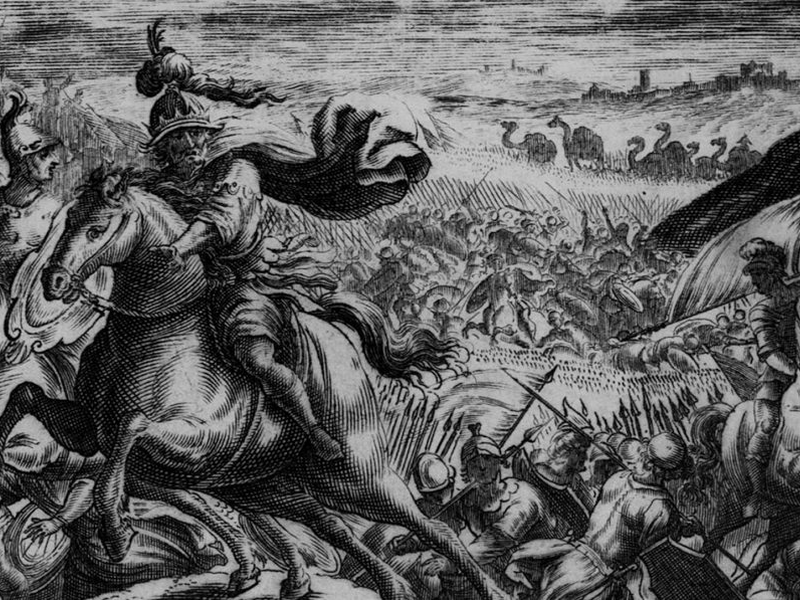
Genesis 14:14 says that Abram mustered his trained men, “born in his house,” to rescue Lot, and gives their number as 318. It is clear that the precise number is provided for some reason, but what is it? S. Gevirtz notes that 318 is the sum of all the prime…

by James B. JordanJanuary 9, 2018
tanner-mardis-xuxghzhibn4-unsplash-1
Biblical Studies

The Flying Scroll

And he said to me, "What do you see?" And I answered, "I see a flying scroll; its length is twenty cubits and its width ten cubits" (Zechariah 5:2). Immediately following his vision of the outpouring of the Spirit upon the restoration community (4:1-14), Zechariah saw a flying scroll. The…

by Peter LeithartJanuary 4, 2018

Showing page 100 of 309

See all

Showing page 27 of 43

See all

Portion and Inheritance

Israel’s priests did not inherit land. Many lived in cities and they possessed the land immediately surrounding. But they did not get a separate plot when the land was divided. Yahweh said He was their inheritance (Numbers 18:19), and He said it chiastically: A. In the land you will not…

December 31, 2014
Theology

The Structure of Promising

Christoph Schwobel’s contribution to Justification in a Post-Christian Society is characteristically grand. Exploring what contribution Lutheranism can make to contemporary society, he focuses on central Lutheran concerns - promise and trust. His explanation of the grammar of promise is densely brilliant: “The central distinction between law and gospel only becomes…

December 31, 2014
Theology

God of Promise

Christoph Schwobel’s analysis of promising ( Justification in a Post-Christian Society ) opens out into a discussion of theology proper with a reference to Luther’s claim that God identifies Himself in Exodus 3:14 as the God who promises Himself, “so that this promise is God’s essence in relation to which…

December 31, 2014

We Have An Altar

“We have an altar, from which those who serve the tabernacle have no right to eat. For the bodies of those animals whose blood is brought into the holy place by the high priest as an offering for sin are burned outside the camp. Therefore Jesus also, that He might…

December 30, 2014
Reformation

Catholic in Reformed

In his study of Calvin’s Company of Pastors , Scott Manetsch estimates that “just under 5 percent of all excommunications” in Geneva were imposed because of “Catholic behavior” (203). By this phrase, he refers to “instances where people voluntarily aligned themselves with some dimension of Roman Catholic faith or practice,…

December 30, 2014
Economics

Invisible Hand

Adam Smith wrote, briefly in several places, of an invisible hand that guided economic life. The work of this invisible hand was to bend self-interested actions to socially beneficent ends. As Smith wrote in The Wealth of Nations : “By preferring the support of domestic to that of foreign industry,…

December 29, 2014

Showing page 481 of 2212

Browse by Category

In Medias Res

Your weekly digest for all things Theopolis.

Donate

Theopolis is nearly 100% donor-supported. Consider joining us on our mission.