Theopolis Logo

Writing

Explore our collection of theological essays, biblical studies, and reflections on faith and culture.

See all
31-03-0213
Hermeneutics

Apocalyptic Eyes

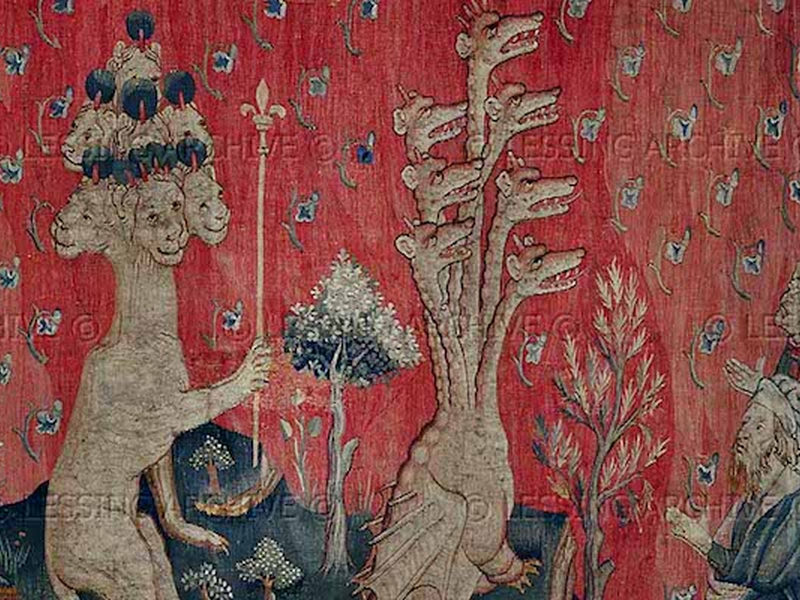
Flying scrolls. Red horses. Beasts coming out of the sea. Winged women. The list goes on. Apocalyptic literature in the Bible is like a cross between science fiction and Marvel comics. And the Bible has a fair bit of this sort of thing. Daniel sees visions in Babylon, Zechariah sees…

by Toby SumpterNovember 4, 2014

bhm-skyline-2
Theopolis News

New Name, New Look

Trinity House Institute has taken a new name, the Theopolis Institute. This striking new name expresses our unique vision and mission and captures the unified purpose behind all our specific programs and activities. We still have Bible, liturgy, and culture in our tagline. We still offer the same courses on…

by TheopolisNovember 4, 2014
istock_000012860926small
Atonement

Not Fearing the Devil

Adam Kotsko offers a socio-political variation on the Christus Victor atonement theory in his 2010 study, The Politics of Redemption: The Social Logic of Salvation . He does this by explaining "the devil" in terms of the Hegelian concept of "objective spirit," Geist . As Kotsko puts it, Geist "refers…

by Peter LeithartOctober 13, 2014
jez-timms-8muutamcwu4-unsplash
Leviticus

The Meaning of Sacrifice

Two factors keep Nahtali Meshel from discussing the meaning of sacrifice until late in his The "Grammar" of Sacrifice . The first has to do with the texts he draws from: "P says little about the meaning of its rituals" (174). The other has to do with the grammatical theory…

by Peter LeithartOctober 8, 2014
jez-timms-8muutamcwu4-unsplash
Leviticus

Praxemics

Chapter 5 of Naphtali Meshel's The "Grammar" of Sacrifice focuses on "praxemics," the physical actions of sacrificial ritual. Praxemes are constituted by six elements: an "atomact," an elementary physical act or gesture; an actor; an object that is acted up; a target for the action and often for the object…

by Peter LeithartOctober 6, 2014
markus-winkler-aid-xyrtlec-unsplash
Leviticus

Jugation and Hierarchy

Two chapters of Naphtali Meshel’s The “Grammar” of Sacrifice cover what he calls “jugation” and “hierarchies.” The first involves the addition of other materials to an animal offering. Jugates include wine, cereal, and oil that are added to the animals (zoemes) that are offered in sacrifice. Some jugates are coordinated…

by Peter LeithartOctober 1, 2014

Showing page 167 of 309

See all

Showing page 27 of 43

See all
Metaphysics

Metaphysics without God

In his monograph on Divine Simplicity , Steven J. Duby discusses the relation between metaphysics and dogmatics. He writes, "In addition to Thomas's metaphysics, the metaphysical works of Bartholomaus Keckermann, Johann Alsted, and Johannes Maccovius provide guidance here. For Keckermann, metaphysics is 'the science of being [ entis ], or…

December 14, 2018

Mammon and Modern Economics

Wesley Bergen's Reading Ritual explores Leviticus through the lens of contemporary popular culture. Instead of treating Leviticus as "religious" ritual in opposition to daily life, he tries to de-de-familiarize Leviticus ritual by finding parallels with contemporary culture. In the first chapter, he examines the ritual dimensions of a meat-packing plant,…

December 13, 2018

Whose Simplicity?

In the third volume of his magisterial Post-Reformation Reformed Dogmatics , Richard Muller offers a helpful summary of pre-Reformation discussions of divine simplicity. Today, simplicity is making a comeback, taken as essential to orthodoxy. Muller's discussion is a healthy reminder that "the doctrine of divine simplicity has not always been…

December 11, 2018

Can We Trust the Gospels?

In Can We Trust the Gospels? , Peter J. Williams, Principal at Tyndale House, Cambridge, doesn't aim to prove that the gospels are true. He wants to show rather that "they can be rationally trusted" (120). If successful, this demonstration is a big deal, as Williams says on the closing…

December 10, 2018

False Answer

Literally, woodenly translated, the 9th Word is: "Thou shalt not answer ( 'anah ) with/against your neighbor a false witness." The verb 'anah is of interest, mainly because it is such an uninteresting word. Of the 300+ times it's used in the Old Testament, the KJV translates it as "answer"…

December 7, 2018

Suffer the Children

Children provide a test case for psychological and epistemological theories. Many theories fail: They do not suffer the little children to come to them. That's part of the point of Vasudevi Reddy's fascinating How Infants Know Minds . The title contains the thesis: Infants know other minds. They don't act…

December 6, 2018

Showing page 51 of 2212

Browse by Category

In Medias Res

Your weekly digest for all things Theopolis.

Donate

Theopolis is nearly 100% donor-supported. Consider joining us on our mission.