Theopolis Logo

Writing

Explore our collection of theological essays, biblical studies, and reflections on faith and culture.

See all
e99a9334
Advent

Stretching Christmas

For many people Christmas comes on December 25 and is over December 26. The tree is taken down along with the lights and the other decorations, and everyone begins setting the house in order for the new year. No more Christmas hymns. No more celebrations (well, until New Year’s Eve).…

by Steve WilkinsDecember 24, 2016
ascension
Advent

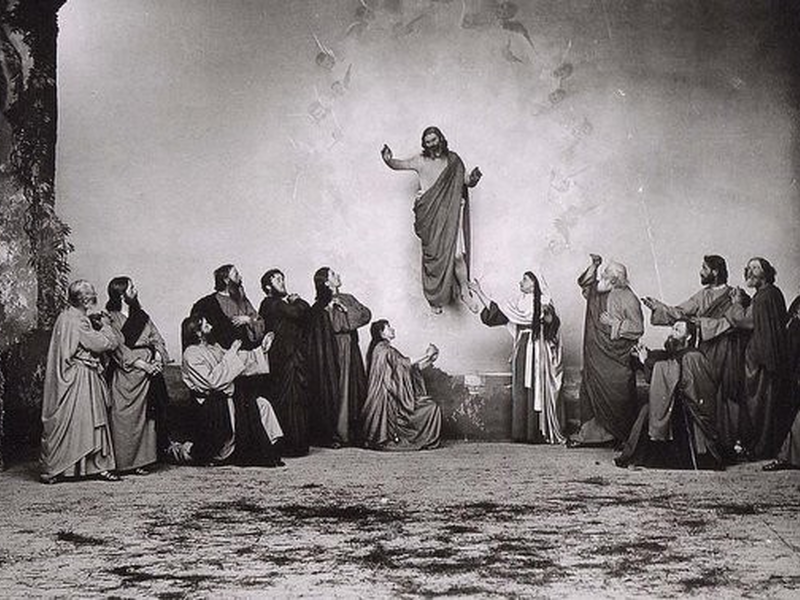
Ascension and Incarnation

The Ascension and the Incarnation should not be disconnected in our Christmas thinking or celebrations. As N.T. Wright notes, the ascension is "a central and vital feature without which all sorts of other things start to go demonstrably wrong. . . . where the ascension has been ignored or misunderstood,…

by Roy AtwoodDecember 23, 2016
nativity-rembrandt
Advent

Christmas Light

“In the Word was life, and the life was the light of men. And the light shines in the darkness.” Thus John describes the incarnation of the Son. He comes as the living and life-giving light of the world. That’s good news. In the beginning, God spoke and light shone…

by Peter LeithartDecember 23, 2016
nativity-chagall
Advent

The Spirit of Christmas

Christmas is all about Jesus. The angels announce Jesus’ birth, shepherds and wise men come to see Jesus, Herod wants to kill Jesus. We occasionally think of the Father who sent the Son, but we keep returning to the Son made flesh in Bethlehem’s manger. Meanwhile, as always, the Spirit…

by Peter LeithartDecember 22, 2016
nativity
Advent

The Humility of God

Christmas is about many things, but one of the chief things revealed in the gospel of Christmas is the humility of God. We don't often think of humility as an attribute of God. If God is glorious and exalted, we think, He must be haughty and proud and self-centered. We…

by Peter LeithartDecember 21, 2016
screenshot-2025-12-15-at-8-35-45-am
Advent

Advent of Unity

John famously begins his Gospel with a piece of theology: “In the beginning was the Word, and the Word was with God, and the Word was God.” Matthew starts with a genealogy. John celebrates Advent with a hymn, Matthew with a list. For John, Jesus is the Word of creation…

by Peter LeithartDecember 20, 2016

Showing page 120 of 309

See all

Showing page 28 of 43

See all

Class consciousness

Lawrence Stone records the following in his classic Crisis of the Aristocracy : “So deep [was] feeling of a fundamental distinction of ranks that gentlemen did not hesitate to behave in ways which would today be considered base and even cowardly. When Lord Herbert of Cherbury was shipwrecked at Dover…

August 9, 2006

Death of the author

A hypothesis to explore: What is the connection between the postmodern “death of the author” and higher critical methods of biblical interpretation? Did the dissolution of the text in biblical studies contribute to a dissolution of the author in texts generally? To what extent is Wellhausen responsible for Barthes and…

August 9, 2006

Type and Antitype

At times, I’ve felt that my polemics against semi-marcionitism in sacramental theology and hermeneutics finds no actual targets. And then I read something like this. In his book on hermeneutics, Louis Berkhof characterizes the difference between type and antitype: “The one represents truth on a lower, the other, the same…

August 9, 2006
History

Left to Right

Butler cleverly suggests that postmodernism’s leftism ends up underwriting rightist politics: “a left-inspired distrust of authority . . . makes recognition of difference possible, and yet those who are perhaps most in favor of leaving differently defined groups in isolation, to compete and fight it out, are those on the…

August 9, 2006
History

Liberal to postmodern

Poor Christopher Butler: He really doesn’t like postmodernism, but he keeps saying that postmodernism at its most sane is just repeating what liberals have always believed and doing what liberals have always done. Postmodernists challenge “the boundaries of our social roles,” and liberals join in; in fact, “the postmodernist deconstructive…

August 9, 2006
Politics

Discourses of power

Postmodernists claim that discourses are inevitably exercises of power. To theorize is to classify, and classification, well, puts things in classes, asserts authority over them. Butler offers this example: “You believe what the young surgeon tells you, and so you give him permission to anaesthetize you, cut you up, and…

August 9, 2006

Showing page 1815 of 2212

Browse by Category

In Medias Res

Your weekly digest for all things Theopolis.

Donate

Theopolis is nearly 100% donor-supported. Consider joining us on our mission.