Theopolis Logo

Writing

Explore our collection of theological essays, biblical studies, and reflections on faith and culture.

See all
img_3944-2
Parenting

Guarding Our Eyes

It is a well-known movie trope, the sports car drives up, a stiletto-heeled starlet steps out and the camera follows her leg up the prodigious slit of her dress, then it takes in the rest of her figure before settling on her face, usually primed and puckered for some pro-feminist…

by Remy WilkinsSeptember 15, 2015
cappadocians
Books

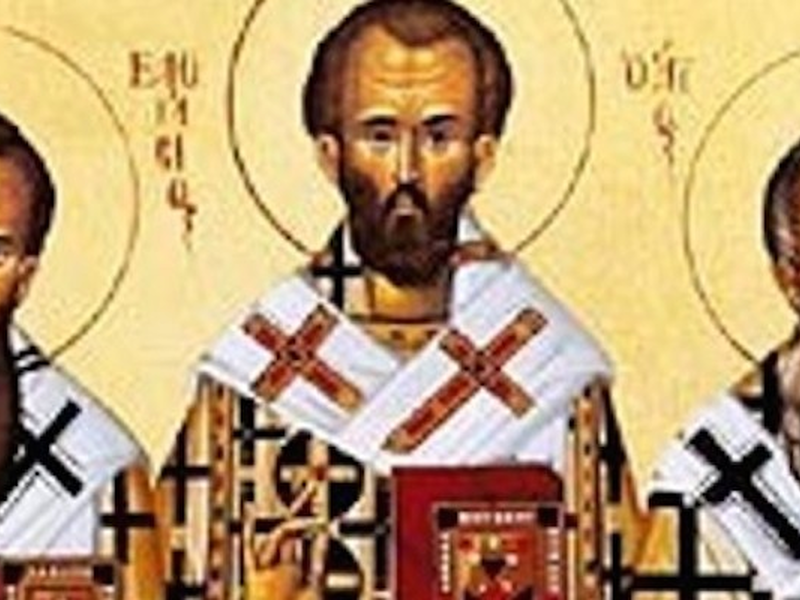
Are the Divine Persons Persons?

The “personalist” understanding of the Trinity, articulated most influentially in the work of John Zizioulas, has fallen on hard times. Recent scholars have attacked Zizioulas’s idea that Cappadocian Trinitarianism represented an ontological revolution, hammering again and again the distinction between divine and human personhood. Michel Barnes’s conclusion is the most…

by Peter LeithartSeptember 10, 2015
austin-distel-tlzhfrlj6ny-unsplash
Culture

Face To Facebook

I sit here in my office and poke around on a keyboard that is not even physically connected to my laptop and characters appear on a screen. I have a phone in my pocket through which I talk to someone around the world, send a text message, and to which…

by Bill SmithSeptember 8, 2015
samuel-martins-3u7hcqkibb4-unsplash
Prayer

Repent of Your Piety

I want to give a pep talk. Nothing fancy, nothing clever. Jesus makes some astounding promises in Luke 11. I want to clear out the clutter and convince you to believe Him and to act on it. The chapter begins with Jesus praying and teaching His disciples to pray by…

by Peter LeithartSeptember 7, 2015
lazarus-raised
John

The Strange Love of Jesus

Eleonore Stump in her book Wandering in Darkness invites us to re-read the story of Lazarus (John 11) from Mary’s perspective. Stump argues that the story of Lazarus is a story of Mary, since both Lazarus and Martha are identified by their relationship with Mary. The true ending of the…

by Bogumil JarmulakSeptember 3, 2015
metro
Movies

Movies and Music with James Jordan

In his introduction to The Glory of Kings: A Festschrift in Honor of James B. Jordan , Peter Leithart says this about him: “Jordan is an unclassifiable thinker because he is an unclassifiable person . . . he closes his eyes in ecstasy listening to Messiaen or Rachmaninoff . .…

by Brian MoatsSeptember 2, 2015

Showing page 144 of 309

See all

Showing page 28 of 43

See all
Theology

Time and the end of actions

Why should there be a final judgment when God judges in time? Aquinas answers: “Judgment on something changeable cannot be rendered fully before its consummation. Thus judgment cannot be rendered fully regarding the quality of any action before its completion, both in itself and its results, because many actions appear…

April 6, 2006

Observations on 2 Corinthians 1

1) Verse 4 moves from the affliction of the apostles (“our”) to the comfort of “those who are in any affliction.” This movement does not depend on any similarity or identity between the affliction of the apostles and the affliction of other sufferers (though cf. v. 6b). Members of the…

April 6, 2006
Philosophy

Descartes, Meditations

A few notes on Descartes, Meditations 1-2, with lots of help from Jean-Luc Marion. Descartes’s ego cogito, ergo sum is not, Marion points out, original, at least in its form. It has origins in Augustine, who offered this response to the skeptics: “I have no fear of the arguments of…

April 6, 2006

Copernican Revolution

Some scattered thoughts inspired by comments from Chris Schlect and Doug Wilson at a faculty discussion of de Lubac today: How is it that theologians (like Norman Shepherd, Steve Wilkins, Rich Lusk, and others) who want to expunge the notion of merit from theology get accused of being “neo-nomians” and…

April 5, 2006
Theology

Surnaturel and Protestantism

Milbank asks the intriguing question of whether de Lubac’s surnaturel thesis “rather deconstructs the terms of the Schleiermacher/Barth divide.” He appears to mean that the polarization of Schleiermacher’s “intrinicism” and Barth’s “extrinicisim” is dissolved by de Lubac’s Thomist understand of nature and grace. To adopt, for the moment, an idiom…

April 5, 2006

Against Yale

Milbank contrasts de Lubac’s advocacy of patristic and medieval hermeneutics, which insists that the allegorical fulfills and completes the literal, with the Yale school, which he sees as living in “the no-man’s land of ‘history-like narrative’ which at once abolishes real history and ignores the essential allegorical underpinning of Christian…

April 5, 2006

Showing page 1862 of 2212

Browse by Category

In Medias Res

Your weekly digest for all things Theopolis.

Donate

Theopolis is nearly 100% donor-supported. Consider joining us on our mission.