Theopolis Logo

Writing

Explore our collection of theological essays, biblical studies, and reflections on faith and culture.

See all
31-03-0213
Hermeneutics

Apocalyptic Eyes

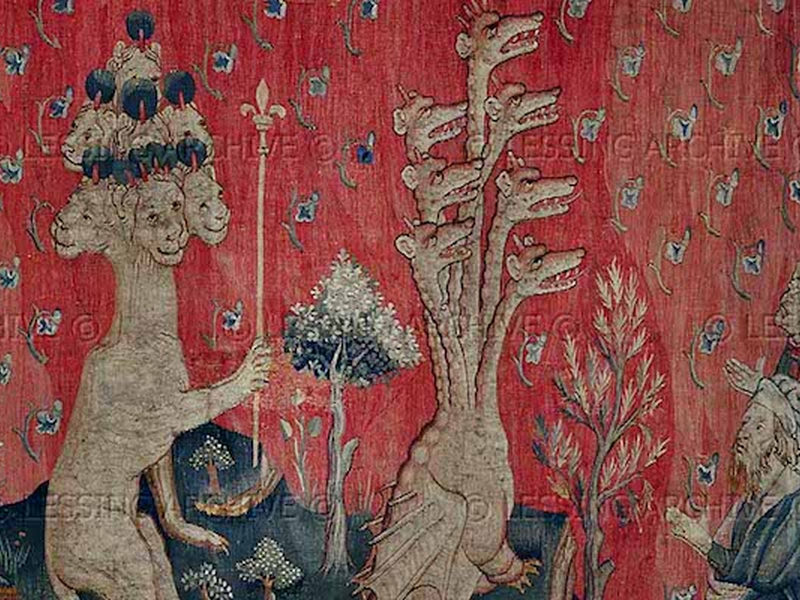
Flying scrolls. Red horses. Beasts coming out of the sea. Winged women. The list goes on. Apocalyptic literature in the Bible is like a cross between science fiction and Marvel comics. And the Bible has a fair bit of this sort of thing. Daniel sees visions in Babylon, Zechariah sees…

by Toby SumpterNovember 4, 2014

bhm-skyline-2
Theopolis News

New Name, New Look

Trinity House Institute has taken a new name, the Theopolis Institute. This striking new name expresses our unique vision and mission and captures the unified purpose behind all our specific programs and activities. We still have Bible, liturgy, and culture in our tagline. We still offer the same courses on…

by TheopolisNovember 4, 2014
istock_000012860926small
Atonement

Not Fearing the Devil

Adam Kotsko offers a socio-political variation on the Christus Victor atonement theory in his 2010 study, The Politics of Redemption: The Social Logic of Salvation . He does this by explaining "the devil" in terms of the Hegelian concept of "objective spirit," Geist . As Kotsko puts it, Geist "refers…

by Peter LeithartOctober 13, 2014
jez-timms-8muutamcwu4-unsplash
Leviticus

The Meaning of Sacrifice

Two factors keep Nahtali Meshel from discussing the meaning of sacrifice until late in his The "Grammar" of Sacrifice . The first has to do with the texts he draws from: "P says little about the meaning of its rituals" (174). The other has to do with the grammatical theory…

by Peter LeithartOctober 8, 2014
jez-timms-8muutamcwu4-unsplash
Leviticus

Praxemics

Chapter 5 of Naphtali Meshel's The "Grammar" of Sacrifice focuses on "praxemics," the physical actions of sacrificial ritual. Praxemes are constituted by six elements: an "atomact," an elementary physical act or gesture; an actor; an object that is acted up; a target for the action and often for the object…

by Peter LeithartOctober 6, 2014
markus-winkler-aid-xyrtlec-unsplash
Leviticus

Jugation and Hierarchy

Two chapters of Naphtali Meshel’s The “Grammar” of Sacrifice cover what he calls “jugation” and “hierarchies.” The first involves the addition of other materials to an animal offering. Jugates include wine, cereal, and oil that are added to the animals (zoemes) that are offered in sacrifice. Some jugates are coordinated…

by Peter LeithartOctober 1, 2014

Showing page 167 of 309

See all

Showing page 28 of 43

See all
Literature

Sigurd’s New Order

Perhaps Sigurd, like Orestes, marks the beginning of a new order. Before Sigurd, the only absolute loyalties in the world of the Volsungs were family loyalties, loyalties of blood. Signy has no loyalty to her husband and encourages Sigmund to kill her sons. But Sigurd seems as loyal to his…

October 31, 2003

Religion in Europe

In Italy, there is a raging debate over a judge’s ruling that crucifixes need to be removed from schools. Seems that Europe, where religion (or religions) is still often a part of government education and where state churches still exist, is beginning to play catch up with American secularism.

October 31, 2003
Literature

Sigurd and the Dragon

In the introduction to his translation of the Volsung Saga, Jesse Byock points out that the scene of Sigurd slaying the dragon was employed on numerous churches throughout Scandinavian countries. The Christological dimensions of a dragon-slayer are obvious, but there is even more going on with Sigurd: He not only…

October 31, 2003

Differance

In an essay on “The Hermeneutics of Difference” in a volume edited by Merold Westphal, Garrett Green offers this helpful summary of Derrida’s conception of supplement: “The fundamental hermeneutical situation in which we all find ourselves as users of signs, which Derrida indicates by the word DIFFERANCE, means that no…

October 31, 2003

Oats

From Dr. Johnson’s dictionary, a definition of “Oats”: “A grain, which in England is generally given to horses, but in Scotland supports the people.”

October 31, 2003

Nothing Outside the Text

In his book “Is There A Meaning in This Text?” Kevin Vanhoozer explains Derrida’s dictum that “there is nothing outside the text” by saying that everything is part of a signifying system or classification system that is constituted by differences. He offers this illuminating illustration: “a Ford has its particular…

October 31, 2003

Showing page 2174 of 2212

Browse by Category

In Medias Res

Your weekly digest for all things Theopolis.

Donate

Theopolis is nearly 100% donor-supported. Consider joining us on our mission.