Theopolis Logo

Writing

Explore our collection of theological essays, biblical studies, and reflections on faith and culture.

See all
kelly-sikkema-gpoh17dxqdm-unsplash
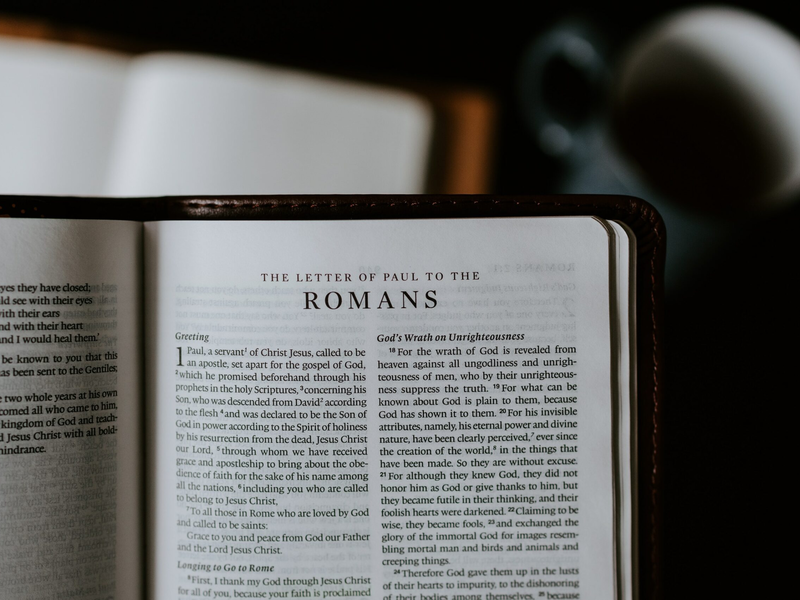
Romans

Paul’s Gospel & the Theme of Romans

Paul, a bond-servant of Christ Jesus, called as an apostle, set apart for the gospel of God, which He promised beforehand through His prophets in the holy Scriptures, concerning His Son, who was born of a descendant of David according to the flesh, who was declared the Son of God…

by Mark HorneJune 6, 2003

screenshot-2023-07-27-at-10-25-35-am
History

The Nelda Boswell Scroll: The Apostle Paul’s Town Hall Meeting in Iconium

With the surprising discovery of the Nelda Boswell scroll historians have deciphered its contents and concluded that the apostle Paul returned to the region of Galatia shortly after he wrote the letter that we call Galatians. The evidence suggests that a number of local pastors, elders, and deacons, along with…

by Jeff MeyersJune 6, 2003
aaron-burden-qjdzyt_k8xg-unsplash
Jonah

Jonah, the Judaizers, and the Gospel

Second Temple Judaism was a form of covenantal nomism, according to E. P. Sanders’ terminology. This means that Torah-observance was a way of expressing loyalty to the Lord of the covenant who had graciously elected Israel. I think Sanders’ view (taken up in bits and pieces and with some modifications…

by Rich LuskJune 6, 2003
Theologia

Gratitude or Faith?

We often hear that the key to Christian obedience is thankfulness for what God has done. But the Bible stresses faith and hope much more than gratitude. The Baptist pastor and author John Piper has written, “Nowhere in the Bible is gratitude connected explicitly with obedience as a motivation. We…

by Mark HorneJune 6, 2003
aaron-burden-qjdzyt_k8xg-unsplash
Federal Vision

God’s Righteousness & Our Justification

One of the questions that is commonly asked about Tom Wright regards his teaching about how Paul uses the term “the righteousness of God.” Since Wright’s interpretation of the term in Paul’s epistles is commonly mentioned in passing but rarely analyzed, it seems like a good idea to explicitly spell…

by Mark HorneJune 6, 2003
jordan-wozniak-xp_agmeea6s-unsplash
Genesis

Forever Means Forever: God’s Promises to the Jews

If God promised a certain land to the seed of Abraham, saying that it would be theirs “forever” (Gen. 13:15), why do Reformed churches teach that the Jews permanently lost their right to the land? What about all these Old Testament “forever” promises and prophesies made to the Jews? How…

by Jeff MeyersJune 6, 2003

Showing page 230 of 309

See all

Showing page 28 of 43

See all

Is Anonymity Still a Thing?

T he literary world is atwitter this week with the revelation of the real identity of Elena Ferrante, the pseudonym used by the author of the acclaimed Neopolitan Quartet. Italian journalist Claudio Gatti reported on his months-long investigation in the New York Review . Gatti’s conclusion, based on real estate…

October 7, 2016
Liberalism

Infantilism and Anti-Paternalism

J ohn Milbank and Adrian Pabst ( Politics of Virtue , 17) claim that “politics should revert to its ancient character as a ‘politics of the soul,’ concerned above all to nurture virtuous citizens, just as parents are concerned above all with the character of their children, precisely because they…

October 7, 2016

Disembedding

J ohn Milbank and Adrian Pabst ( Politics of Virtue , 47) observe that the liberal state claims to release “the economic and social spheres to be pre-politically themselves as natural, meaning true to human biological needs and inclinations.” In fact, however, it “politically produces this sphere of man as…

October 7, 2016

Scarcity

S carcity is one of the central premises of economic theory. John Milbank and Adrian Pabst see the premise of scarcity as one of a triad of pessimistic assumptions that found liberal order - the other two are “ontological violence and natural egoism” ( Politics of Virtue , 48). They…

October 7, 2016

Your Brain On Paper

M atthew Crawford ( The World Beyond Your Head ) observes that we can do simple mathematics in our heads. We can even multiply bigger numbers by breaking them down into smaller ones. At some point, though, most of us lost track: “If one has to multiply 356 by 911,…

October 7, 2016

God's Gift to God

1 Chronicles 17 is the Chronicler’s account of the Davidic covenant, Yahweh’s commitment to the Davidic dynasty. In his response to the Lord’s pledge, David summarizes the aims of the exodus (v. 21). Following the Hebrew word order, we can see a somewhat irregular chiasm: A. And what one nation…

October 6, 2016

Showing page 246 of 2212

Browse by Category

In Medias Res

Your weekly digest for all things Theopolis.

Donate

Theopolis is nearly 100% donor-supported. Consider joining us on our mission.