Theopolis Logo

Writing

Explore our collection of theological essays, biblical studies, and reflections on faith and culture.

See all
hebrew-manuscript-2
Hermeneutics

The Complexity of Biblical Allusion

There is no question about the fact that the book of Deuteronomy is full of literary allusion. But there is a serious problem, even a paradox, of understanding how that allusion works. To begin with, if we assume that Deuteronomy was written by Moses — with some editorial emendations added…

by Ralph Allan SmithJanuary 23, 2018

bladerunner
Culture

The Artificial Resurrection

Genesis and Genetics in Blade Runner 2049 The power of science fiction, and what’s positive about it, is that you’re able to experience the worst-case scenario without actually having to live it. (Actor Ryan Gosling, who plays Officer “K”) (Warning: The following analysis contains spoilers for both Blade Runner films.)…

by Mike BullJanuary 18, 2018
sixteen-miles-out-d40gdcd_-he-unsplash
Biblical Studies

The Battle of Gog and Magog

The battle of Gog and Magog is found in Ezekiel 38-39. My purpose in this brief essay is to propound an explanation for this passage that I have not encountered in any of my commentaries, but that makes more sense to me than any other. I offer it here in…

by James B. JordanJanuary 16, 2018
resurrection

Deep Hope

I. Varlam Shalamov in Kolyma Tales describes his experience of the Gulag, where he spent more than a dozen of years. In a story titled The Life of Engineer Kipreev Shalamov reflects on the theme of hope in the life of a prisoner: “Hope always shackles the convict. Hope is…

by Bogumil JarmulakJanuary 11, 2018
abraham-defeats-kings-g-jollain-2
Biblical Theology

Abram’s 318 Men

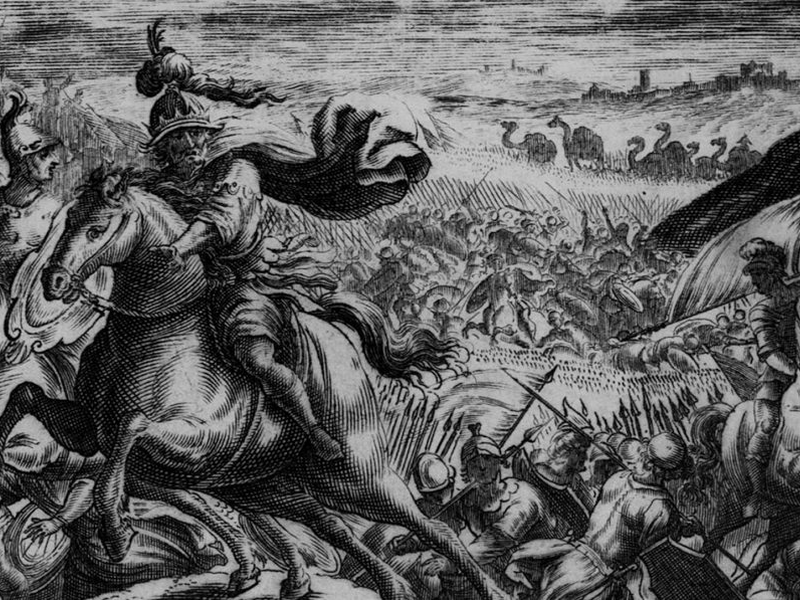
Genesis 14:14 says that Abram mustered his trained men, “born in his house,” to rescue Lot, and gives their number as 318. It is clear that the precise number is provided for some reason, but what is it? S. Gevirtz notes that 318 is the sum of all the prime…

by James B. JordanJanuary 9, 2018
tanner-mardis-xuxghzhibn4-unsplash-1
Biblical Studies

The Flying Scroll

And he said to me, "What do you see?" And I answered, "I see a flying scroll; its length is twenty cubits and its width ten cubits" (Zechariah 5:2). Immediately following his vision of the outpouring of the Spirit upon the restoration community (4:1-14), Zechariah saw a flying scroll. The…

by Peter LeithartJanuary 4, 2018

Showing page 100 of 309

See all

Showing page 28 of 43

See all

Donne and Sacramental Poetics

Sophie Read's Eucharist and the Poetic Imagination in Early Modern England examines six early modern English poets on the assumption that “particularities of belief can be made manifest in the verbal texture of a literary work: that there is an analogy between the rhetorical and theological plans of understanding, and…

April 29, 2016

Preaching to Spirits

Karen Jobes ( 1 Peter ) understates the point when she says that 1 Peter 3 is “more obscure than we might wish,” but she highlights the central point of Peter's odd claim that Jesus preached to spirits in prison: “(1)Being linked with 3:13-17 by hoti kai (because also, 3:18),…

April 28, 2016

Rabbinic Welfare

Susan Holman devotes a few pages of her The Hungry Are Dying , a study of “beggars and bishops” in Cappadocia, to a sketch of Rabbinic teaching on almsgiving, drawn from the writings of the Talmudim. The poor appear in three main contexts in rabbinic writing: “First, they are recognized…

April 28, 2016
Ritual

Biblical Terms for “Ritual”

English Bibles rarely employ the words “ceremony,” “rite,” or “ritual” to translate biblical terms. The NASB, for example, uses the words “ritual” and “rite” in only three instances, all having to do with the Passover (Exodus 12:25-26; 13:5). The Authorized Version uses the word “ritual” only at Number 9:3. The…

April 27, 2016

Weber's Liberal Protestantism

Anthony Carroll summarizes his Protestant Modernity in a 2009 article in the Archives of European Sociology . Recognizing that Weber's theory of secularization “has greatly influenced later social theorists in their accounts of secularisation, rationalisation, and modernisation,” he wanted to set Weber's theory “within its liberal Protestant heritage.” This is…

April 27, 2016

No Longer

The ruined city Babylon is a city where things that used to happen don't happen anymore. John's description is under the rubric “no longer” ( ou eti , used 6x in Revelation 18:21-24). In Babylon, music, crafts, milling, light, and weddings have ceased. The old has passed, the new has…

April 26, 2016

Showing page 295 of 2212

Browse by Category

In Medias Res

Your weekly digest for all things Theopolis.

Donate

Theopolis is nearly 100% donor-supported. Consider joining us on our mission.